The Role of Teacher in Education: What Teachers Really Do
The role of teacher in education goes far beyond delivering lessons. Teachers serve as instructors, mentors, facilitators, counselors, and role models at the same time. Research confirms that teachers are the single most important factor in shaping learning quality. This article explains every major teacher role, covers how modern education has changed these responsibilities, and answers the most common questions about what teachers actually do in and beyond the classroom.
According to UNESCO, the world needs 44 million more teachers by 2030 just to meet the demand for quality education. That number alone tells you something important: the role of teacher in education is not just valuable. It is irreplaceable.
Most people think teaching means standing in front of a class and explaining a subject. But the real work of a teacher reaches far beyond that. Teachers shape how students think, how they handle challenges, and how they grow as people. They carry out responsibilities that touch every part of a student’s life, from academic growth to emotional support.
This guide breaks down all the major roles teachers play, explains why each one matters, and shows how the teaching profession has changed in recent years.
What Is the Role of Teacher in Education?
The role of teacher in education is to guide students toward knowledge, skills, and personal development. Teachers plan lessons, deliver instruction, assess understanding, and provide mentorship. Beyond academics, they help build values, problem-solving abilities, and social skills.
This makes the teacher’s role multidimensional. A teacher is not simply someone who transfers information from a textbook to a student. A teacher is the architect of a learning environment where students can grow intellectually, emotionally, and socially.
Research published in the RSIS International Journal (2025) describes teachers as “the primary architects of learning environments” who ultimately determine the success of education. That is a strong statement, but it reflects how central the teacher’s role really is in shaping learning outcomes.
What Are the Roles and Responsibilities of a Teacher?
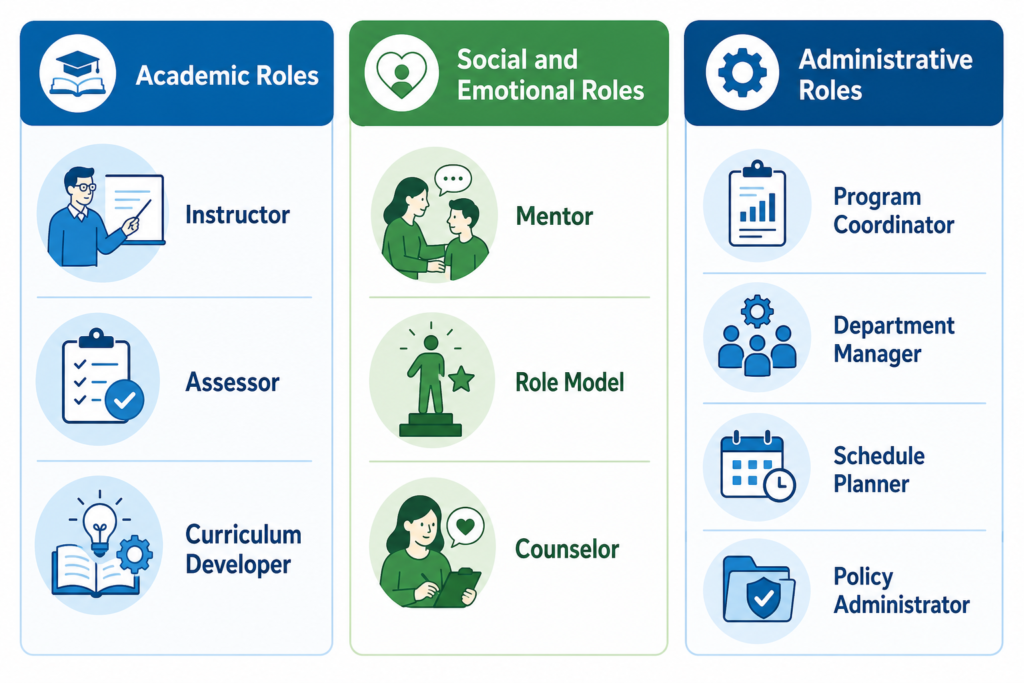
Teachers hold many different roles at once. These roles fall into three main groups: academic roles, social and emotional roles, and administrative roles. Together, they cover everything a teacher does to support student development inside and outside the classroom.
Academic Roles
Academic roles are the most visible part of a teacher’s job. They include:
- Instructor: The teacher explains concepts, delivers lessons, and makes complex topics easy to understand. Good instruction means meeting students where they are and adjusting the approach when needed.
- Curriculum deliverer: Teachers translate broad curriculum frameworks into daily lesson plans. They align every lesson to learning standards while keeping the content relevant and engaging.
- Assessor: Teachers test student understanding through quizzes, assignments, projects, and observations. Formative assessment helps teachers know what to revisit and how to improve their instructional strategies.
- Lesson planner: Thoughtful planning is behind every successful class. Teachers spend significant time outside school hours designing activities that meet learning outcomes for each student.
Understanding the functions of a teacher in detail helps explain why academic roles are far more complex than they appear from the outside.
Social and Emotional Roles
Beyond academic work, teachers support the whole student. These roles include:
- Mentor: Teachers guide students through personal challenges, career questions, and self-doubt. A study published in Nature Scientific Reports (2025) found that teachers act as “significant others” who directly shape student outcomes beyond grades.
- Counselor: Teachers notice when a student is struggling emotionally. They provide a safe space, offer encouragement, and connect students to additional support when needed.
- Role model: Students observe how teachers speak, treat others, and handle problems. A 2025 study in Frontiers in Education found that teacher values significantly shape student wellbeing and professional development over time.
- Community builder: Teachers bridge the gap between school and home. Regular communication with parents and involvement in school events helps create a wider support network for each student.
Administrative and Professional Roles
These roles happen mostly behind the scenes but are essential to how schools function:
- Curriculum developer: Teachers adapt existing materials, identify content gaps, and design resources suited to their specific students.
- Parent communicator: Keeping families informed about student progress is a key responsibility that affects student motivation and behavior.
- Professional development participant: Teachers attend workshops, complete training, and stay updated on new pedagogical approaches to keep improving their practice.
Why Is the Role of Teacher Important for Student Development?
Teachers directly influence how students grow cognitively, emotionally, and socially. The impact of a skilled teacher stretches far beyond any single school year.
Research from Nature (2025) confirms that the teacher-student relationship significantly influences academic performance. Students with supportive, engaged teachers consistently show higher achievement, stronger critical thinking skills, and better social behavior. The importance of teachers in shaping these outcomes is backed by decades of education research.
Beyond academics, teachers instill lifelong habits. They encourage curiosity, model empathy, and teach students how to handle failure. These are not skills that come from textbooks. They come from consistent, caring human interaction over time. No digital tool or algorithm can fully replicate that kind of influence on a young person’s development.
How Has the Role of Teacher Changed in Modern Education?

The teacher’s role has shifted significantly in the past decade. The shift is from sole knowledge-provider to learning facilitator, digital guide, and inclusive educator.
| Traditional Role | Modern Role |
|---|---|
| Primary source of information | Guide who helps students evaluate and use information |
| Lecture-centered delivery | Student-centered, active learning facilitation |
| Focused mainly on academics | Addresses academic, emotional, and digital development |
| Minimal use of technology | Integrates EdTech, LMS tools, and digital resources |
| Standardized teaching methods | Differentiated, competency-based learning approaches |
India’s National Education Policy 2020 is one of the clearest examples of this shift. NEP 2020 officially moved education away from rote learning toward holistic, learner-centric approaches. Under this policy, the role of teacher in education is redefined as facilitator, innovator, and guide for overall student development.
In the United States, Wooclap’s 2025 teacher demographics report shows that over 700,000 veteran teachers are expected to retire by 2030. This generational shift makes it more urgent than ever for the profession to adapt to new expectations and new tools.
What Is the Role of Teacher in the Classroom?
The classroom is where most of a teacher’s roles come together at once. A teacher manages the space, delivers instruction, monitors student engagement, handles behavioral issues, and builds a culture of trust, all at the same time.
Effective role of teacher in classroom practice means creating an environment where students feel safe enough to ask questions, make mistakes, and try again. Research consistently shows that classroom safety and belonging are directly tied to student motivation and learning outcomes.
Teachers use different classroom management strategies depending on the age group and subject. In younger grades, structure and routine are essential. In higher grades, autonomy and discussion-based learning become more important. In every case, the teacher sets the tone for how learning happens.
What Is the Role of Teacher as a Facilitator?
As a facilitator, the teacher steps back from direct instruction and creates conditions for students to discover knowledge themselves. This approach builds active participation, critical inquiry, and collaborative problem-solving skills.
The role of teacher as facilitator includes:
- Asking open-ended questions that push students to think critically
- Designing group projects that require collaboration and communication
- Using Socratic discussion methods to help students examine ideas from different angles
- Encouraging students to question sources and evaluate information independently
- Providing scaffolding so students can take on more responsibility as they grow
Modern education frameworks, including NEP 2020 and 21st-century competency models, strongly support facilitation as a core pedagogical approach. Teachers who facilitate well produce students who can think independently, which is one of the most valuable learning outcomes in today’s knowledge-driven world.
What Is the Role of Teacher in Inclusive Education?
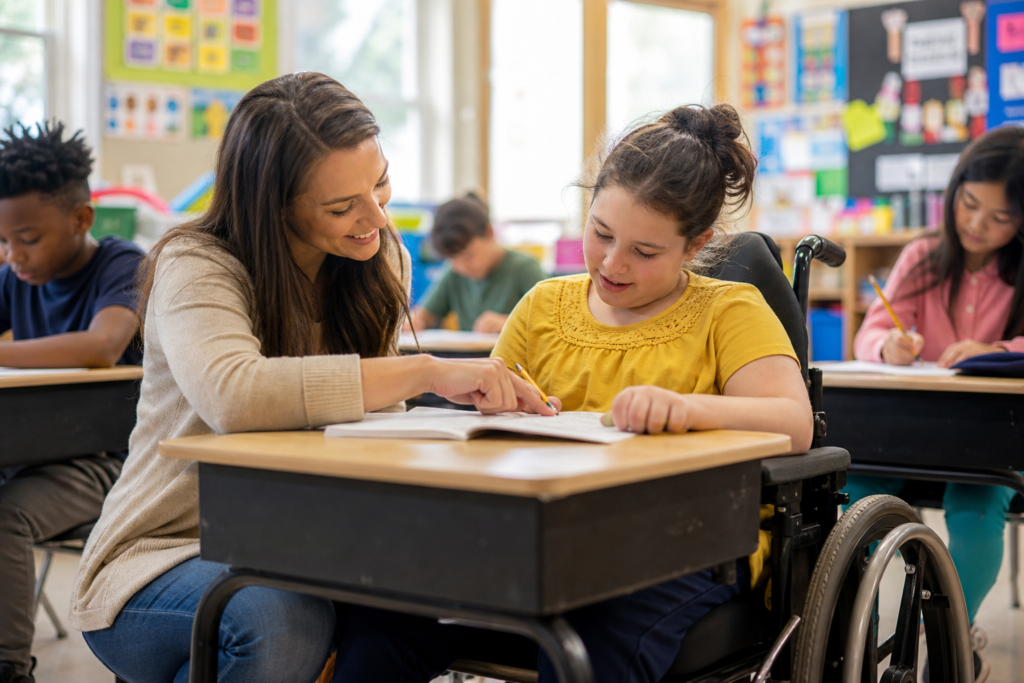
In inclusive education, the teacher adapts instruction to meet the needs of all students, including those with disabilities, language barriers, or different learning styles. This is one of the most demanding and meaningful aspects of modern teaching.
Key responsibilities in an inclusive classroom include:
- Designing differentiated learning activities so every student can access the content
- Using Universal Design for Learning (UDL) principles to remove barriers before they arise
- Collaborating with special education teachers and support staff
- Fostering peer acceptance and a classroom culture where differences are respected
- Recognizing early signs that a student needs additional academic or emotional support
Inclusive teaching is not about lowering standards. It is about creating multiple pathways to the same high expectations. Teachers who do this well ensure that no student is left behind due to factors outside their control.
Challenges Facing Teachers in Their Role Today
Despite the vital importance of their work, teachers face significant pressures that affect their ability to perform every role effectively.
Key challenges include:
- High attrition rates: Approximately 8% of teachers leave the profession every year, and Wooclap’s 2025 data shows that 75% of teachers considered leaving during the 2022 to 2023 school year.
- Aging workforce: Only 14% of US teachers are under age 30, creating a pipeline problem as veteran teachers retire.
- Administrative overload: Paperwork, compliance requirements, and non-teaching duties eat into time that could go toward lesson planning and student support.
- Technology adaptation pressure: Teachers are expected to integrate EdTech tools, AI platforms, and digital literacy instruction with little additional training or time.
- Mental health and burnout: The emotional labor of teaching, especially in under-resourced schools, contributes to chronic stress and exhaustion.
These challenges do not reduce the importance of the teacher’s role. They highlight why supporting teachers with proper resources, training, and respect is essential for any education system that wants to succeed.
The teacher personality and resilience required to navigate these pressures is itself a subject worth understanding, as personal qualities play a major role in how effectively teachers carry out their responsibilities.
Frequently Asked Questions
What is the difference between a teacher’s academic role and personal role?
A teacher’s academic role focuses on curriculum delivery, lesson planning, assessment, and building subject knowledge. The personal role involves mentoring students, supporting their emotional wellbeing, modeling values, and building trust. Both roles are equally important and happen at the same time in every classroom.
How do teachers support moral development in students?
Teachers support moral development by modeling fairness, empathy, and respect in their daily interactions. They create classroom environments where students practice cooperation, resolve conflicts, and develop a sense of personal responsibility. Over time, these consistent examples shape how students treat others and make decisions.
What makes a teacher effective in the 21st century?
An effective 21st-century teacher combines strong subject knowledge with the ability to facilitate learning, integrate technology, differentiate instruction, and support student wellbeing. They stay current with new pedagogical approaches and adapt their methods to meet the needs of a diverse student population.
How does the teacher’s role differ at the primary and secondary level?
At the primary level, teachers focus heavily on foundational skills, routine, and nurturing emotional security. At the secondary level, teachers increasingly take on subject specialist roles, support career guidance, and help students develop independent thinking and academic discipline for higher education.
What role do teachers play in building school culture?
Teachers shape school culture through their professional relationships with colleagues, their engagement with families, and the classroom environments they create. When teachers collaborate, model respect, and hold high expectations consistently, they contribute to a school-wide culture of learning and belonging.
How does teacher-student communication affect learning outcomes?
Clear, consistent communication between teacher and student builds trust and engagement. Students who feel heard and understood by their teacher are more likely to participate, ask for help, and persist through challenges. Research consistently links strong teacher-student communication to improved academic performance and social development.
Teaching is one of the most complex and meaningful professions in the world. The role of teacher in education covers far more than what most people see from the outside. From delivering lessons and assessing progress to mentoring students and building inclusive classrooms, teachers shape the people their students become.
As education continues to evolve with new technology, changing policies, and growing student needs, the teacher’s role will only become more important. Understanding that role fully is the first step toward appreciating the people who fill it every day.