Definition of Education: Role in Personal and Social Development
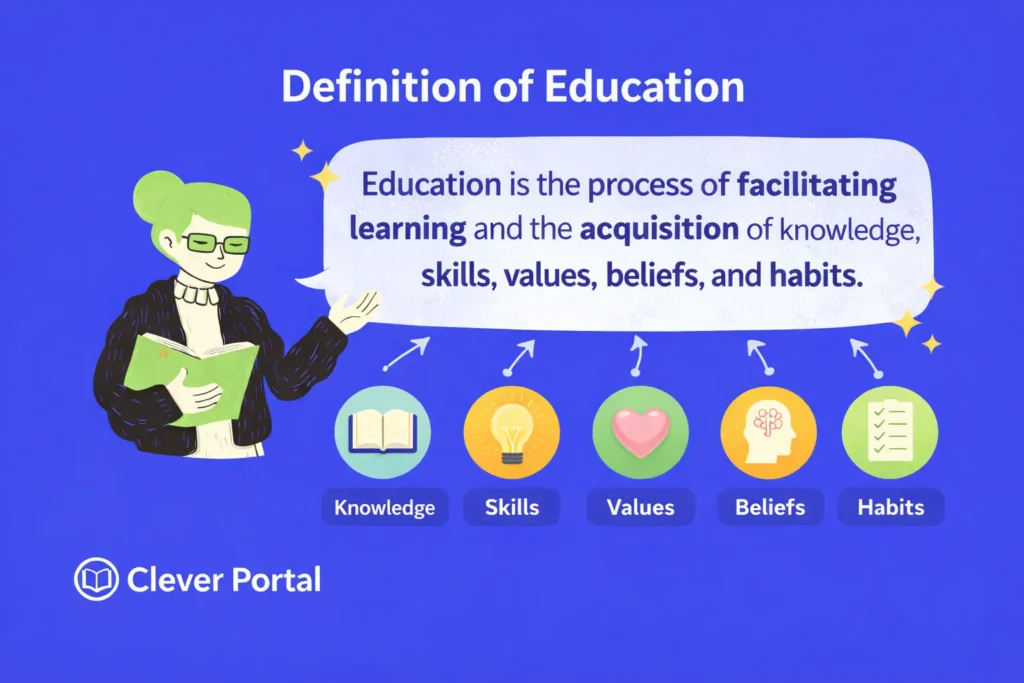
The definition of education goes far beyond classroom learning. Education is the deliberate process of building knowledge, skills, values, and attitudes in individuals. It shapes personal growth by developing critical thinking and confidence. It drives social development by building stronger, fairer, and more peaceful communities. Every person who learns contributes to a better society.
Education is one of the most powerful forces in human life. It does not just happen inside a school building. It happens through experience, relationships, curiosity, and effort. But what exactly is education, and what role does it play in shaping who we are and the world we live in?
This article explores the full definition of education, what major thinkers and institutions say about it, and how it drives both personal growth and social development. Whether you are a student, a teacher, or simply a curious reader, this guide gives you a clear and complete picture.
What Is the Definition of Education?
The definition of education covers the process of acquiring knowledge, developing skills, building values, and forming attitudes that help a person live well and contribute to society.
According to Merriam-Webster, education is “the action or process of teaching or of being or becoming educated.” Cambridge Dictionary describes it as “the process of teaching or learning, especially in a school or college, or the knowledge that you get from this.” Britannica adds that education is “the discipline concerned with methods of teaching and learning in schools or school-like environments.”
These three definitions share a common thread. Education involves a transfer of knowledge from one person, place, or experience to another. But modern educational philosophy expands this idea much further. Education also includes:
- The development of moral values and ethical thinking
- The building of social skills and emotional intelligence
- The cultivation of creativity and independent thought
- The growth of lifelong learning habits
Education, in its fullest meaning, is not just about what you know. It is about who you become through the process of learning.
How Does Education Support Personal Development?
Personal development through education is one of the most well-documented outcomes in social science research. Education helps individuals grow intellectually, emotionally, and professionally throughout their lives.
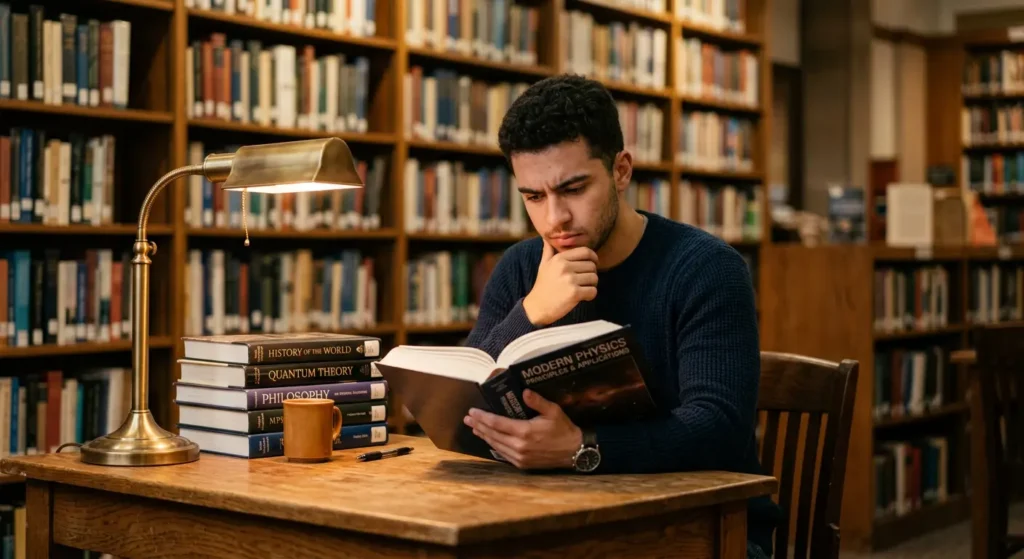
Education builds critical thinking, self-confidence, and lifelong learning habits that drive personal growth.
Building Confidence and Self-Awareness
When people learn new things, they gain a sense of accomplishment. Each educational milestone, whether finishing a grade, mastering a skill, or understanding a new concept, builds self-esteem. Research consistently shows that educated individuals report higher levels of life satisfaction and mental well-being.
Education also promotes self-awareness. It helps people understand their strengths, recognize their values, and develop a clearer sense of identity. According to educational research, schools play a key role in shaping how students see themselves and their place in the world.
Developing Critical Thinking and Decision-Making
Education trains the mind to think carefully. Students who go through structured learning environments develop stronger reasoning skills, problem-solving abilities, and the capacity to evaluate information critically.
These cognitive development skills carry over into every area of life. An educated person is better equipped to make informed decisions about health, finances, relationships, and civic life. The development of intellectual growth through education is not limited to formal schooling. It continues through non-formal learning and informal daily experiences.
Expanding Career Opportunities
One of the most practical outcomes of education is wider career opportunity. Education opens professional doors that would otherwise remain closed. Higher levels of education generally correlate with higher earning potential, better job security, and greater professional satisfaction.
This is not only about degrees and certifications. Vocational training, skill-based learning, and self-directed study all contribute to a person’s ability to contribute meaningfully in the workplace.
What Role Does Education Play in Social Development?
Education is a vehicle for social cohesion and community progress. Its impact on society is as powerful as its impact on the individual.
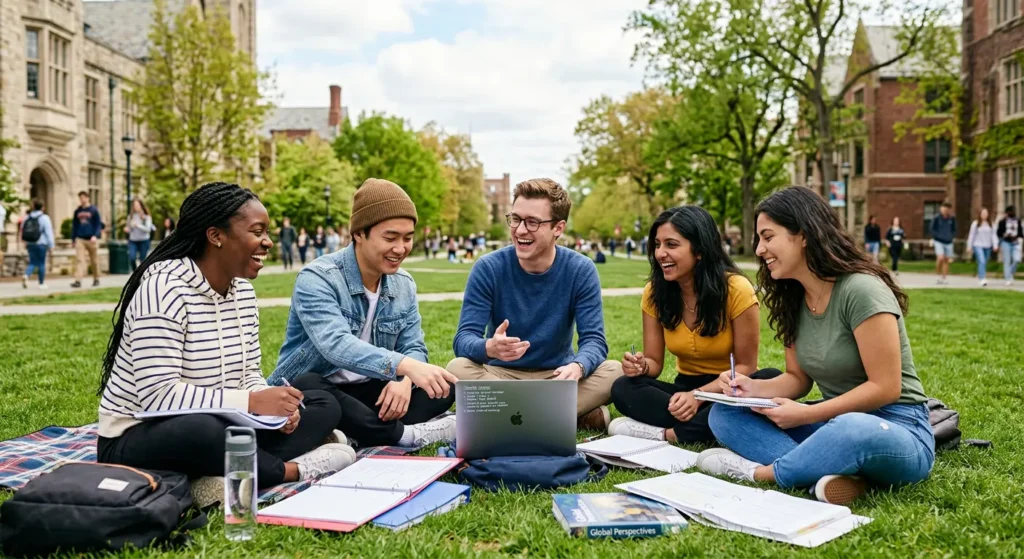
Education brings people together, builds shared values, and strengthens community bonds across diverse groups.
Promoting Social Cohesion and Shared Values
Schools and learning institutions bring together people from diverse backgrounds. Through shared curriculum, group activities, and collaborative learning, students develop empathy, tolerance, and respect for others. These shared experiences build social bonds and reduce divisions between different groups.
UNESCO states clearly that education “promotes social cohesion, economic progress, and sustainable development.” When individuals understand each other better, entire communities become more stable and more peaceful.
Reducing Social Inequality
Education is one of the most reliable pathways out of poverty. According to the OECD, education plays a central role in reducing social inequalities by providing upward mobility and bridging cultural divides.
When more people have access to quality education, gaps in income, health outcomes, and civic participation begin to narrow. Literate and skilled populations also drive innovation and economic growth, benefiting whole societies rather than just individuals.
Strengthening Civic Participation
Educated citizens are more likely to vote, volunteer, and engage in community decision-making. Education develops a sense of civic duty and responsibility.
Societies with strong educational systems tend to experience lower crime rates and higher levels of democratic participation. Schools do not just teach academic subjects. They also teach students how to be active, responsible members of their communities.
How Do Scholars and Authors Define Education?
Many of the world’s greatest thinkers have offered their own definitions of education. Each definition reflects a different emphasis but all point to the same core truth: education shapes both individuals and societies.
John Dewey
John Dewey, one of the most influential educational philosophers, described education as “a social process and a process of living, not a preparation for future living.” For Dewey, learning happens best through active experience and engagement with real-world problems. He believed that education and life should not be separate.
Lawrence Cremin
Lawrence Cremin offered a broader definition. He described education as “the deliberate, systematic, and sustained effort to transmit, evoke, or acquire knowledge, values, attitudes, skills, or sensibilities as well as any learning that results from that effort.” This definition is widely used in academic circles because it captures both formal and informal modes of learning.
Mark K. Smith
Mark K. Smith, writing for infed.org, described education as “the wise, hopeful and respectful cultivation of learning and change undertaken in the belief that we all should have the chance to share in life.” This definition places dignity and human potential at the center of the educational process.
C.V. Good
C.V. Good, in his Dictionary of Education (1973), defined education as “the aggregate of all the processes by which a person develops abilities, attitudes and other forms of behaviour of practical value in the society in which they live.” This definition emphasizes the practical and social outcomes of learning.
UNESCO
UNESCO defines the role of education as developing “individual knowledge, skills, values, and attitudes to enable personal growth and active participation in society, while also promoting social cohesion, economic progress, and sustainable development.” UNESCO also recognizes education as a fundamental human right.
What Are the Main Types of Education?
The formal definition of education includes three recognized types, each playing a different role in personal and social development.
Formal Education
Formal education takes place in structured institutions such as schools, colleges, and universities. It follows a set curriculum, leads to recognized qualifications, and is regulated by governments and educational authorities. Formal education is the most familiar type and is the foundation of most national educational systems.
Non-Formal Education
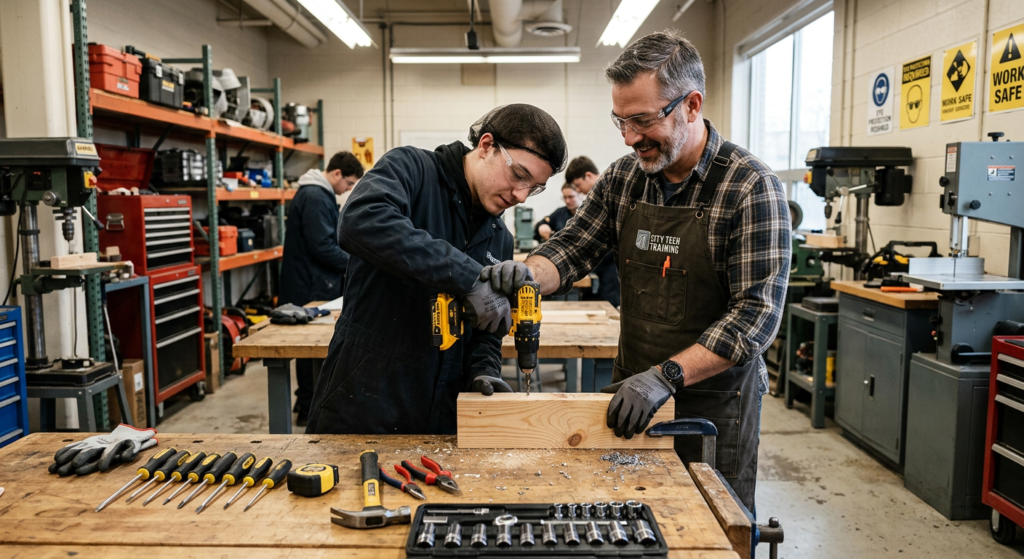
Non-formal education includes vocational training and hands-on skill development outside traditional school settings.
Non-formal education is structured and intentional but takes place outside traditional school settings. Examples include vocational training programs, adult literacy classes, community learning centers, and online courses. It bridges the gap between formal schooling and everyday life learning.
Informal Education
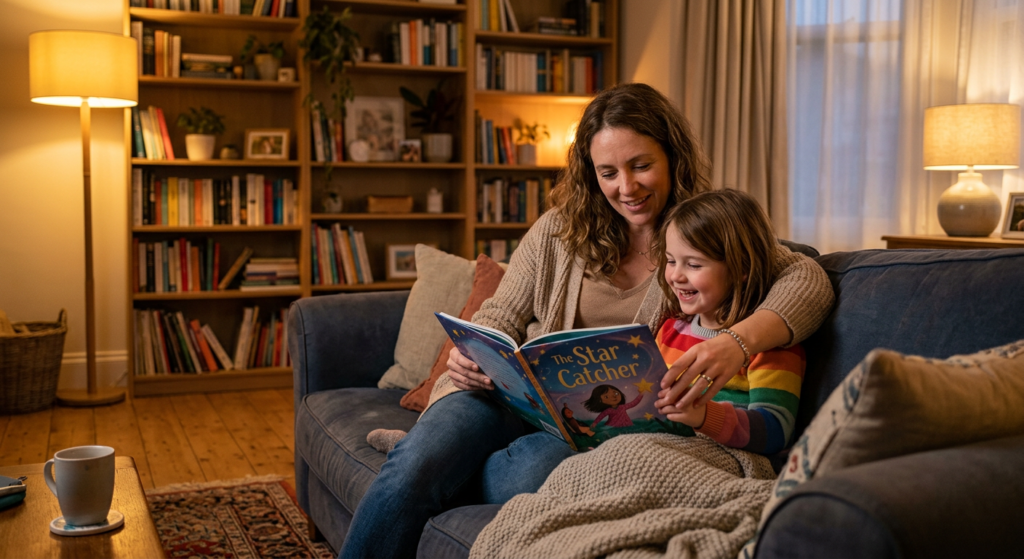
Informal education happens naturally at home, through family interactions, reading, and everyday lived experiences.
Informal education is unstructured and continuous. It happens through daily experiences, family interactions, community involvement, and self-directed curiosity. There are no grades, no certificates, and no formal teachers. Yet informal education contributes enormously to cognitive development, values formation, and lifelong learning.
What Is the Scope of Education?
The scope of education covers every stage of human life and every dimension of human development. It begins before formal schooling, in the early conversations and experiences of childhood, and continues through adulthood into old age as lifelong learning.
The scope includes:
- Stages of life: Pre-primary, primary, secondary, higher education, and adult learning
- Domains of learning: Academic knowledge, vocational skills, social competence, and moral development
- Dimensions of growth: Intellectual growth, emotional development, physical well-being, and spiritual formation
This broad scope is why scholars insist that the meaning and definition of education cannot be reduced to schooling alone. Education is a lifelong, all-encompassing process that shapes the whole person across every stage of life.
Is Education the Same as Schooling?
No. Education and schooling are related but they are not the same thing. Schooling is one specific form of education. It refers to structured, institution-based learning that takes place in schools and universities and typically leads to formal credentials.
Education is a much wider concept. It includes everything a person learns throughout life, whether through formal schooling, a vocational program, a conversation with a mentor, or simply living and observing the world.
A simple way to think about it: all schooling is a form of education, but not all education happens in school. Recognizing this distinction helps students, parents, and teachers appreciate the full value of learning that happens both inside and outside the classroom.
Frequently Asked Questions
What is the best definition of education?
The most widely accepted definition comes from Merriam-Webster: education is “the action or process of teaching or of being or becoming educated.” Scholars like John Dewey and Lawrence Cremin expand this to include social development, values, and lifelong learning. The best definition depends on whether you are focusing on personal growth, social impact, or academic achievement.
What is the meaning of education in simple words?
In simple words, education is the process of learning and being taught. It helps people gain knowledge, build skills, develop values, and grow as individuals. Education happens in schools, at home, in the workplace, and through everyday experiences throughout life.
What is the role of education in personal development?
Education supports personal development by building critical thinking, self-confidence, communication skills, and decision-making ability. It also promotes intellectual growth and helps individuals discover their strengths, form a clear sense of identity, and pursue meaningful careers and relationships.
What is the role of education in social development?
Education drives social development by promoting social cohesion, reducing inequality, strengthening civic participation, and supporting economic growth. Societies with strong educational systems tend to be more stable, more innovative, and more equitable.
What is the difference between formal and informal education?
Formal education is structured, credential-based learning in schools and universities. Informal education is unstructured learning through life experiences, family, and community. Both contribute to personal growth. The key difference is that formal education follows a set curriculum, while informal education happens naturally through daily living.
What is education according to UNESCO?
UNESCO defines education as a process that develops individual knowledge, skills, values, and attitudes to enable personal growth and active participation in society. UNESCO also identifies education as a fundamental human right and a foundation for peace and sustainable development.
What did John Dewey say about education?
John Dewey said education is “a social process and a process of living, not a preparation for future living.” He believed learning should be connected to real experience and that schools should prepare students for active, engaged citizenship rather than passive reception of facts.
Explore More on Education
Understanding the definition of education and its role in personal and social development is just the beginning. Education is a rich, layered topic that connects to history, philosophy, psychology, and public policy.
To continue learning, explore these related guides on CleverPortalus:
- What Is Education? for a foundational overview
- Etymology of Education to understand the Latin roots behind the word
- Types of Education to see how formal, non-formal, and informal learning differ
The more you understand what education truly means, the better you can use it as a tool for your own growth and for building a stronger community around you.