
Daylight Saving Time: What It Is, When It Changes, and Why
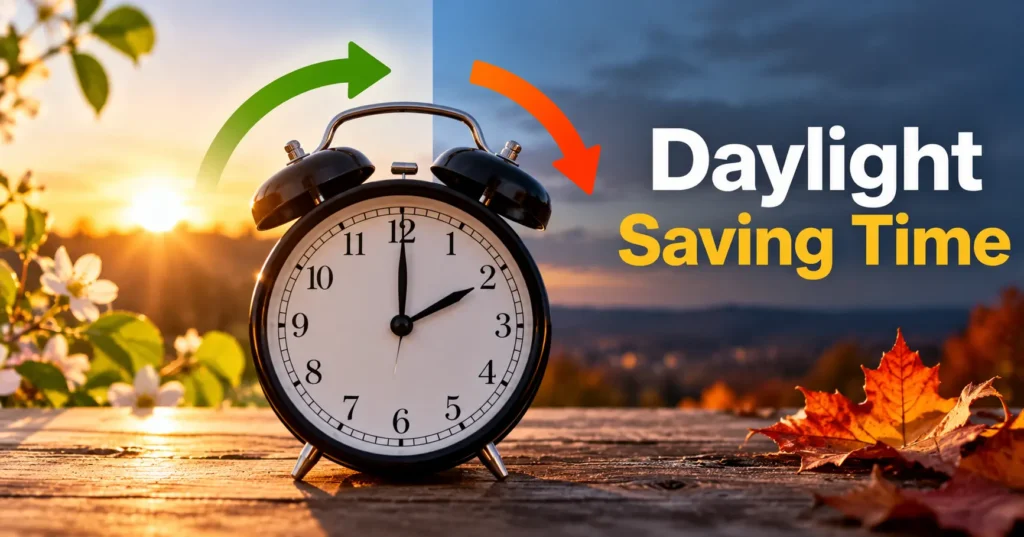
Daylight saving time is the seasonal practice of moving clocks forward by one hour so daylight occurs later in the evening. In most of the United States, it starts on the second Sunday in March and ends on the first Sunday in November. The 2026 dates are March 8 and November 1. The practice affects clock times, daily routines, sleep, and how daylight is spread across the day.
Why does the clock suddenly change twice a year? Daylight saving time, often shortened to DST, is the practice of setting clocks one hour ahead during part of the year. The shift moves an hour of morning daylight into the evening. In 2026, DST began on March 8 and ends on November 1. Not every state or U.S. territory observes it. This guide explains how DST works, why it exists, which states skip it, and what research says about its effects on sleep, energy use, and safety.
What Is Daylight Saving Time?
Daylight saving time is the practice of advancing clocks by one hour during part of the year. It moves daylight from the early morning hours to later in the evening. DST does not create more daylight. The total time between sunrise and sunset stays the same. Only when that daylight appears on the clock face changes.
During DST, the sun rises and sets about one hour later by clock time compared to standard time. Many people find the extra evening daylight useful for outdoor activities, sports, and time spent outside after school or work.
When Does Daylight Saving Time Start and End in 2026?
Daylight Saving Time 2026 U.S. DST schedule is confirmed by the National Institute of Standards and Technology (NIST). The dates are:
| Event | 2026 Date | Clock Change |
| DST begins | March 8, 2026 | 2:00 a.m. moves to 3:00 a.m. |
| DST ends | November 1, 2026 | 2:00 a.m. moves back to 1:00 a.m. |
When DST starts in spring, clocks skip forward from 2:00 a.m. directly to 3:00 a.m. When DST ends in fall, clocks turn back from 2:00 a.m. to 1:00 a.m., repeating that one-hour block.
Do You Lose an Hour or Gain an Hour?
This depends on which direction the clock moves.
| Season | What Happens | What You Feel |
| Spring (March 8) | Clock moves forward 1 hour | You lose 1 hour of sleep |
| Fall (November 1) | Clock moves back 1 hour | You gain 1 hour of sleep |
A simple memory trick most Americans know: spring forward, fall back.
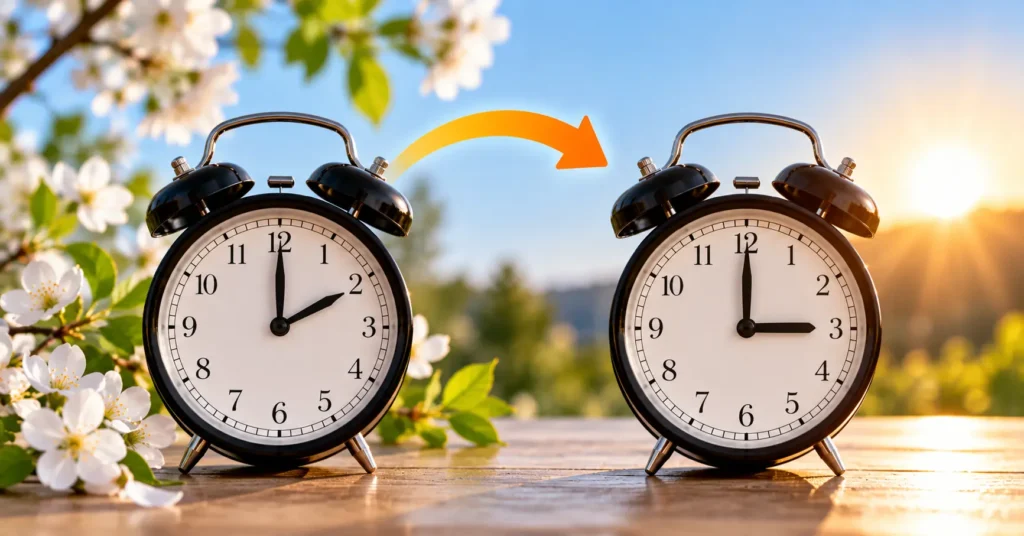
In spring, the clock jumps forward, so the night is one hour shorter. In fall, the clock rolls back, so that hour is returned.
Why Do We Have Daylight Saving Time?
DST was created to make better use of natural daylight during the longer days of spring and summer. The core idea was straightforward. If people woke up with the sun, an extra hour of daylight would shift to the evening, when most people are still active. That would reduce the need for electric lights during evening hours.
Wartime fuel and electricity conservation were also major reasons behind the idea. Extending daylight into the evening was believed to cut lighting costs at the end of the workday.
The original energy argument made more sense when most electricity went to lighting. Today, energy use covers air conditioning, heating, devices, and electronics. The research on whether DST still saves energy is mixed, which this guide covers in its own section below.
How Does Daylight Saving Time Work in the United States?
The United States follows a national schedule for DST, governed by federal law.
DST starts on the second Sunday in March and ends on the first Sunday in November. The U.S. Department of Transportation oversees federal time standards. Under the Uniform Time Act, states may choose not to observe DST at all, but they cannot independently choose to stay on DST year-round. A state that wants permanent DST would need an act of Congress to make that happen.
States that skip DST simply stay on standard time all year long. Their local clocks do not change in spring or fall.
Each major U.S. time zone, including Eastern Time, Central Time, Mountain Time, and Pacific Time, follows the same federal clock change schedule when DST applies.
Which States Do Not Observe Daylight Saving Time?
Most of the country observes DST, but several places do not.
| Location | Observes DST? |
| Hawaii | No |
| Most of Arizona | No |
| Navajo Nation (within Arizona) | Yes |
| Puerto Rico | No |
| Guam | No |
| American Samoa | No |
| U.S. Virgin Islands | No |
| Northern Mariana Islands | No |
| All other U.S. states | Yes |
Hawaii does not observe DST because it sits close to the equator. Near the equator, sunrise and sunset times do not vary as much between seasons. There is little benefit to shifting the clocks.
Most of Arizona skips DST because of the desert climate. Extra evening daylight in summer means more heat during the hottest part of the day, which is not welcome when temperatures already reach extreme levels.
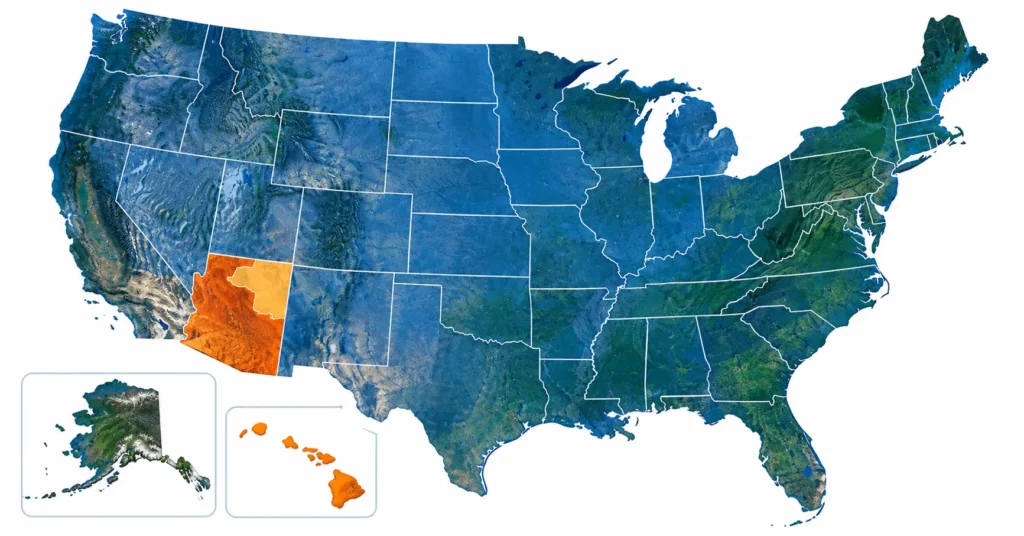
The Navajo Nation, which spreads across parts of Arizona, Utah, and New Mexico, does observe DST. This creates a situation where parts of Arizona follow DST and other parts do not, which can cause local time differences within the same state.
U.S. territories including Puerto Rico, Guam, American Samoa, the Northern Mariana Islands, and the U.S. Virgin Islands also do not observe DST. They stay on their standard local time all year.
What Is the History of Daylight Saving Time?
Early Ideas About Changing Clocks
The idea of adjusting clocks to match available daylight circulated in several countries in the late 1800s and early 1900s. Early proposals appeared in New Zealand, the United Kingdom, and parts of Europe, though widespread adoption did not follow right away.
World War I and the First U.S. Adoption
The United States first adopted DST in 1918 as a wartime measure, according to the Library of Congress. The goal was to reduce electricity use during World War I by extending evening daylight. Shifting daylight to the evening meant people needed to turn on electric lights later in the day.
After World War I ended, the national law became unpopular in many farming communities, where early morning schedules mattered more. Congress repealed it in 1919. States and cities were then left to manage their own time rules. This produced a confusing mix of local time policies across the country.
World War II
During World War II, the United States reinstated a year-round time change, sometimes called “War Time.” Fuel and electricity conservation were again the primary goals. When the war ended, national control over time rules faded again, and the patchwork of local schedules returned.
The Uniform Time Act of 1966
Different time rules across states and cities created serious problems for transportation networks, radio and television broadcasting, and business. In 1966, Congress passed the Uniform Time Act to create a consistent national DST schedule. The law set standard start and end dates and gave the U.S. Department of Transportation authority over the nation’s time standards.
States retained the option to opt out of DST entirely. Hawaii and Arizona used this option, which is why they do not observe it today.
The 2007 Schedule Change
The Energy Policy Act of 2005 extended the DST period starting in 2007. The spring start date moved from the first Sunday in April to the second Sunday in March. The fall end date moved from the last Sunday in October to the first Sunday in November. This added about four weeks to the DST period and remains the schedule in use today.
Does Daylight Saving Time Actually Save Energy?
Energy conservation was one of the original reasons for DST. The logic was that shifting daylight to the evening would cut the need for electric lighting, which would reduce total energy use.
Research has tested this idea, and the results are not consistent.
A well-known study used the state of Indiana as a natural experiment. Indiana began observing DST statewide, which allowed researchers to compare electricity use before and after. The National Bureau of Economic Research published findings showing that residential electricity demand actually rose by about 1% after the change. The study suggested that while lighting use fell slightly, the cost of extra air conditioning and heating during the longer light evenings more than made up the difference.
Other research has found small energy benefits in some regions and small increases in others. Climate, geography, and local energy habits all appear to influence the outcome.
| Energy Question | What Research Shows |
| Does DST reduce lighting use? | Some reduction in evening lighting demand |
| Does DST reduce total energy use? | Evidence is mixed; some studies show small increases |
| Does climate affect the outcome? | Yes; warmer climates often see higher cooling costs |
The short version: the energy savings case for DST is weaker than originally thought, and results vary significantly by location.
How Does Daylight Saving Time Affect Sleep?
The spring clock change is harder on sleep than the fall change.
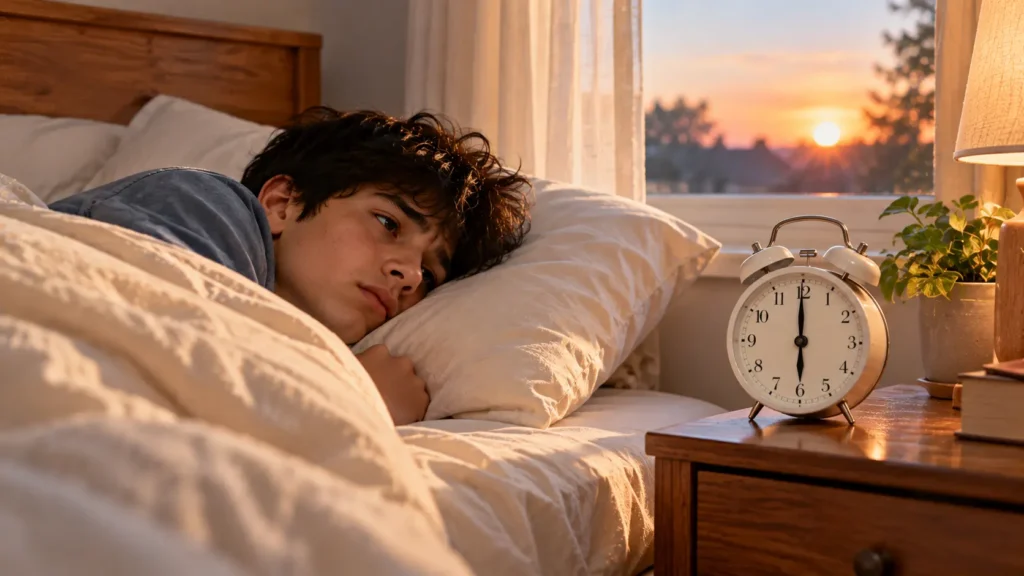
When clocks spring forward, the clock skips from 2:00 a.m. to 3:00 a.m. One hour of sleep disappears from that night. Your body’s internal clock, called the circadian rhythm, does not adjust at the same speed as the clock on the wall.
Research has confirmed sleep disruption around the spring transition. A study using data from 11,780 participants in the UK Biobank found that sleep duration on the Sunday of the spring time change was about 65 minutes shorter than the Sunday one week earlier. That is a real and measurable drop for a single night.
The circadian rhythm is the body’s natural 24-hour cycle. It controls when you feel sleepy and when you feel alert. Suddenly shifting the clock by one hour can make it harder to fall asleep at the new bedtime and harder to wake up in the morning.
Most people adjust within a few days. Those who have irregular sleep schedules or are more sensitive to time changes may take longer to feel normal again.
A few steps that may help around the spring transition:
- Go to bed slightly earlier in the two or three days before the change
- Keep a steady wake time even when you feel tired
- Get exposure to morning light, which can help signal the circadian rhythm to reset
Does Daylight Saving Time Affect Driving and Safety?
Research has found a short-term rise in fatal traffic accidents following the spring DST transition.
One large U.S. study examined 732,835 fatal motor vehicle crashes from 1996 to 2017. The results showed a 6% increase in fatal crash risk in the days right after the spring clock change. Researchers pointed to sleep loss and sudden schedule disruption as possible reasons that driver alertness may drop briefly.
The fall transition, when clocks fall back and most people gain an hour, does not show the same pattern in the data.
Not all studies have found identical results. Research using different methods and data sets has produced mixed findings. The weight of available evidence does suggest a short-term risk during the spring transition, though the effect is not confirmed across every study.
Being well-rested and alert while driving is always a smart practice. Taking extra care in the week after clocks spring forward is a reasonable precaution based on available research.
Does Daylight Saving Time Affect Work and Productivity?
Some research has examined whether the seasonal time change affects how people perform at work.
A 2024 study tracked hourly activity on GitHub as a real-world measure of output. The results showed short-lived daily declines and signs of reduced activity in early working hours that extended into the second week after the DST transition. The study was published in ScienceDirect.
The measured effects were relatively small and temporary. Most people return to their usual work patterns within one to two weeks after the time change. The spring transition appears to produce more of an effect than the fall transition, which aligns with what research shows about sleep loss.
What Is the Difference Between Daylight Saving Time and Standard Time?
Standard time is the base clock setting used during the winter months. DST is the adjusted setting that applies from March through November.
| Feature | Daylight Saving Time | Standard Time |
| When it applies | March to November | November to March |
| Clock setting | Moved 1 hour ahead | Regular base time |
| Evening daylight | Later | Earlier |
| Morning sunrise | Later | Earlier |
During DST, the sun rises and sets about one hour later by clock time. During standard time, sunrise comes earlier in the morning. Some people prefer the evening light of DST. Others prefer the earlier morning light of standard time.
Is It “Daylight Saving Time” or “Daylight Savings Time”?
The officially correct term is daylight saving time, with “saving” as a single word, not “savings.”
“Daylight savings time” with an added “s” is common in everyday speech. Many Americans use it without thinking about it. The formal, legal, and scientific term used by NIST, the U.S. Department of Transportation, the U.S. Naval Observatory, and government sources is daylight saving time.
Both versions are widely understood, and no one will misread your meaning either way. If you are writing a school assignment, a formal report, or an official document, use the singular “saving.”
Common Daylight Saving Time Questions
Did daylight saving time just happen?
The answer depends on when you are reading this. In 2026, DST started on March 8 and ends on November 1. If today’s date falls between those two dates, DST is currently in effect and the spring change already happened. If today is after November 1, the fall change has already occurred. Check the 2026 dates table above to see where we are in the current cycle.
When does daylight saving time end in 2026?
DST ends on November 1, 2026, in areas that observe it. At 2:00 a.m., clocks move back to 1:00 a.m.
Do you lose an hour when DST starts?
Yes. The clock moves from 2:00 a.m. to 3:00 a.m. in spring. That hour is gone from the clock day. Most people get one hour less sleep that night.
Do you gain an hour when DST ends?
Yes. The clock moves from 2:00 a.m. back to 1:00 a.m. in fall, so the 1:00 a.m. hour repeats. Most people get one extra hour of sleep.
Does Arizona observe daylight saving time?
Most of Arizona does not observe DST. The state stays on Mountain Standard Time all year. The Navajo Nation within Arizona does observe DST, which creates local time differences within the state.
Does Hawaii observe daylight saving time?
No. Hawaii stays on Hawaii Standard Time year-round and does not observe DST.
Does DST create more daylight?
No. DST changes when daylight occurs on the clock, not the total amount of daylight. The number of daylight hours in a day is set by the Earth’s position relative to the sun, not by the clock.
Why doesn’t Arizona observe DST?
Most of Arizona opted out because extra evening daylight during the summer increases heat exposure. In a desert climate, longer and hotter evenings are a drawback rather than a benefit.
Is it safe to drive right after clocks spring forward?
Research points to a short-term rise in fatal crash risk in the days after the spring transition. Being well-rested and alert while driving is always the right call, and extra care right after the spring change makes sense.
Now that you understand how daylight saving time works, when the clocks change, and what research says about sleep, energy, and safety, you are better prepared for each seasonal time change. For more practical guides built for students, teachers, and everyday learning, explore CleverPortalUS. You might find our lesson planning guide especially useful for building school routines that hold up even through seasonal schedule changes. If questions around how students learn and adapt interest you, our learning styles guide covers those topics in the same clear, practical format.