The Importance of Informal Education: What It Is and Why It Matters
Most people spend 12 to 16 years inside a classroom. They study mathematics, history, science, and language. They earn certificates and degrees. Yet some of the most important things they ever learn, how to communicate, how to handle conflict, how to be kind, they learn nowhere near a school desk.
This is informal education at work. And its importance is far greater than most people give it credit for.
This article explains what informal education is, why it matters deeply, and how it shapes personal growth, career success, and stronger communities. You will also find research from UNESCO, the European Commission, and the Council of Europe that shows just how much real-world learning affects real lives.
What Is Informal Education?
Informal education is learning that happens outside structured classrooms and organized school systems. It takes place through daily life, through conversations with family members, experiences in the community, time spent at work, and even hobbies pursued for pure enjoyment.
A child learning to bake bread with a grandparent is experiencing informal education. A teenager picking up a second language through online videos is too. So is an adult who learns conflict resolution skills by working through disagreements at a volunteer organization.
Informal education is not the same as non-formal education. Non-formal education is organized and structured but takes place outside traditional schools, such as community workshops or adult literacy programs. Informal education, by contrast, is unstructured and spontaneous. It has no fixed schedule, no grades, and no certificates. Its value shows up in real life, not on paper.
To understand how informal education fits alongside other learning systems, read the full guide on types of education.
Why Is Informal Education Important?
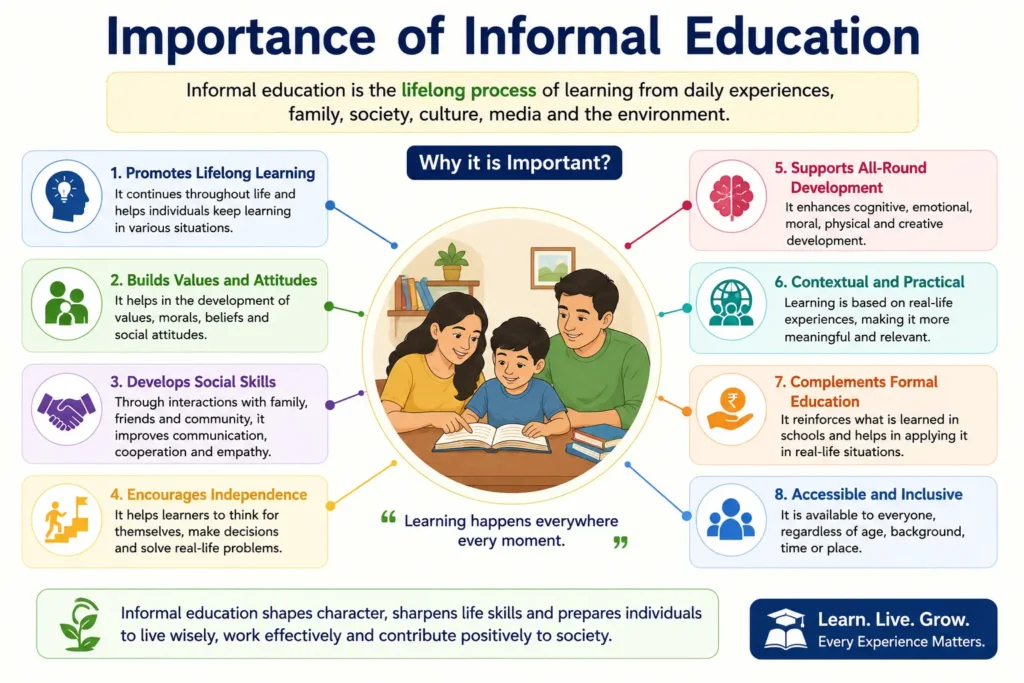
Informal education is important because it builds the practical skills, emotional resilience, and social awareness that formal schooling simply cannot fully teach. It supports lifelong learning, strengthens communities, improves employability, and helps people grow at every stage of life.
The numbers make the case clearly. According to the UNESCO Institute for Lifelong Learning, 739 million young people and adults around the world still lack basic literacy skills. In roughly one-third of all countries, fewer than 5 percent of adults aged 15 and older participate in any formal education or training program. When formal systems fall short or become inaccessible, informal learning fills the gap.
Key reasons informal education matters:
- It builds skills that employers and communities genuinely need
- It supports personal growth beyond academic knowledge
- It reaches people that formal education systems often miss
- It keeps learning alive across every stage of life, not just school years
- It strengthens the return on formal education by helping people apply what they learned
Key Benefits of Informal Education
Personal Development and Self-Awareness
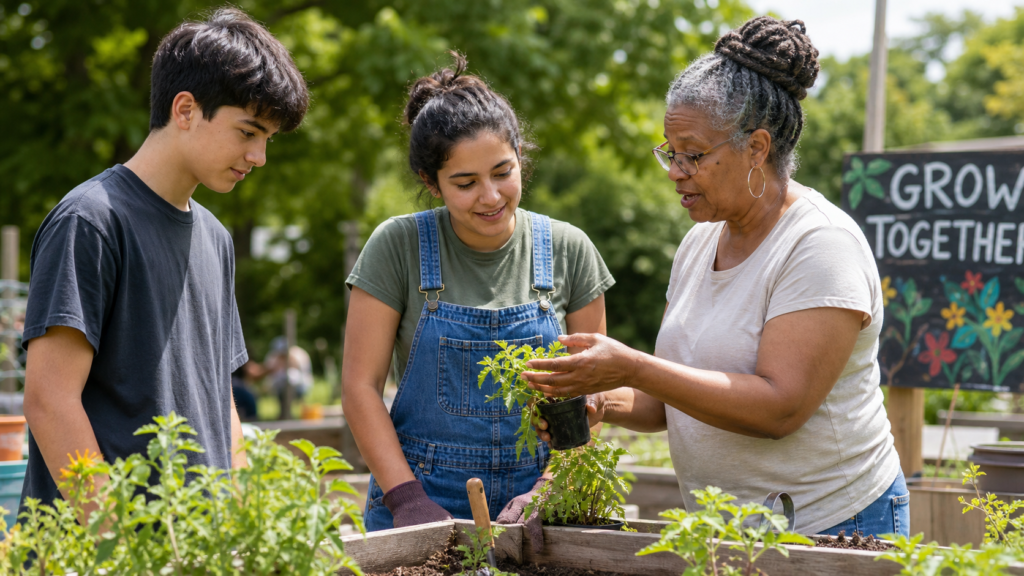
Informal education plays a direct role in shaping who a person becomes. Through real interactions at home, in neighborhoods, at sports clubs, and at work, people develop self-awareness, emotional intelligence, and empathy. These are not skills that come from textbooks.
Research referenced by Japanese Ministry of Health and Welfare studies shows that informal education positively affects motivation, self-actualization, social competence, and mental health. When people learn through lived experience rather than formal instruction, they develop a stronger sense of identity and purpose.
Creativity and Problem-Solving
Without the pressure of grades or performance assessments, informal learning environments give people the freedom to experiment. A child building something from discarded materials is practicing problem-solving. A teenager teaching herself graphic design through free online tutorials is developing creative thinking. These informal experiences often produce the kind of flexible, inventive thinking that structured education struggles to build.
People who engage in informal learning regularly tend to approach challenges with more confidence because they are used to figuring things out on their own terms.
Social Skills and Community Bonds
Much of what makes a community work well comes from informal education. Conversation, negotiation, listening, and cooperation are all learned through everyday social interaction, not through lectures.
The Council of Europe’s desk study on the value of informal education confirms that informal learning enables citizens to combine school, work, and community experience to fully participate in society. When people learn to communicate and collaborate through real-world experience, they form stronger bonds with those around them.
Employability and Career Readiness
Employers frequently say that technical qualifications matter less than they once did. What they want now is communication ability, adaptability, critical thinking, and problem-solving. These are skills mostly built outside formal education.
The European Commission’s Council Recommendation recognizes informal learning as a direct contributor to employability. When a person has managed a volunteer project, navigated a difficult team environment, or learned a new tool through self-directed practice, they bring something valuable to any workplace.
Skills built through informal learning that employers value:
- Clear communication and listening
- Adaptability under pressure
- Practical problem-solving
- Teamwork in unstructured settings
- Self-motivation and initiative
Ethics and Character Building
Moral reasoning is not something most school systems explicitly teach in depth. It is mostly built through experience, through watching how the adults around you behave, through facing the consequences of your own choices, and through learning from community expectations.
The United Nations Office on Drugs and Crime (UNODC), through programs in Kenya and similar initiatives globally, has documented that informal education builds behavioral change and ethical development in ways that formal schooling often cannot reach. When young people learn integrity, respect, and responsibility through lived experience, those values tend to stick.
How Does Informal Education Support Lifelong Learning?

Informal education supports lifelong learning by keeping curiosity active well beyond formal schooling. Unlike classroom learning, it adapts to any stage of life, whether childhood, working adulthood, or retirement, and occurs through ordinary daily experience.
UNESCO’s 2024 Marrakech Framework for Action, adopted by 149 countries, formally recognizes informal learning as a core pillar of building inclusive lifelong learning societies. The framework commits governments to treating informal learning not as a side note but as a genuine part of national education strategy.
Lifelong learning matters because the pace of change in work, technology, and society means that what a person learns in school at age 18 may be outdated by age 30. The people who adapt most successfully are those who never stopped learning, not always in classrooms, but through experience, curiosity, and daily engagement with the world around them.
When informal learning habits are built early, through a family that encourages questions, a community that values stories and traditions, a workplace that supports mentoring, they compound over a lifetime. According to UNESCO, nearly 34 percent of countries spend less than one percent of their education budget on adult learning. Informal channels carry much of the weight that formal systems leave behind.
Real-World Examples of Informal Education
Informal education is not abstract. It is happening around you every day, in ways you might not have thought to label.
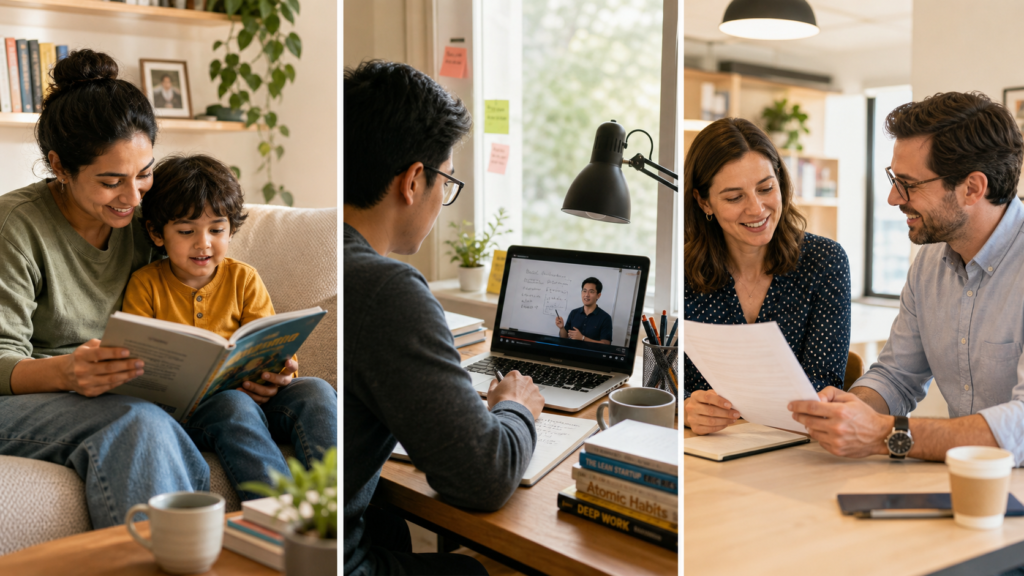
Examples of informal education in daily life:
- A parent teaching a child to ride a bicycle or cook a family recipe
- A workplace mentor sharing knowledge with a newer colleague
- Learning a new language through a mobile app during a daily commute
- Joining a community sports team and learning teamwork, discipline, and respect
- Picking up financial habits by watching how a family handles money
- Volunteering at a local organization and developing leadership and empathy
- Watching educational videos online and exploring topics out of personal curiosity
- Learning cultural traditions, values, and history from older family members
Technology has expanded informal learning significantly in recent years. Research published in 2025 by the International Journal of Science and Advanced Technology points to apps, gamified platforms, fitness trackers with coaching features, and virtual communities as powerful modern tools for self-directed knowledge acquisition. The line between playing and learning has become very thin, and that is a good thing.
How Does Informal Education Compare to Formal Education?
Informal education is not a replacement for formal education. It is a complement. The two work best when they work together.
| Dimension | Formal Education | Informal Education |
|---|---|---|
| Structure | Highly structured, curriculum-based | Unstructured, spontaneous |
| Setting | Schools, colleges, universities | Home, community, workplace, online |
| Assessment | Grades, exams, certificates | No formal assessment |
| Flexibility | Fixed schedule and content | Flexible, learner-driven |
| Primary outcome | Academic qualifications | Practical skills, social competence |
Research shows that informal education actually improves the return on formal education investment in the labor market. Students who grow up in environments rich in informal learning, where adults read with them, where conversations are encouraged, where curiosity is rewarded, tend to perform better in formal schooling too. UK government evaluations of family literacy schemes found positive effects on Key Stage 1 reading scores in children whose families engaged in informal learning together.
The relationship is not competitive. Formal education gives structure and credentials. Informal education gives depth, character, and adaptability. Both matter.
For a closer look at how these systems relate to each other, see the detailed breakdown of formal, informal, and non-formal education differences.
Who Benefits Most from Informal Education?
Every person benefits from informal learning throughout life, but certain groups experience its impact most directly.
Children gain foundational social skills, emotional understanding, and language development through family and community interaction long before they enter a school building. The first years of life are almost entirely defined by informal learning.
Adults re-entering the workforce often rely on skills built through informal experience when their formal credentials feel dated or insufficient. Self-directed learning through reading, online communities, and peer networks becomes their primary path to growth.
Disadvantaged communities with limited access to quality formal schooling depend heavily on informal channels for knowledge acquisition, skill development, and community-based learning. UNESCO’s data on the 739 million adults who lack basic literacy shows how critical informal education is for populations that formal systems have not reached.
Older adults continue learning through social interaction, hobbies, and community participation well into retirement. Informal learning keeps the mind engaged and preserves a sense of purpose and social connection.
Working professionals build leadership, communication, and technical skills through on-the-job experience, mentoring relationships, and professional communities, often far more than through formal training courses.
The Bigger Picture
Informal education is not a backup plan for when formal schooling falls short. It is a parallel system that runs alongside formal education from birth to old age, shaping the parts of a person that grades and diplomas never quite capture.
The practical skills learned at home, the ethical values shaped through community life, the creative thinking born from unstructured play, the career instincts developed through real work experience, all of this is informal education doing its work quietly and continuously.
As the UNESCO Institute for Lifelong Learning and the European Commission both confirm, recognizing and supporting informal learning is one of the most practical steps any society can take toward building educated, adaptable, and connected citizens.
Learning does not stop when a person leaves school. For most people, the most meaningful learning is only just beginning.