Transition in Education: What It Means and Why It Matters
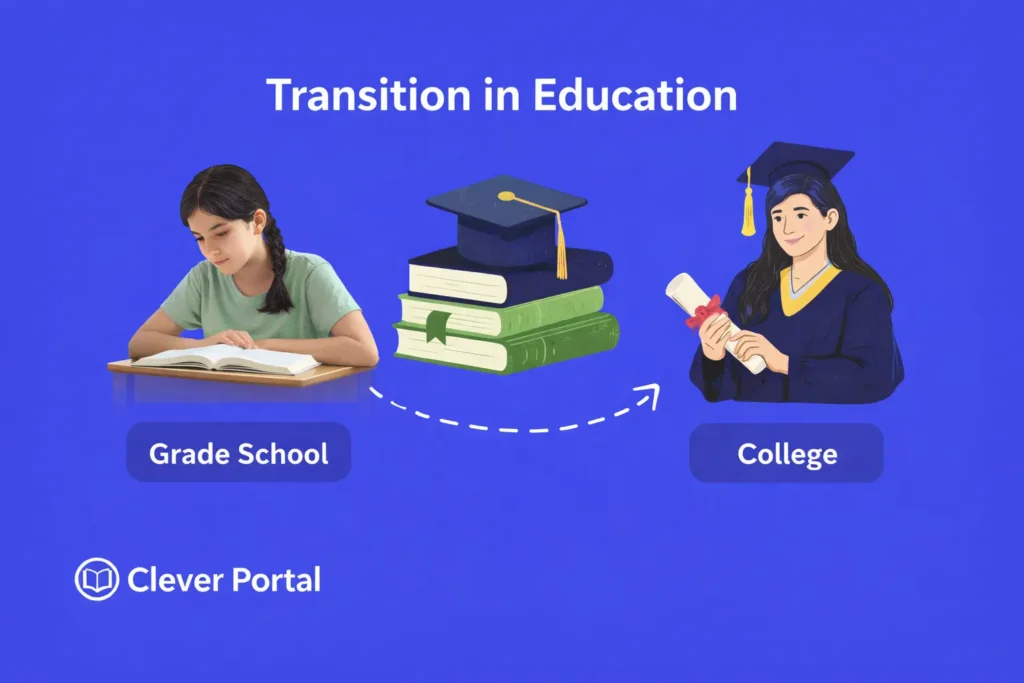
Transition in education refers to the movement of students from one learning stage to another, such as from elementary to middle school, or from high school to college. These shifts affect academic performance and student well-being. Schools, teachers, and counselors each play a key role in helping students move through these changes successfully.
Every student faces moments when everything changes at once. A new school building. New teachers. New classmates. New rules. These moments are called educational transitions, and they shape how students learn, grow, and see themselves as learners.
Research shows that school transitions are among the most disruptive events in a student’s academic life. When schools prepare students well, the impact is manageable. When they don’t, students can fall behind in ways that take years to recover from.
This guide breaks down what transition in education means, the types students go through, how transitions affect learning, and what schools can do to provide real support.
What Is Transition in Education?
Transition in education refers to any major shift a student makes from one learning environment, stage, or setting to another. At its core, it describes the process of moving from one part of the school system to the next.
The most recognized definition, as noted by the Education Glossary, describes an educational transition as “a period of movement from one stage of education to another or from education into the workforce or adult life.” This definition covers a wide range, from the first day a kindergartner walks into a classroom to the moment a high school senior leaves for college.
Transitions can be planned and expected, like moving from fifth grade to middle school. They can also be sudden and unplanned, like when a family relocates mid-year and a student must enroll in a completely new school with no preparation.
Both types carry real weight. Both affect how students perform in class, how they feel about school, and how connected they feel to the people around them. Understanding the full range of what educational transitions look like is the first step toward supporting students through them.
What Are the Main Types of Transitions in Education?
Not all transitions look the same. Students experience several distinct types throughout their K-12 journey, each with its own challenges and support needs.
Structural Transitions
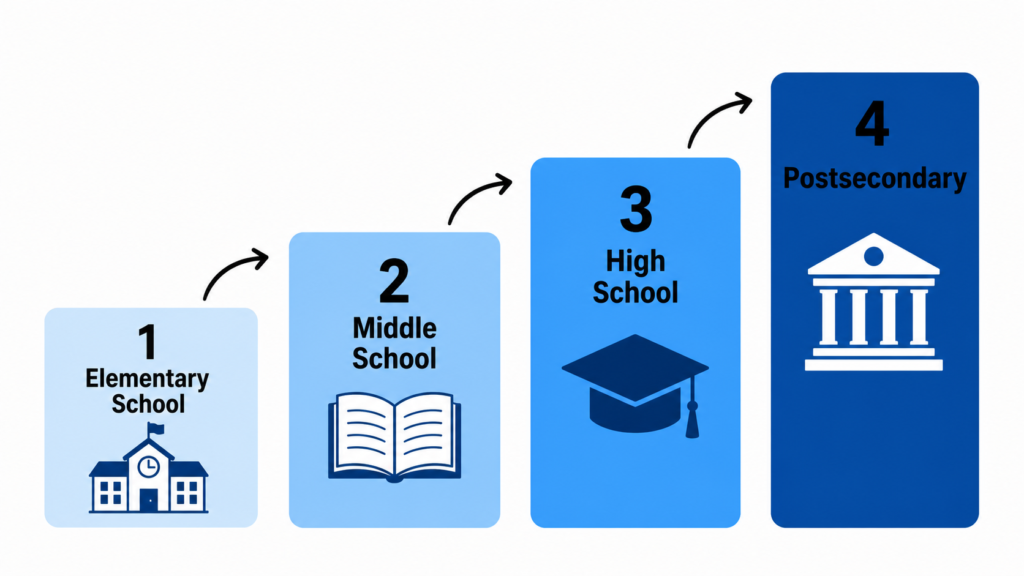
Structural transitions are the big, expected moves between school levels. These are the shifts the entire grade moves through together:
- Elementary to middle school: Students move from a single-classroom structure to rotating teachers, multiple subjects, and a much larger social environment. This is widely considered the most challenging transition in K-12 education.
- Middle school to high school: Academic demands increase sharply. Students begin making choices that affect their postsecondary options, including course selection, extracurriculars, and early career planning.
- High school to postsecondary life: This includes transitions to college, vocational training, military service, or direct employment. It is the most independence-heavy transition a student faces.
Special Education Transitions
Under the Individuals with Disabilities Education Act (IDEA), students with disabilities have specific, legally protected transition rights. Schools must begin formal transition planning no later than age 16 as part of the student’s Individualized Education Program (IEP).
This type of transition planning covers postsecondary education goals, independent living skills, vocational training, and employment readiness.
Digital and Learning Environment Transitions
A newer category has emerged in recent years. When schools move students from in-person to hybrid or fully online learning, students face a digital transition that carries its own academic risks. Without the right tools in place, students lose access to familiar platforms, teachers, and routines.
By 2024, 35% of global schools had migrated from on-premise systems to cloud-based learning platforms, creating new transition challenges for millions of students.
Routine Within-School Transitions
These are the small, daily transitions that happen inside school walls, such as moving between classrooms, switching activities, or adjusting to a new schedule. While less dramatic, these transitions matter most for young learners and students with sensory or behavioral needs.
How Do Educational Transitions Affect Student Performance?
The research on this is clear: transitions carry real academic risk, and schools that underestimate this risk put students in a difficult position.
Academic Impact
A study published in MIT’s Education Finance and Policy journal found that students who moved schools experienced measurable declines in both reading (effect size: -0.041) and mathematics (effect size: -0.072) in the medium-term following their transition. These may seem like small numbers, but they represent real learning loss that compounds over time.
Data from ERIC confirms the same pattern at a larger scale. Structured school-to-school transitions have a statistically significant negative impact on graduation rates across New York State school districts. Students who change schools multiple times face the highest risk.
Social-Emotional Impact
Academic performance is only part of the picture. Students transitioning to a new school often report:
- Lower confidence in their academic abilities
- Difficulty forming new friendships
- Increased anxiety about fitting in
- A weaker sense of belonging to the school community
A review published in PMC (National Institutes of Health) found that mathematics self-concept drops noticeably for high-ability students following a school transition. Students who once felt strong in math can begin to doubt themselves simply because the environment around them changed.
Social-emotional learning (SEL) support during transition periods has been shown to reduce these effects when applied consistently.
Who Is Most Vulnerable During School Transitions?
Not every student experiences transitions the same way. Some groups face significantly higher risk during school changes.
Research from PMC and ERIC points to several student groups that consistently experience greater disruption:
- Students from lower-income families: These students have fewer social and material resources to rely on during a move. They are more likely to change schools mid-year and less likely to receive targeted transition support.
- Students with disabilities: Without proper IEP transition planning, students receiving special education services can lose access to accommodations and support services during a school move.
- English language learners (ELL): A school transition adds a language barrier on top of an already unfamiliar environment.
- Boys: Research shows that boys experience steeper academic declines following school transitions compared to girls, particularly in reading performance.
- Mid-year movers: Students who change schools outside of the natural August-September window face the highest disruption because they arrive after classroom routines and social groups are already formed.
Understanding who is most at risk allows school counselors, teachers, and administrators to direct support where it is needed most rather than treating all transitions equally.
How Can Schools Support Students Through Transitions?
Good transition support does not happen by accident. It requires planning, communication, and consistent follow-through from everyone in the school community.
For Teachers
- Start early. Begin preparing students for the next school level at least one semester before the move. This includes discussions about what to expect, academic skills that will be needed, and how to ask for help.
- Build social-emotional skills. Students who can name their feelings, manage stress, and communicate with adults adapt to new environments faster. Embedding SEL into daily instruction pays off during transitions.
- Share academic records proactively. When a student moves to a new school, their receiving teacher should have clear information about academic strengths, learning needs, and any ongoing interventions.
- Connect students to digital tools early. If the student will be using a new learning platform, give them time to practice with it before the switch. Platforms that use a single sign-on portal ensure students can access their existing tools without starting from scratch.
For School Counselors
- Create transition groups. Small group sessions where students heading into middle or high school can ask questions, share concerns, and meet future teachers reduce anxiety before the move happens.
- Identify high-risk students. Use academic data, attendance patterns, and teacher input to identify which students need individual transition check-ins.
For Administrators
- Build school-to-school communication channels. The sending school and the receiving school should share information about incoming students, especially those with IEPs or documented learning needs.
- Run orientation programs. A single orientation day before the school year starts can reduce social anxiety and help students build at least one connection before the first official day of school.
Research on micro-learning approaches shows that consistent, short-burst preparation activities can improve knowledge retention by up to 80% compared to single-session orientations. Spreading transition preparation across multiple sessions works better than cramming it into one event.
What Is Transition Planning in Special Education?
Transition planning in special education is a formal, legally required process under the Individuals with Disabilities Education Act (IDEA). It is not optional, and it is not a formality. It is a structured plan built into a student’s IEP that outlines what life after high school will look like.
When does it start? IDEA requires that transition planning be included in the IEP no later than the first IEP in effect when the student turns 16. Some states require it to begin at 14.
What does an IEP transition plan include?
- Postsecondary education goals: Will the student attend a two-year college, four-year university, or vocational program?
- Employment goals: What type of work does the student want to pursue? What skills do they need to get there?
- Independent living skills: Does the student need support learning to manage a household, budget, or transportation?
- Transition services: These are the specific activities, courses, and programs the school will provide to help the student reach their goals.
The student must be an active participant in creating this plan. Families are also key contributors. A transition plan written without the student’s input is far less likely to reflect their actual goals or lead to real outcomes.
According to the Indiana Institute on Disability and Community, the best transition plans are “outcome-oriented” and built on a full picture of the student’s strengths, preferences, interests, and needs.
How Is Digital Transformation Changing Education Transitions?
A new kind of transition has emerged over the past several years. When schools upgrade their technology systems, switch learning platforms, or move students from in-person to hybrid learning, they create a digital learning transition that carries real academic risk if not handled carefully.
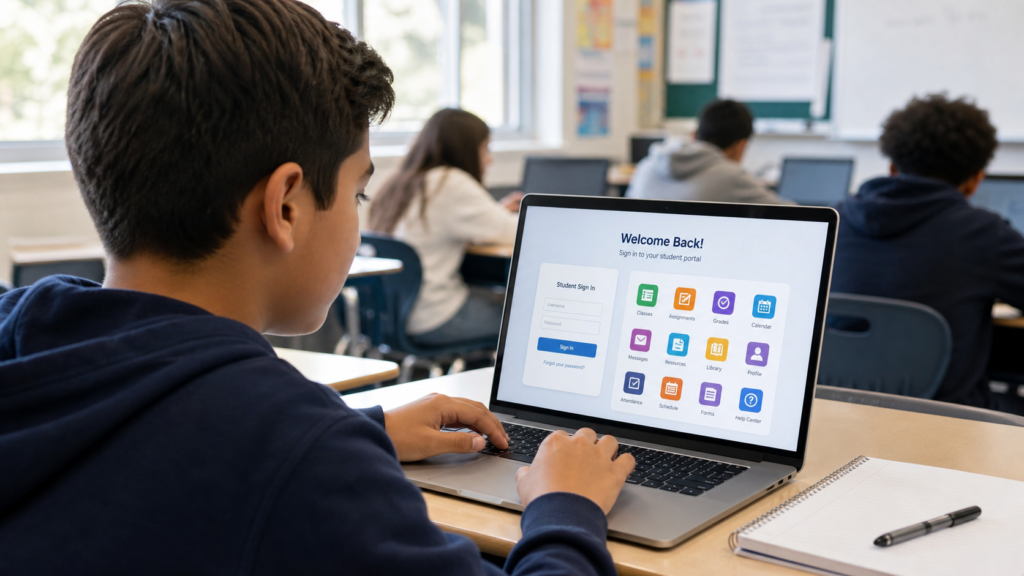
The numbers tell a clear story. By 2024, 35% of schools globally had moved from on-premise systems to cloud-based learning management systems. At the same time, 54% of higher education institutions reported plans to increase their digital infrastructure investment within two years.
Google for Education now reaches students across 1,000 or more U.S. higher education institutions, and its tools are used by millions of K-12 students daily.
When students switch schools, they often lose access to the digital tools they were using before. Bookmarks disappear. App logins stop working. Learning progress is lost. This gap in learning continuity is one of the most overlooked parts of student transition planning.
Schools that use a single sign-on (SSO) portal address this problem directly. Platforms like Clever Portal ensure that when a student moves from one school to another, their digital learning tools move with them. Students keep access to the same apps, assignments, and resources without starting over.
This matters most for students in lower-resource districts where digital tools represent a significant portion of daily instruction. Losing access to those tools during a transition is not just inconvenient. It widens an existing learning gap.
Key Terms and Concepts in Educational Transitions
| Term | What It Means |
|---|---|
| Structural transition | A planned move between major school levels (elementary, middle, high school, postsecondary) |
| School mobility | An unplanned, often family-driven school change during the academic year |
| IDEA | Individuals with Disabilities Education Act — federal law governing special education transition rights |
| IEP | Individualized Education Program — a written plan for students receiving special education services |
| Postsecondary transition | The move from high school to college, vocational training, or employment |
| SEL | Social-emotional learning — skills that help students manage emotions and relationships during change |
| Learning continuity | Maintaining uninterrupted access to learning tools and instruction across school changes |
| SSO portal | Single sign-on platform that allows students to access all digital learning tools with one login |
Helping Students Through Every Transition
School transitions are not problems to be solved. They are normal, expected parts of a student’s educational journey. But they carry real risk for real students, and that risk grows when schools treat transitions as automatic rather than as moments that need active preparation and support.
Teachers, counselors, and administrators each have a role to play. So does the technology students rely on every day.
If your school or district is working to reduce transition-related disruption, making sure students retain access to their digital learning tools is one of the most practical steps you can take. Clever Portal helps schools maintain learning continuity from day one, so students spend less time setting up and more time actually learning.
Explore how Clever Portal supports students, teachers, and districts through every stage of the K-12 journey at cleverportalus.com.
Frequently Asked Questions
What is the difference between a school transition and school mobility?
A school transition is a planned move that happens at a natural stage break, like moving from elementary to middle school. School mobility is an unplanned mid-year move caused by family relocation or other circumstances. Mobility carries higher academic risk because students arrive after routines are established and social groups are formed.
At what age does special education transition planning begin?
Under IDEA, formal transition planning must be included in a student’s IEP no later than age 16. Some states begin this process at age 14. The plan covers postsecondary education, employment, and independent living goals, and the student must be directly involved in creating it.
Why do students struggle more during elementary to middle school transitions?
This transition involves multiple simultaneous changes: a new building, multiple teachers instead of one, a larger peer group, higher academic expectations, and puberty-related social pressures. These changes happen all at once, which makes it harder for students to adjust compared to other transitions that involve fewer simultaneous shifts.
Can digital tools help reduce transition-related learning disruption?
Yes. When students maintain access to the same learning platforms and tools before and after a school move, the disruption to daily instruction is significantly reduced. Schools using SSO portals and cloud-based systems create a more consistent learning experience across transitions.
What role does a school counselor play in transition support?
School counselors identify at-risk students, run transition preparation groups, coordinate communication between sending and receiving schools, and provide one-on-one support during high-stress transitions. Their role is especially important for students with IEPs, students new to a district, and students moving during mid-year.
How does learning continuity connect to student outcomes?
When students lose access to familiar routines, tools, and support systems during a school change, their academic performance drops. Maintaining learning continuity, meaning consistent access to instruction, digital tools, and academic records, directly reduces the achievement gap that often follows a transition.