Formal Informal Non Formal Education: A Complete Guide
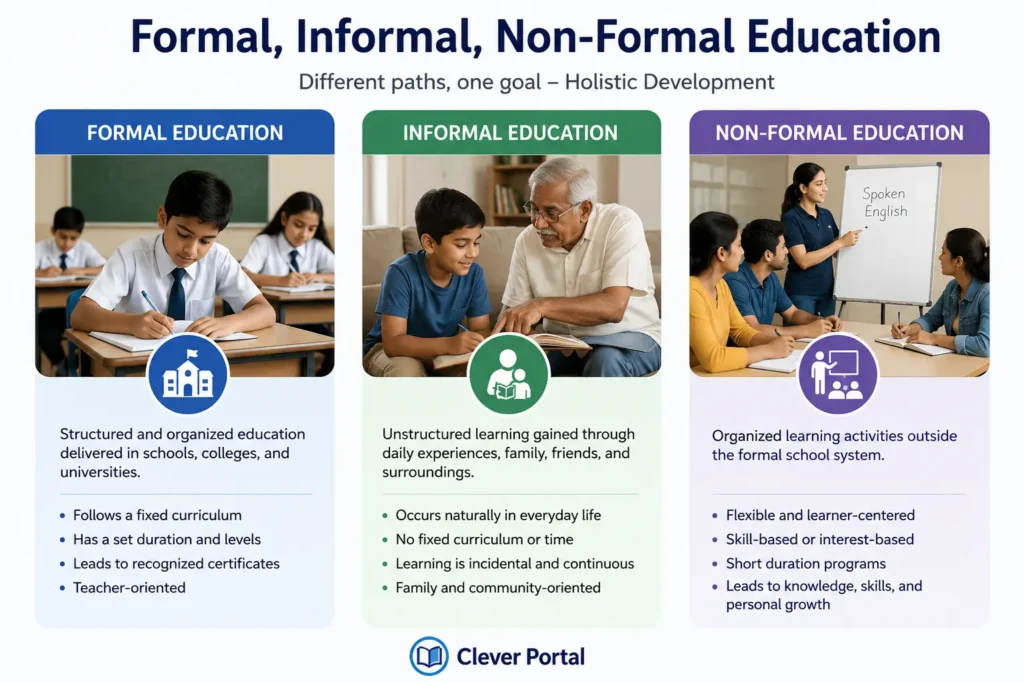
Most people think school is the only place where learning happens. But the truth is, you learn something new every single day, at home, at work, on the streets, and even while watching a video online. That learning has a name. In fact, it has three names: formal informal non formal education.
These three types of education exist all around you. UNESCO, the world’s leading education body, recognizes all three as part of a complete learning system. Once you understand what each one means and how they are different, you will see learning in a completely new way.
This guide breaks down each type clearly, compares them side by side, and explains why all three work together to shape lifelong learning.
What Are the Three Types of Education?
Education does not only happen inside a school building. Philip Coombs, an education economist, first described these three distinct forms of education back in 1968. His work, developed further with Manzoor Ahmed in 1974, gave the world a clear way to think about all the places where learning takes place.
The three types of education are:
- Formal education – the structured school and university system
- Non-formal education – organized learning that happens outside school
- Informal education – everyday, unplanned learning from life experiences
Each type has its own setting, style, and purpose. Together, they make up what UNESCO calls the full spectrum of lifelong learning.
To explore all the ways learning is classified, read our overview of the types of education.
What Is Formal Education?
Formal education is the structured, curriculum-based learning system that runs from primary school through university. It follows a set plan, is delivered by qualified teachers, and leads to recognized certificates or degrees. Under the ISCED 2011 classification (International Standard Classification of Education), formal education covers Levels 0 through 8, from early childhood programs all the way to doctoral degrees.
This is the kind of education most people are most familiar with. It is organized by the government or accredited institutions and is compulsory in the early years in most countries.
Characteristics of Formal Education
- Takes place in schools, colleges, universities, and vocational institutions
- Follows a set national curriculum with defined learning goals
- Is delivered by trained, qualified teachers or professors
- Is age-graded, meaning students move through levels based on age and performance
- Leads to officially recognized credentials such as certificates, diplomas, and degrees
- Is assessed through exams, assignments, and standardized testing
Advantages: Clear qualifications, structured progression, social development, and recognition by employers and institutions worldwide.
Limitations: Can be rigid, expensive, and not accessible to everyone, especially in rural or low-income communities. The Cambridge Assessment research review notes that formal learning is “organized through the curriculum within the broader field of education,” which also means it has less room for flexibility.
What Is Informal Education?
Informal education is the lifelong, unplanned process through which people learn from everyday experiences. It has no fixed curriculum, no formal teacher, and no certificate at the end. Yet it shapes your values, attitudes, and practical skills every single day.
According to infed.org, citing Dierking and colleagues, informal education is “voluntary, self-directed, lifelong, and motivated mainly by intrinsic interests, curiosity, exploration, and social interaction.” You do not choose to sit down for a lesson. The learning just happens naturally.
Examples of Informal Education in Daily Life
- Learning to cook by watching a parent or grandparent
- Picking up a language by spending time with native speakers
- Understanding money management from personal experience
- Learning social skills by interacting with friends and peers
- Reading books, articles, or watching documentaries out of personal interest
- Observing workplace behaviors and professional norms on the job
- Learning cultural traditions through family and community life
Informal learning builds soft skills like communication, critical thinking, and cultural awareness. These are skills that no school timetable can fully cover. The importance of informal education in everyday life goes far beyond what most people realize. It is happening even when you are not aware of it.
What Is Non-Formal Education?
Non-formal education sits between the other two types. It is intentionally organized and goal-directed, but it takes place outside the traditional school system. This is the type most commonly misunderstood. People often confuse it with informal education, but they are not the same thing.
UNESCO defines non-formal education as “institutionalized, intentional and planned by an education provider.” The key word is intentional. Unlike informal learning, someone has planned this experience with a learning goal in mind. Unlike formal education, it does not always lead to a nationally recognized degree, and it is far more flexible in its structure, schedule, and who it serves.
Characteristics of Non-Formal Education
- Organized and planned with specific learning objectives
- Takes place outside traditional school systems
- More flexible in schedule, age requirements, and curriculum design
- May or may not lead to a formal certificate or qualification
- Often targets adults, working professionals, or marginalized groups
- Can be run by NGOs, community organizations, employers, or online platforms
Examples of Non-Formal Education
- Adult literacy and numeracy programs
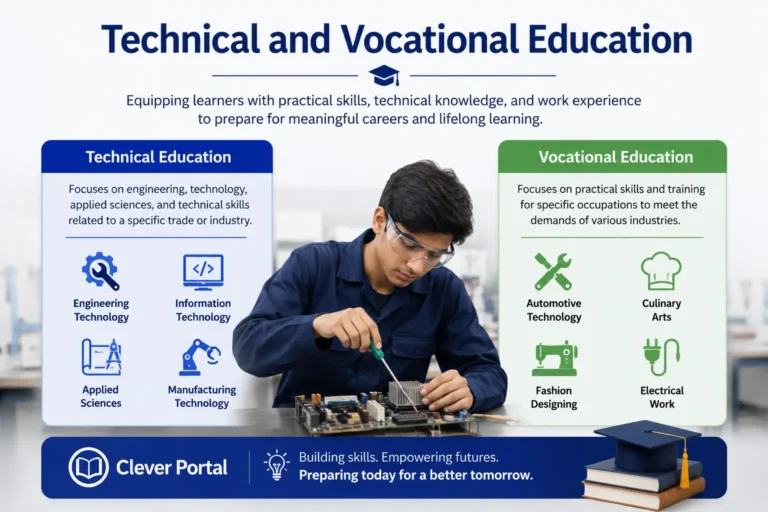
- Community-based vocational training workshops
- Language classes at a private school or community center
- Youth club programs and life skills training
- Online certificate courses such as MOOCs and similar platforms
- Sports coaching programs with structured training plans
- NGO-run programs for women’s empowerment or rural skill-building
According to the UNESCO Institute for Lifelong Learning (UIL), non-formal learning environments include community learning centers (CLCs), adult learning centers, libraries, and study circles. These are all settings where organized learning happens without a school bell.
The International Journal of Education (2025) confirms that non-formal education is more flexible in learning methods and curriculum design, and it often serves as a practical solution for people who cannot access the formal school system.
Formal vs. Informal vs. Non-Formal Education: Key Differences
Here is a clean side-by-side comparison of all three types. This is the clearest way to see how they are different from one another.
| Feature | Formal Education | Non-Formal Education | Informal Education |
|---|---|---|---|
| Structure | Highly structured, curriculum-based | Semi-structured, goal-oriented | Unstructured and spontaneous |
| Setting | Schools, colleges, universities | Community centers, NGOs, online platforms | Home, workplace, social settings |
| Intent | Intentional and compulsory in early years | Intentional | Often unintentional |
| Facilitator | Qualified teachers or professors | Trainers, mentors, community facilitators | No formal facilitator |
| Certification | Yes – degrees, diplomas, certificates | Sometimes – certificates of completion | No certification |
| Age Flexibility | Age-graded and mostly structured by age | No fixed age requirement | No restrictions at all |
| Cost | Government-funded or tuition-based | Variable and often lower cost | Usually free |
| Examples | Primary school, university, vocational college | Adult literacy programs, MOOCs, workshops | Family conversations, personal reading, travel |
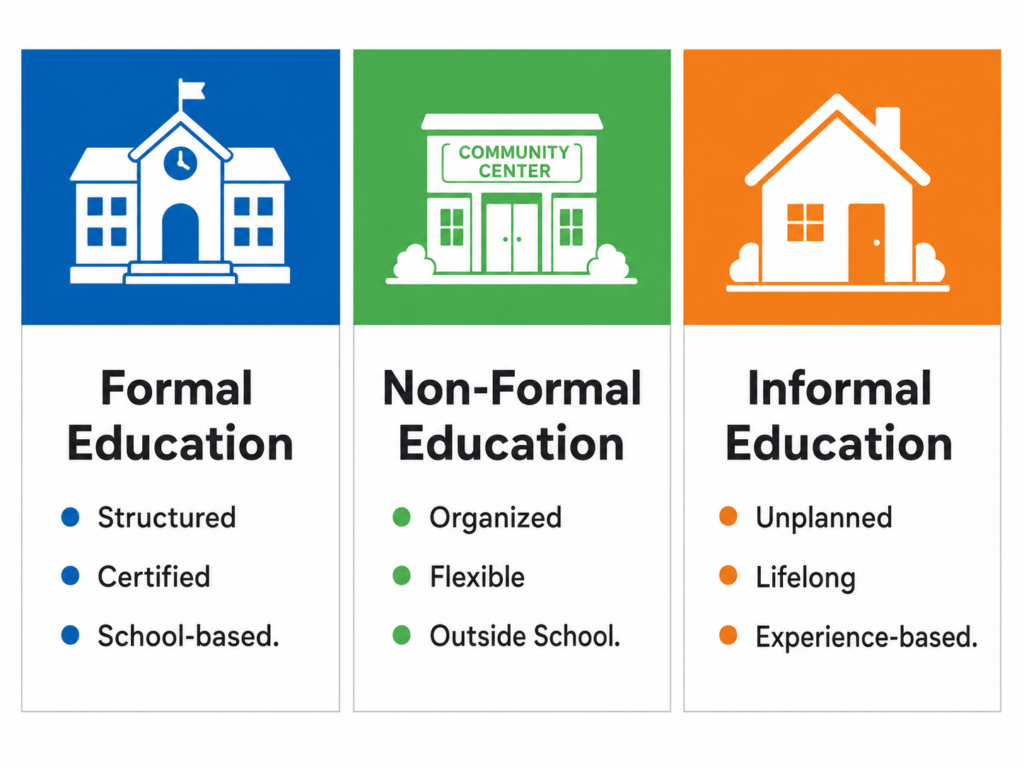
The biggest confusion most people have is between non-formal and informal education. The difference is straightforward. Non-formal education is planned by someone with a goal. Informal education is not planned by anyone. It just happens through life.
Why Are All Three Types of Education Important?
No single type of education is enough on its own. Formal education gives you the credentials employers need. Non-formal education fills the gaps that schools cannot cover. Informal education builds the human skills that no classroom can fully teach. All three work together as part of a complete lifelong learning system.
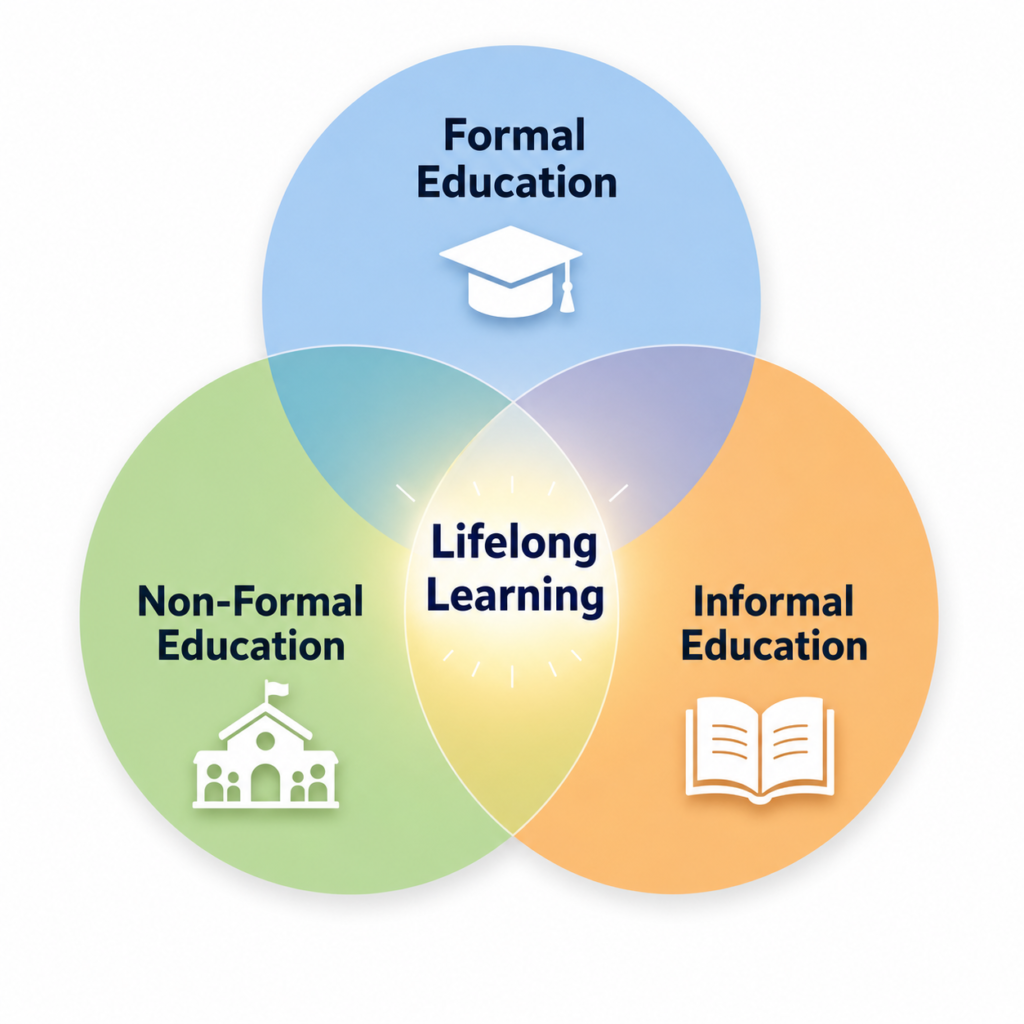
UNESCO’s Higher Education Global Data Report states clearly that “each person’s learning trajectory involves innumerable formal and informal learning experiences.” You cannot separate them. A child learns to read at school (formal), takes a community art class on weekends (non-formal), and picks up empathy and problem-solving at home (informal), all at the same time.
CEDEFOP, the European Centre for the Development of Vocational Training, highlighted in 2025 that millions of people across Europe possess valuable skills that are never recognized because those skills were gained outside the formal school system. This is a direct argument for taking all three types of education seriously.
SDG 4, the United Nations’ Sustainable Development Goal for Quality Education, specifically calls for inclusive and equitable quality education and the promotion of lifelong learning opportunities for all. That goal cannot be reached through formal schooling alone.
How Non-Formal Education Is Growing in 2025 and 2026
Non-formal education is getting more attention from governments, researchers, and international organizations than at any point in recent history. Several important shifts are driving this growth.
Digital access has changed everything. Online bootcamps, structured video courses, skill-based certificate platforms, and community webinars are all forms of non-formal education that did not exist at this scale ten years ago. Technology has made it easier than ever to access organized learning outside a school building, according to research published in Frontiers in Education and cited in Sage Journals (2025).
Europe is building recognition systems. CEDEFOP held a major 2025 event called Validation of Non-Formal and Informal Learning: Moving Forward, focused on how countries can officially recognize skills gained outside school. This is a policy shift with real consequences for workers and learners everywhere.
UNESCO’s 2025 World Education Statistics pointed out that non-formal education data is still underrepresented in local education planning. In many countries, the contributions of the non-formal sector remain invisible in government reports, even though millions of people rely on it for basic skill-building.
Non-formal education as a response to social problems is also growing in academic research. A 2025 Sage Journals publication focused on how non-formal programs are being used to address inequity, poverty, and access barriers where formal schooling has not been able to reach.
Key trends to watch:
- Blurring lines between non-formal and informal learning through digital platforms
- Growing validation frameworks in Europe and beyond
- Increased NGO and employer investment in structured non-formal programs
- Rising demand for adult learning and reskilling programs across the globe
Why These Three Types Work Together
Formal, non-formal, and informal education are not competing systems. They are three complementary pathways that work together across a person’s entire life.
A student might attend a formal university program, take a non-formal coding bootcamp on the side, and learn negotiation skills informally through workplace experience. All three types contribute to that person’s growth. One does not cancel out the other.
Participation data tracked by Our World in Data and UNESCO UIS shows that adults in most countries combine formal and non-formal education throughout their working lives, not just in their early school years. Lifelong learning is not a metaphor. It is a measurable pattern that shows up in data year after year.
Structured learning through schools gives you the foundation. Community-based learning through non-formal programs fills in the gaps. Self-directed learning through informal experience keeps you growing long after your last exam.
Final Thoughts
Understanding formal informal non formal education is not just an academic exercise. It is a practical way to see how learning works in real life.
You probably use all three types every week without realizing it. You read a textbook (formal), complete an online skills course (non-formal), and pick up a new habit from someone you respect (informal). Each of these experiences builds on the other.
The goal of any complete education is not to master one type. The goal is to use all three wisely. Schools teach you how to think. Community programs teach you how to apply skills. Life teaches you how to adapt. When you understand these three pathways clearly, you can make better choices about your own learning, and help others do the same.
For a deeper look at how these pathways connect, explore our full guide on the types of education and learn more about the lasting value of the importance of informal education.