Lifelong Learning: What It Is, Why It Matters, and How to Build the Habit
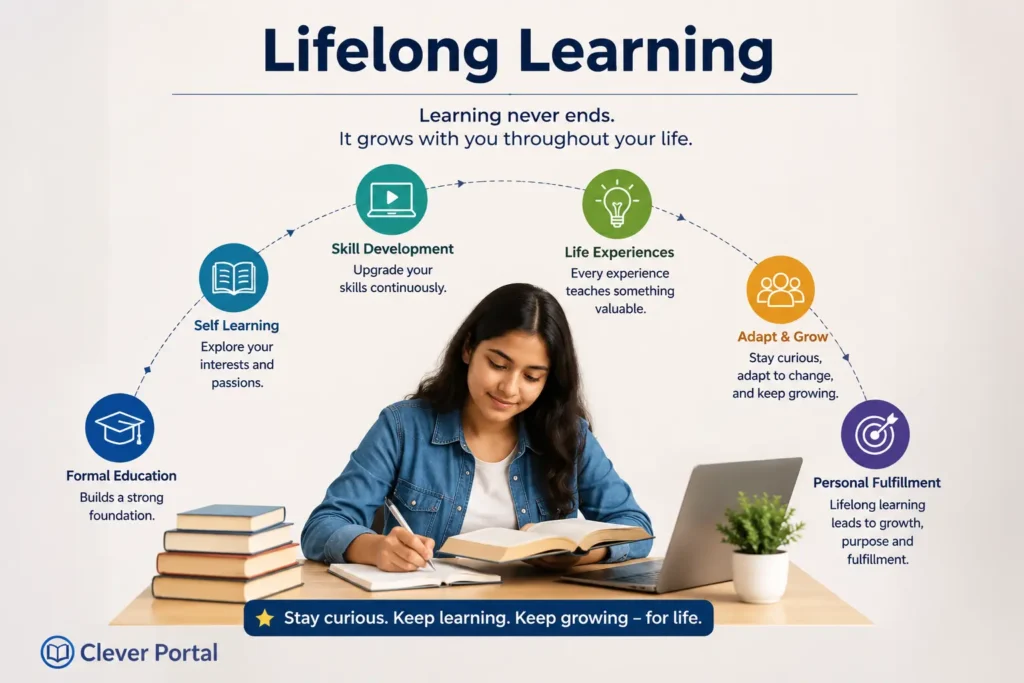
Lifelong learning is the ongoing, voluntary pursuit of knowledge and skills across all stages of life. It goes far beyond school or college. It covers formal courses, workplace training, and everyday self-directed experiences. Research shows it improves career adaptability, cognitive health, and personal wellbeing. With AI reshaping job markets around the world, continuous learning has become a life skill everyone needs. The OECD identifies will, skills, and access as its three core building blocks.
Most people think learning ends the day they leave school. But that idea is one of the biggest myths in modern life.
About 80 percent of adults feel the need to keep expanding their knowledge, yet only around 10 percent are actively doing so. That gap is exactly why lifelong learning matters so much right now. In 2025 and 2026, with artificial intelligence changing industries faster than ever, the ability to keep learning is no longer optional. It is one of the most important skills a person can build.
This guide explains what lifelong learning really means, why it matters for individuals and for society, what types of lifelong learning exist, and how anyone can start building the habit today.
What Is Lifelong Learning?
Lifelong learning is the ongoing, self-motivated pursuit of knowledge, skills, and understanding throughout a person’s entire life. It does not stop after high school or college. It continues through every stage of life, from early childhood all the way through retirement.
UNESCO defines lifelong learning as a framework for human development that supports growth at every stage of life. It is not limited to classrooms or textbooks. A person who reads books every week, watches educational videos, picks up a new hobby, or takes an online course is already practicing lifelong learning.
The concept covers three broad channels: formal education (like degrees and certified courses), non-formal education (like workplace training and community workshops), and informal learning (like reading, podcasts, or learning from daily experiences). Most lifelong learning actually happens informally, even when people do not realize they are doing it.
Why Is Lifelong Learning Important?
The world is changing fast. Jobs that existed ten years ago are disappearing, and new ones are appearing that did not exist before. Traditional education simply cannot keep up with that pace on its own.
The OECD Education Policy Outlook 2025 identified lifelong learning as a strategic priority across 35 countries, backed by more than 230 policies. Governments around the world are investing in it because they understand that a population that keeps learning is more innovative, more adaptable, and more resilient.
On a personal level, lifelong learning protects employability. A report from Santander’s Tomorrow’s Skills study in 2025 found that 38 percent of adults believe the training they received before entering the job market has not been useful in their actual careers. That number highlights a major problem with relying only on formal education.
Continuous learning bridges this gap. It allows people to update their skills as the world changes, rather than waiting for a new degree program to catch up with reality. For those who want to build a deeper understanding of how learning systems are structured, exploring the different types of education is a great starting point.
What Are the Benefits of Lifelong Learning?
The benefits of continuous learning touch every area of life. They are not only about career growth. They cover personal development, mental health, and the health of whole communities.
Benefits for Individuals
People who commit to ongoing knowledge acquisition and skill development gain significant advantages in daily life:
- Career adaptability: Lifelong learners stay competitive in the job market by upskilling and reskilling as industries evolve.
- Better cognitive health: Research shows that continuous mental activity helps maintain brain function, improve memory, and reduce the risk of cognitive decline. Learning keeps brain cells working at strong levels throughout life.
- Greater self-confidence: Gaining new skills builds self-esteem and gives people a stronger sense of purpose and competency.
- Renewed motivation: Learning something new brings a fresh sense of excitement and energy that spills over into other areas of life.
- Stronger soft skills: Communication, problem-solving, creativity, and adaptability all improve naturally through continuous learning experiences.
A study from the UPCEA Global Lifelong Learning Survey in 2025 found that 35 percent of learners are motivated by skills development, 34 percent by personal growth, and 23 percent by enjoyment. These are not career-only motivations. They are deeply personal ones.
Benefits for Society
The positive effects of continuous education scale up far beyond the individual. When communities embrace a learning culture, the results are felt across whole societies:
- Innovation and economic growth: Workforces that keep learning drive new ideas, stronger businesses, and healthier economies.
- Reduced inequality: Access to ongoing learning helps bridge gaps between different groups, especially those with limited access to formal education.
- Aging workforce readiness: UNESCO projects that by 2050, the number of people over 65 will exceed the number of young people globally. Keeping older adults engaged in learning prepares them for longer, more fulfilling lives.
- Democratic participation: People who continue to learn are better informed and more engaged in civic life.
- Sustainable development: Lifelong learning supports the United Nations Sustainable Development Goal 4, which calls for inclusive and equitable quality education for all.
For more on how education systems support these broader goals, the concept of universal education helps explain the bigger picture.
What Are the Types of Lifelong Learning?
Not all learning looks the same. Lifelong learning happens in many different forms and settings. Understanding the types helps people recognize the learning they are already doing and find new ways to grow.
| Type of Learning | Description | Real-Life Examples |
| Formal Learning | Structured, accredited, institution-based | University degrees, professional certifications, online diploma courses |
| Non-Formal Learning | Organized but not officially accredited | Workplace training, community workshops, language classes, skill seminars |
| Informal Learning | Unstructured, self-directed, everyday | Reading books, watching educational videos, listening to podcasts, hobbies |
Most lifelong learning happens in the informal category. When someone listens to a podcast during a morning walk, reads a book about history, or learns a new cooking technique from a video, that is informal lifelong learning in action.
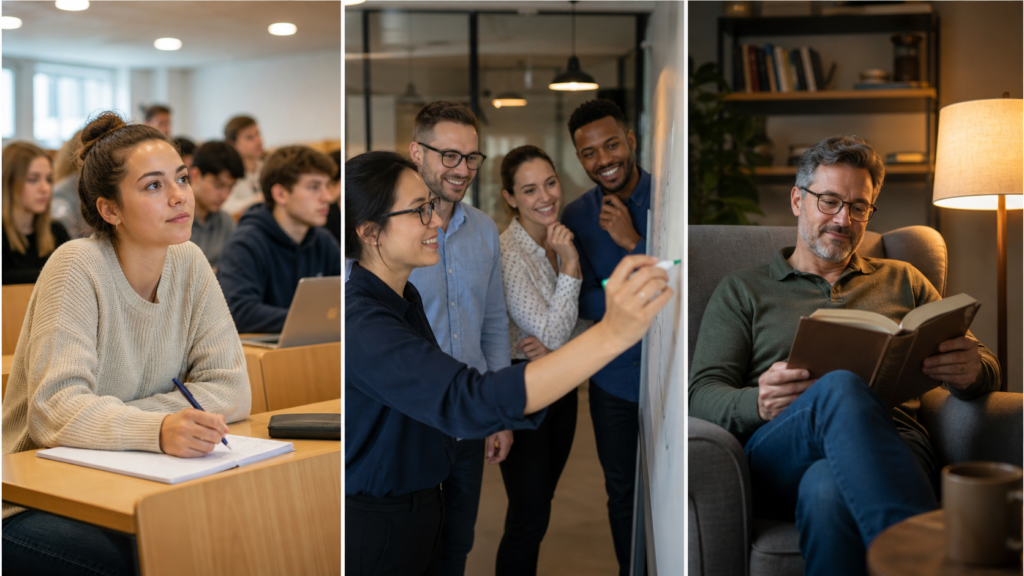
Self-directed learning is a key principle here. Rather than waiting for an employer or institution to provide training, lifelong learners take the initiative to spot their own knowledge gaps and fill them. This autonomy makes the learning process faster, more personal, and more effective.
What Is the Lifelong Learning Mindset?
Knowing what lifelong learning is and actually building the habit are two different things. The mindset behind it matters just as much as the methods.
The OECD identifies three pillars that make continuous learning work for real people. The first is “will,” which means the inner motivation and curiosity to want to learn. The second is “skills,” meaning the ability to find, evaluate, and apply new knowledge. The third is “means,” which covers the practical factors like time, money, and access to resources.
Of these three, the “will” pillar is the starting point. Without genuine curiosity and a sense of purpose, even the best tools and most available time will not produce consistent learning habits.

People with a strong growth mindset tend to share a few common traits:
- They stay curious and ask questions about things they do not fully understand.
- They reflect on their experiences and look for lessons in both success and failure.
- They seek feedback regularly instead of waiting for annual reviews or assessments.
- They set small, specific learning goals rather than vague intentions like “learn more.”
- They connect new knowledge to things they already know, which helps it stick.
Building this mindset does not require hours each day. Even 15 to 20 minutes of focused, intentional learning done consistently adds up to significant growth over months and years.
How Does Lifelong Learning Connect to Societal Progress?
Lifelong learning is not just a personal tool. It is a pillar of how societies grow, adapt, and care for their members.
UNESCO’s 2026 education data shows that global youth literacy sits at around 93 percent and adult literacy at around 88 percent. While these numbers represent real progress, they also reveal that persistent gaps remain in many regions. Millions of adults around the world still lack the foundational skills needed to engage in continuous learning.
The OECD Education Policy Outlook 2025 documents how 35 countries are actively working to close these gaps through more than 230 education policies targeting everything from early childhood development to adult reskilling programs. This lifecycle approach recognizes that learning must be supported at every age, not just during school years.
When societies invest in widespread learning culture, they build greater resilience against economic shocks, technological disruption, and demographic change. Communities with higher rates of adult education tend to have lower unemployment, stronger civic engagement, and better public health outcomes.
Barriers like geographic isolation, income inequality, and digital divides still prevent many people from accessing these benefits. Addressing those barriers is one of the most important education challenges of the coming decades. For a broader look at how access connects to educational equity, universal access to education provides useful context.
What Role Does AI Play in Lifelong Learning Today?
Artificial intelligence is changing lifelong learning in two important ways. First, it is making continuous skill development more urgent. Second, it is making continuous learning more accessible.
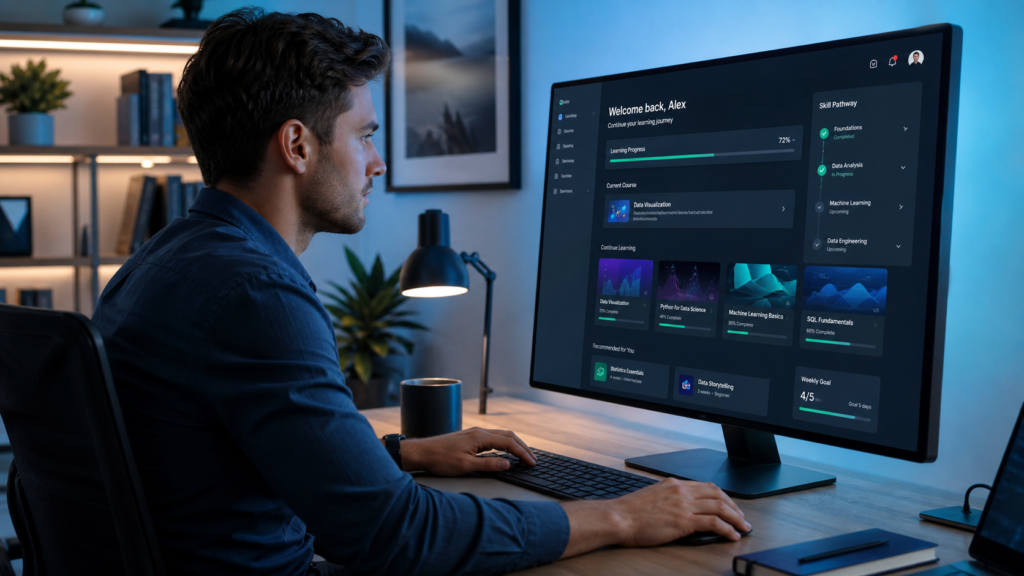
On the urgency side, AI is reshaping entire job categories faster than traditional education can respond. A feature from The Daily Star in 2025 described lifelong learning as the key to staying relevant in the age of AI. Workers who keep building new skills are far better positioned than those who stop learning after their initial qualifications.
On the access side, AI-powered learning platforms can now personalize the learning experience in ways that were not possible before. These tools identify a learner’s knowledge gaps, recommend relevant resources, and provide real-time feedback on progress. This makes learning faster, more targeted, and less frustrating for everyone.
The global lifelong learning and adult education market reflects this shift. It was valued at around 58.2 billion dollars in 2026 and is projected to grow to 88.9 billion dollars by 2034, driven largely by digital and AI-enabled learning tools.
What Barriers Prevent People from Lifelong Learning?
Despite all of its benefits, active participation in lifelong learning remains surprisingly low. Only about 10 percent of adults globally are engaged in it on a regular basis. That gap between awareness and action is caused by a set of very real barriers.
The OECD’s “Means” framework identifies the practical obstacles that stop people from learning even when they want to:
- Time constraints: Busy work schedules, caregiving responsibilities, and daily demands leave many adults feeling like they have no time to study or practice new skills.
- Financial barriers: Quality courses and training programs often come with costs that are out of reach for lower-income individuals.
- Digital access gaps: Millions of people in lower-income countries and rural areas still lack reliable internet or devices needed for online learning.
- Lack of awareness: Many adults do not know what resources are available to them or do not recognize that everyday activities count as learning.
- Low confidence: People who had negative experiences in formal education sometimes feel they are “not learners” and avoid seeking out new knowledge.
- Policy gaps: In some regions, government support for adult education and reskilling programs remains limited or hard to access.
UNESCO’s 2026 education data confirms that while literacy rates have improved globally, regional disparities in adult learning participation remain significant. Closing these gaps requires policy action, community support, and a cultural shift toward valuing learning at every age.
How to Start Practicing Lifelong Learning
Getting started with continuous learning does not require enrolling in a course or spending money. It begins with small, consistent habits built into daily life.
Start by identifying one area where you want to grow. This could be a professional skill, a personal interest, or something you have always been curious about. Then find a format that fits your schedule and learning style.
A few practical ways to start today:
- Set aside 15 to 20 minutes each day for focused reading, a podcast episode, or a short online lesson.
- Keep a simple notebook where you write down one new thing you learned each day.
- Join a community, group, or club connected to a topic you want to explore.
- Apply what you learn as quickly as possible in real situations. Applying new knowledge is one of the most effective ways to retain it.
- Use free or low-cost tools and platforms to access structured lessons in your area of interest.
The key is to make learning feel like a natural part of daily life rather than an extra obligation. When curiosity drives the process, it becomes something to look forward to rather than something to squeeze in.
Conclusion
Lifelong learning is one of the most powerful investments a person can make in themselves and in their community. The evidence from the OECD, UNESCO, and global research all points to the same conclusion: people who keep learning live better, work better, and contribute more.
Learning never truly stops. It simply takes different shapes at different stages of life. Recognizing that is the first step toward making it a lasting habit.