The Future of Education Is Flexible, Connected, and Digital
Nelson Mandela once said, “Education is the most powerful weapon which you can use to change the world.”
There’s no doubting that. But at the rate technology is moving, it’s easy to get up in the overwhelm of it all. And school students? They either get it or they don’t.
How can they believe they can change the world if their foundation is on shaky ground? Kids have so much more to contend with. Given the current transitional state of the U.S. education system from AI integration to performance metrics, many are left behind.
“That translates directly into budget deficits, staff layoffs, program cuts, and in some cases, school closures.” – Kindra Britt, communications director for California County Superintendents, on the drop in the state’s K-12 school enrollments.
Instead of chasing the latest innovations, teachers should focus on what they do best: teaching. And rebuilding education around helping students become changemakers. That change can only happen through flexibility, connection, and digital fluency.
Flexibility as the Default
For years, “flexible learning” constituted online electives or the occasional hybrid course. Now it’s built into entire programs that are designed for students and educators.
Teacher training programs are hopping onto the trend of meeting students where they are, and not the other way round. Online school counseling degree programs fall in with the progression.
They’re preparing the next generation of school counselors to empower school kids to overcome personal challenges and achieve their goals. When done online, a Master of Science in Education (MSED) in School Counseling fits around a working adult’s life rather than a rigid semester grid.
Accredited online school counseling programs are built around asynchronous coursework and remote practicum coordination, explains St. Bonaventure University. That same logic is trickling into K-12 professional development and the delivery of coursework to students.
So you see, flexibility isn’t lowering the bar. It’s removing tension that has nothing to do with learning.
Connection Runs Deeper Than Wi-Fi
“Connected” gets used as shorthand for devices and broadband. The more important kind of connection is structural: schools linking up with universities and employers to make learning less isolated and more relevant.
The state of education is moving towards outcomes-based partnerships and stronger accountability structures. Schools are expected to show, not claim, that their programs are working.
Data isn’t just for compliance reports anymore. It’s the shared language of districts and partner organizations trying to figure out what’s genuinely moving the needle for kids.
This shows up as more cross-institutional collaboration for teachers. It equates to co-designed curricula and shared professional learning communities. And it closes the ties between what’s taught and what students need after graduation.
The Power of Connection
You don’t need to run the partnership program to feel its effects. Better-connected systems tend to mean clearer expectations. More relevant resources landing in your inbox. Less guesswork about what you’re teaching maps to where students are headed next.
The Digital Shift With a Human Center
“Digital” doesn’t mean “less human.” If anything, the opposite.
UNESCO’s recently published work on AI in education emphasizes exactly that. Technology should serve learning and strengthen critical thinking. Teachers remain education’s most essential resource.
Even beyond 2030, UNESCO examines how demographic change, AI, and changing labor markets will reshape what schools need to prepare students for. And teachers are right there, in the center of it.
A World Economic Forum report picked up by Polity.org makes a similar point. AI is transforming how people learn and build skills. Yet education’s future won’t be decided by technology alone. It hinges on whether systems can strengthen human learning, equity, and trust while using these tools.
AI isn’t the Problem
Telefónica names the AI risk “cognitive debt”. Students outsource thinking to AI so completely that they stop building the mental muscle in the first place.
Citing a Higher Education Policy Institute (HEPI) survey, it mentions that the use of AI among U.K. university students rose from 66% in 2024 to 92% last year. That’s the biggest jump recorded to date.
Heavy AI use has been linked to reduced activity in brain regions and tied to a false sense of understanding. Yet it doesn’t hold up under Telefónica’s scrutiny. Their fix is refreshingly simple. Think first, then use AI as a support (not a replacement) for understanding.
Teachers’ Roles Are Changing, Not Diminishing
If there’s one myth that needs retiring, it’s that AI makes teachers less necessary.
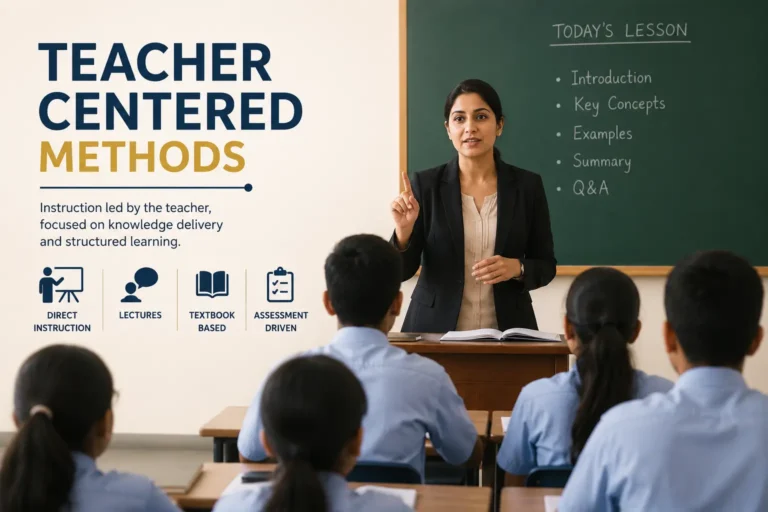
The opposite argument is gaining traction. Traditional teacher-directed instruction was never built for a world where students can generate an answer in seconds.
What’s needed is a shift toward teaching students to ask better questions, evaluate AI output critically, and dig past a first draft.
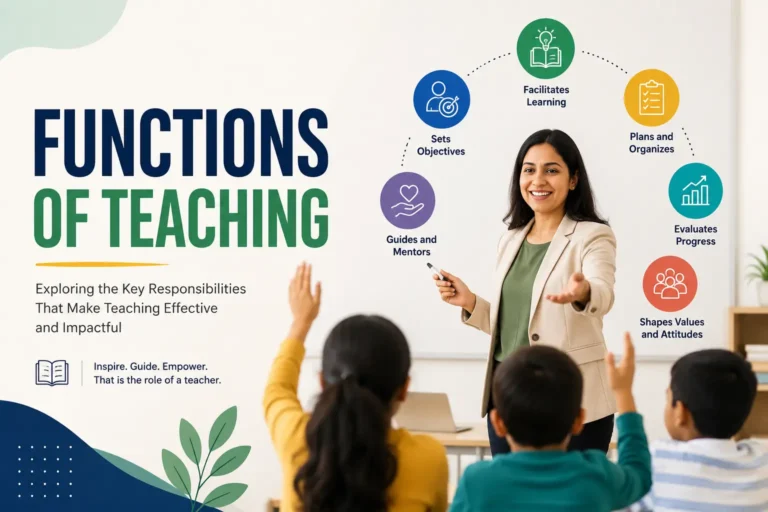
That’s a bigger, more interesting job than lecture-and-recite ever was. Teachers will become designers of learning experiences rather than sole gatekeepers of information. You’re curating, questioning, and guiding students through tools that are already in their pockets.
FAQs
Does “flexible learning” mean less rigor?
No. Flexibility is about pacing, delivery, and access, rather than lowering standards.
Will AI replace teachers?
Most current research says no. It changes the job instead of eliminating it. Soon, teachers will design learning experiences, teach critical evaluation of AI output, and guide the “why” behind the answers.
What is “cognitive debt”?
It’s the learning loss that occurs when students let AI do their thinking for them instead of using it as a support tool.
How can I start connecting my classroom to broader partnerships without a district-wide initiative?
Start small. Reach out to a local university program, business, or nonprofit for a single project, guest session, or curriculum tie-in.
The Future of Education in Numbers
| Stat | Detail | Source |
| 92% | Share of university students using AI in 2025, up from 66% in 2024 | HEPI student generative AI survey |
| 70% | Share of teachers already using AI in the classroom | Telefónica |
| 50% | Share of educational institutions offering specific AI training to staff | Telefónica |
| 88% | Share of teaching staff using AI without a clear pedagogical approach | Digital Education Council Global AI Faculty Survey |
Three’s Company
Flexible, connected, and digital aren’t three separate entities competing for your time. They’re part of one bigger movement.
Education is loosening its rigid structures. It’s linking up across institutions, and adopting tools thoughtfully enough that the human relationships at the center get stronger, not weaker.