How AllMath Is Helping Students Overcome Math Anxiety

Math doesn’t become a hassle for students only during exams. For many, it becomes stressful as soon as they see numbers, formulas, and math problems on the page. This pressure can affect their confidence and even performance.
Quick answer: AllMath helps students with math anxiety by giving free calculators and an AI math solver that show step-by-step solutions. Seeing each step builds understanding and confidence, as long as students solve problems first and use the tool to check work.
According to OECD’s PISA (Programme for International Student Assessment) results, just a one-point increase in the math anxiety index can cause an 18-point drop in math performance.
This shows that math anxiety isn’t just a normal feeling students can ignore. It can affect how they think, learn, and solve mathematical problems.
Why Math Anxiety Happens
Math anxiety mostly starts when students think they have to solve math problems quickly and accurately every single time. In simple words, they feel that they can’t afford to make a mistake. Just a small miscalculation or error can make them feel “they are bad at math.”
The fear of making a mistake, getting stuck on a tricky step, and being unable to proceed are some of the main reasons students feel anxious in math.
The anxiety becomes even worse when students compare themselves with their classmates, feel embarrassed to ask questions in the classroom, or remember a previous negative math experience.
Other reasons include weak basics or a lack of enough math practice. When learners don’t fully grasp the main concepts behind a topic, math feels much tougher and more challenging. As a result, they may panic even before trying to practice math.
This creates a cycle of avoidance and confusion, which, with time, leads to math anxiety.
What is AllMath and How Can It Help Students Overcome Math Anxiety?
AllMath is an AI math solver designed to help students (whenever they get stuck) by providing step-by-step solutions. Not just that, it offers detailed study guides and practice tests to help learners strengthen their math skills.
This platform can be especially useful for math-anxious students as it can guide them and encourage them to move forward during moments of confusion and uncertainty.
Let’s further explore in detail and find out how AllMath can help students overcome math anxiety.
Instant Support
One common fear among students practicing math is “getting stuck at a difficult concept or math problem and not knowing what to do next.” This can usually happen during homework, exam preparation, or self-study, when a teacher or a friend might not be available for help.
In such moments, students need timely help to keep making progress and not give up.
So, rather than searching here and there on the internet looking for help without any guarantee of getting it, they can get guidance from AllMath’s AI solver right away.
Instant support at moments of struggle can reduce pressure, remove confusion, and build confidence. It gives students a clear next step when they feel like hitting a brick wall.
Step-by-step Solutions
Another reason why students feel anxious is not understanding math solutions thoroughly. They might somehow learn to reach the answer but never understand the logic behind it. This leads to mistakes and wrong answers during homework and self-practice.
The more mistakes students make while solving math questions, the more anxious they feel in mathematics. AllMath’s step-by-step AI solutions can make a difference in this case.
When a problem is broken into smaller steps, it becomes easier to follow. Through the AI solver, students can clearly see which formula is used, where values are placed, how calculations move forward, and why a specific method is applied.
With step by step solutions, students can also spot the exact mistakes they are making whenever they reach an incorrect final answer. This can reduce confusion and help students become less afraid of making mistakes. Instead, they start to learn from them.
Gradually, this brings improvement, which can ultimately help get over math anxiety.
Study Guide & Practice Test
Math anxiety often grows when students jump into practice without understanding the topic properly. They may try to solve questions, but every wrong attempt makes them feel more confused. The “Study Guide” feature of AllMath can explain a topic in the simplest way. It covers the basic idea and important formulas as well as practical examples.
Once a topic is understood well, the “practice test” feature can help students apply what they have learned. This matters a lot because confidence in math does not come only from reading explanations. It comes from practicing and solving math problems again and again.
For anxious students, this combination is valuable. The study guide helps them prepare before practice, while the practice test helps them face questions with more confidence and less fear.
The Right Way to Use AllMath’s AI Solver
- Always try solving the problem yourself first. Even if the answer is wrong, your attempt helps you understand what mistakes you are making.
- Use the AI solver to learn the whole solution. Do not just use it to get the final answer. Focus on how each step is solved so you can learn the method properly.
- Compare your own solution with the AI math solver’s solution. This may help you spot calculation mistakes, missing steps, or wrong formula applications.
- Write down the mistake you are making. A small mistake note can help you avoid repeating the same errors in future.
- Practice similar math problems after getting help for one problem.
What Are the Signs of Math Anxiety in Students?
The signs of math anxiety appear in the body, in emotions, and in behavior. Students feel a racing heart or upset stomach before math, say “I am bad at math,” avoid homework, rush through tests, or freeze on problems they solved before.
| Type of Sign | What It Looks Like |
|---|---|
| Physical | Sweaty hands, fast heartbeat, headache or stomachache before math class or tests |
| Emotional | Fear, frustration, embarrassment, or tears when stuck on a problem |
| Thinking | Mind going blank, trouble remembering steps, negative self-talk |
| Behavioral | Avoiding homework, skipping questions, asking to leave class, guessing instead of trying |
Teachers and parents who spot these signs early stop the avoidance cycle before it hardens into a long-term dislike of math.
How Can Teachers Reduce Math Anxiety in the Classroom?
Teachers reduce math anxiety by treating mistakes as part of learning, lowering time pressure, teaching concepts before speed, and giving students low-stakes ways to practice. Small changes in classroom routines make math feel safer for anxious students.
- Praise effort and strategy, not only correct answers
- Replace some timed drills with untimed practice
- Show worked examples, then fade the steps away gradually
- Let students check answers privately with mini whiteboards or digital tools
- Use “my favorite mistake” discussions where the class learns from an anonymous error
- Review weak foundation skills before starting a new unit
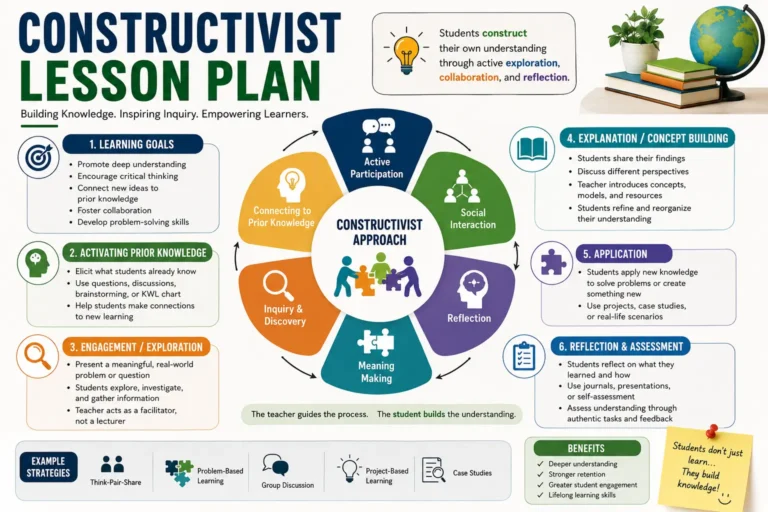
These strategies fit well with active learning strategies such as think-pair-share, which let students test ideas with a partner before speaking to the whole class.
How Can Parents Help a Child With Math Anxiety?
Parents help most by staying calm and positive about math, never saying “I was bad at math too,” setting a regular homework time, and asking their child to explain each step aloud. Explaining builds understanding and shows parents exactly where the child gets stuck.
Parents do not need to know every method their child learns at school. Asking “What did your teacher show you?” and “What is the first step?” keeps the child in charge of the thinking. When a child is stuck for more than ten minutes, a step-by-step tool such as AllMath, a worked example in the textbook, or a short break works better than pushing through frustration.
How Does an AI Math Solver Compare With Other Types of Math Help?
An AI math solver gives instant, step-by-step help at any hour, while a teacher or tutor gives personal explanation and accountability. A basic calculator only gives answers. Anxious students do best with a mix: a solver for quick help and a teacher for deeper gaps.
| Type of Help | Speed | Explains Steps | Best Use |
|---|---|---|---|
| Basic calculator | Instant | No | Checking arithmetic |
| AI math solver (such as AllMath) | Instant | Yes | Homework help when stuck |
| Textbook worked examples | Fast | Yes | Reviewing a method |
| Teacher or tutor | Scheduled | Yes, personalized | Fixing deeper skill gaps |
Students who use each type of help for its best purpose build both skill and confidence, which is the real cure for math anxiety.
How Long Does It Take to Overcome Math Anxiety?
Most students feel less math anxiety within a few weeks of steady, low-pressure practice, and confidence keeps growing over a semester. Progress comes from small wins: finishing one problem alone, then two, then a full set. Students with severe anxiety benefit from support by a school counselor alongside academic help.
Wrapping Up
Math anxiety becomes worse when students feel stuck, confused, and afraid of making mistakes. But it can be managed when they get clear guidance at the right time.
AllMath supports this by providing instant help, step-by-step solutions, study guides, and practice tests. These features can help students understand real math concepts instead of only memorizing answers.
The best results come when students use the AI math solver to learn, practice, and review their mistakes. With steady effort and the right support, math can slowly become less stressful and more manageable.
Frequently Asked Questions
What causes math anxiety?
Math anxiety comes from past bad experiences, timed tests, fear of being wrong in front of others, gaps in earlier skills, and anxious messages from adults. It raises stress and blocks working memory during math tasks.
What is AllMath?
AllMath is a free online math website with calculators and an AI-powered solver for topics such as fractions, algebra, geometry, and statistics. It shows step-by-step solutions instead of only final answers.
Is using a math solver cheating?
Using a math solver to copy homework answers is cheating. Using it to check your own work, study worked examples, and understand where you made a mistake is a legitimate study method.
How can students reduce math anxiety?
Students reduce math anxiety by practicing in short sessions, reviewing missing basic skills, asking questions early, using worked examples, practicing deep breathing before tests, and focusing on progress instead of speed.