What Is The Description Method in Teaching? Simple Guide

The description method in teaching is a verbal way of teaching where the teacher uses clear, detailed words to help students picture and understand a topic in their minds. It works well when you cannot show the real thing in class, such as faraway places, past events, or tiny objects like cells. Teachers plan the description, use simple but vivid language, and ask questions to check understanding.
Introduction: Turning Words Into Pictures
Imagine you need to explain a rainforest, an ancient city, or the inside of a cell to your class, but you have no pictures or videos. Your only tool is your voice and your words. In this situation, the description method teaching approach becomes very powerful.
In this article, you will learn what the description method is, how it works step by step, when to use it, and how it is different from other teaching methods like the lecture and demonstration methods. You will also see simple classroom examples and tips you can apply right away in your teaching and learning process.
You can later explore more general methods on the site’s main page about teaching and learning methods to see where the description method fits within the wider field of pedagogy.
What Is The Description Method in Teaching?
The description method in teaching is an instructional strategy where the teacher uses detailed, organized language to describe a concept, object, event, or process so that students can build a clear mental image. It is a teacher centered approach, because the teacher controls most of the talking and the structure of the lesson.
In this method, words act like a camera. The teacher paints a picture with sentences and phrases. The goal is not just to talk a lot, but to choose the right details and a logical order so that students can really understand and remember the idea.
How Does The Description Method Work? Step By Step
The description method is more than “just talking.” It follows a clear procedure, like other formal teaching methods.
Step 1: Choose The Topic
The teacher first picks a topic that needs a strong mental image. It might be a place, a process, a scene, an object, or a complex idea. Examples include the water cycle, a historical battle, or a character from a story.
Step 2: Plan The Structure
Next, the teacher plans how to describe the topic. Many teachers move from general to specific or from beginning to end. For example, in a geography lesson, the teacher may start with the whole landscape, then describe the sky, the trees, the animals, and finally small details like sounds or smells.
Step 3: Select Clear Vocabulary
The teacher then chooses age appropriate words. Long or rare words make the description hard to follow. Simple, clear vocabulary helps learners of different levels, including English language learners, understand the message.
Step 4: Use Vivid, Sensory Language
Good description uses words that appeal to the senses. The teacher talks about how something looks, sounds, feels, or even smells and tastes when it fits the topic. This kind of descriptive language makes it easier for students to create strong mental images.
Step 5: Keep A Logical Sequence
The teacher follows the planned order without jumping around. A clear sequence helps students follow the description step by step and reduces confusion.
Step 6: Connect To Prior Knowledge
The teacher links the new topic to things students already know. For example, a rainforest can be compared to a very crowded, tall garden, or the inside of a cell can be compared to a busy factory. This makes the idea more relatable.
Step 7: Check Understanding
Finally, the teacher asks questions, invites students to restate the description, or has them draw what they heard. This shows whether the description was clear and if students built the right mental model.
When Should A Teacher Use The Description Method?
The description method is most useful when students cannot see or touch the real thing. It works very well in several school subjects.
It is a good choice when you teach:
- Geography: Landforms, climates, rivers, rainforests, or deserts that students have never visited
- History: Life in ancient civilizations, famous events, battles, or daily life in past times
- Science: Atoms, cells, planets, or processes such as the water cycle or photosynthesis
- Language and Literature: Characters, settings, and imagery in stories or poems
- Social Studies: Cultures, traditions, and community life in different countries
The method fits lessons where students need to imagine something that is far away, very small, very large, or from a different time. It is less useful for tasks that depend on physical skills, like using lab tools or playing a sport, where demonstration or hands on practice works better.
Advantages Of The Description Method
Used well, the description method offers many benefits for both teachers and students.
Key advantages:
- Builds vocabulary and language skills
- Students hear precise words and phrases again and again, which helps them expand their vocabulary and understand subject specific terms.
- Supports learning of abstract ideas
- Many important topics, such as democracy or the structure of an atom, are hard to show directly. Description helps make these ideas concrete in students’ minds.
- Needs little or no equipment
- The method can work in low resource classrooms, in online learning, or in situations where visual aids are limited. The main tools are the teacher’s voice and words.
- Gives the teacher control over content
- The teacher decides which details to include and in what order. This supports accuracy and helps align the description with learning goals and curriculum standards.
- Helps visual learners through mental images
- Even without pictures, strong descriptive language allows students to “see” the topic in their minds.
Because of these strengths, many universities and teacher training courses treat the description method as a key part of teacher centered instruction in pedagogy.
You can also study a related verbal approach on this site in the detailed guide to the lecture method so you can compare how both strategies work in real classrooms.
Limitations Of The Description Method
Like any teaching method, the description method also has limits. Knowing these limits helps teachers decide when to use it and when to switch to another strategy.
Main limitations:
- Risk of passive learning
- If the teacher talks for a long time without questions or interaction, students may become passive listeners rather than active learners.
- Heavy dependence on teacher language skills
- The success of the lesson depends on how well the teacher can choose words, organize ideas, and speak clearly. If the description is confusing, students will struggle.
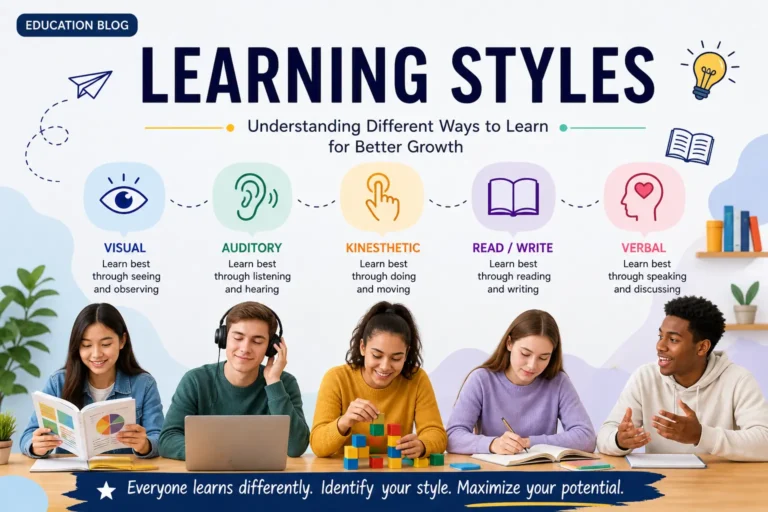
- Not ideal for every learning style
- Students who learn best by doing or moving may find long descriptions hard to follow. They might need demonstrations, projects, or activities to fully understand.
- Can overload working memory
- If the description is too long or detailed, students may not remember all the parts. Shorter chunks with breaks are usually more effective.
Because of these limits, many experts suggest mixing description with other teaching methods, such as group work, demonstration, or project based learning, to support different learners.
Description Method Compared With Other Teaching Methods
Teachers often confuse the description method with lecture, explanation, narration, or demonstration. In fact, each of these methods has a slightly different focus.
Here is a simple comparison.
| Method | Main Focus | Physical Activity | Teacher Role | Best Use |
| Description method | Describing and depicting with words | No | Describer | Abstract ideas, places, scenes |
| Lecture method | Presenting large amounts of content | No | Speaker | Overviews and full topics |
| Demonstration method | Showing how to do something | Yes | Demonstrator | Skills, experiments, procedures |
| Explanation method | Showing reasons and causes | No | Analyst | Concepts, principles, rules |
| Narration method | Telling stories about events | No | Storyteller | History, biographies, plots |
While all these methods are part of verbal teaching, the description teaching method centers on painting a picture in the learner’s mind. The lecture method focuses more on coverage, and the demonstration method focuses on action and visual performance.
If you want a deeper look at how lectures work and how they relate to other strategies, you can read the extended guide on this site about the lecture method benefits.
Classroom Examples Of The Description Method
Seeing the method in action makes it easier to understand. Here are a few short examples across school subjects.
Geography Example
A teacher in a grade 6 geography class needs to teach about a desert. There are no pictures available. The teacher asks students to close their eyes and then describes the sky, the sand, the heat, the winds, and the rare plants and animals. Students then open their eyes and draw what they imagined.
History Example
In a history lesson, the teacher wants students to feel what life was like in an ancient city. The teacher describes narrow streets, crowded markets, sounds of traders, smells of food, and the shape of the houses. Students later write a short diary entry as if they lived in that city.
Science Example
For a lesson on cells, the teacher compares a cell to a busy factory. First comes the main idea of the factory, then the roles of workers, walls, and doors, all tied to cell parts such as the nucleus, membrane, and cytoplasm. Students later label a diagram using this factory image.
Language And Literature Example
In a poetry class, the teacher reads a poem and then describes the images in everyday language. The teacher explains what the poet wants readers to “see” and “feel” and invites students to share their own mental pictures.
In each case, the teacher uses structured, vivid, and clear language so that students can build a strong mental model of the topic.
Tips For Using The Description Method Effectively
To make the description method teaching approach work well, teachers can follow some simple but powerful tips.
- Keep language clear and simple
- Choose short sentences and common words. Explain new terms as you go.
- Move from general to specific
- Start with the big picture, then move into smaller details. This matches how students build understanding.
- Use sensory details
- Include how things look, sound, or feel to make the scene more real.
- Pause and ask questions
- Break the description into parts. After each part, ask short questions or ask students to repeat key points.
- Link to students’ lives
- Compare new ideas with familiar places, objects, or activities.
- Combine with simple visuals when possible
- Even a quick sketch or a basic chart can support verbal description and help learners who need visual support.
- Invite active responses
- Ask students to draw, summarize, or act out what you described. This turns a teacher centered moment into a more active learning experience.
These tips help keep lessons engaging and also support better learning outcomes and more inclusive classrooms.
Final Thoughts
The description method in teaching is a simple but powerful way to help students understand ideas they cannot see or touch. With careful planning, clear language, and vivid detail, a teacher can use only words to build strong mental images in students’ minds. This method fits well inside the wider set of teaching methods and can work together with lecture, demonstration, and project based learning to create rich, balanced lessons.
If you teach in a school with limited resources, or you want to improve how you explain complex topics, start by choosing one upcoming lesson and planning a short, structured description. Then reflect on how students respond and adjust your approach. For a broader view of other methods you can mix with this one, visit the site’s main guide to teaching and learning methods, and begin building a toolkit of strategies that match your learners, your subjects, and your goals.