Universal Access to Education: What It Means, Why It Matters, and What Is Holding the World Back
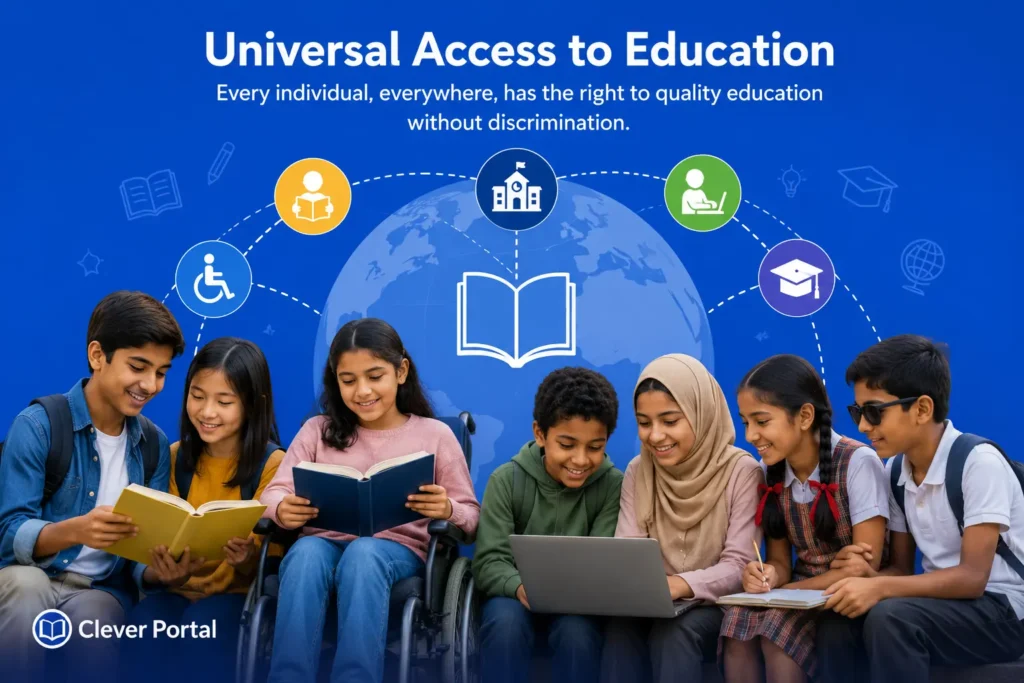
Universal access to education is the idea that every person, no matter their background, deserves a fair chance to learn. It is recognized as a basic human right by the United Nations. Right now, 273 million children and young people are still out of school worldwide, even as more students enroll than ever before. This article explains what the concept means, why it is so important, what barriers get in the way, and what the world is doing to fix it.
More children are sitting in classrooms today than at any point in human history. School enrollment numbers have hit record highs around the world. Yet, at the same time, 273 million children and young people are still not in school at all. That number has gone up for seven years in a row.
Universal access to education sits at the heart of this puzzle. It is one of the most talked-about goals in global development, and also one of the hardest to achieve. This article breaks down what the term really means, why it matters so much, and what is standing between millions of children and the classroom.
What Is Universal Access to Education?
Universal access to education means that every person, no matter who they are or where they come from, should have an equal opportunity to receive a good education. It does not matter if someone is a girl or a boy, rich or poor, living in a city or a remote village, or has a physical or mental disability. Everyone deserves the same chance to learn.
The term covers more than just going to primary school. It includes early childhood education, secondary schooling, vocational training, and even adult literacy programs. It also includes making sure that people with disabilities can access learning tools and environments built for them.
Universal access is closely related to the idea of equitable access to education, which means removing the extra walls that some groups face. It also connects to the concept of inclusive education, where schools are designed to welcome all learners rather than pushing some aside.
It is important to understand that universal access does not mean everyone gets the exact same education. It means everyone gets a fair opportunity to learn, grow, and develop skills for life.
Why Does Universal Access to Education Matter?
Education is one of the most powerful tools a person can have. When people learn to read, write, and think critically, their lives improve in concrete ways. But the benefits go far beyond the individual.
When a community gains access to quality education, the effects ripple outward. Poverty rates drop. Health outcomes improve. Economies grow stronger. Societies become more stable. UNESCO has stated directly that education raises people out of poverty, levels inequalities, and supports sustainable development across all sectors of life.
Here is why universal access to education is so critical:
- It breaks the cycle of poverty. Educated adults earn more, save more, and invest more in their children’s futures.
- It supports gender parity. When girls stay in school, they marry later, have healthier families, and contribute more to local economies.
- It improves public health. People with more years of schooling make better health decisions and are more likely to vaccinate their children.
- It strengthens democracy. Educated citizens can read, question, and participate in civic life.
- It builds stronger economies. Countries with higher literacy rates and school completion rates grow faster and more steadily.
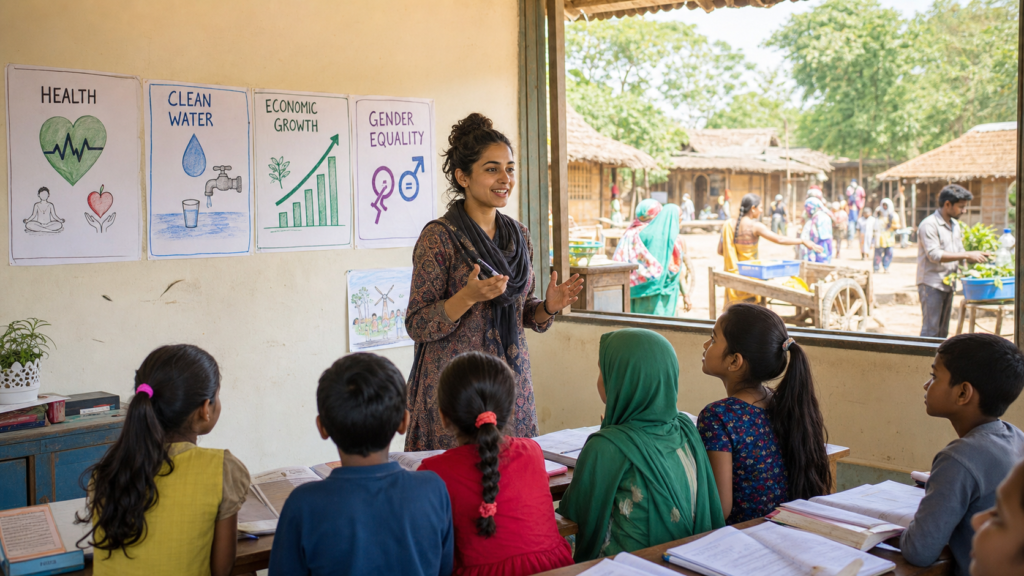
Education also serves as the foundation for reaching the other global development goals. Without universal access to learning, progress on clean water, economic growth, and gender equality slows down significantly. Exploring lifelong learning opportunities for all ages shows just how far this principle extends beyond childhood schooling.
How Many People Still Lack Access to Education?
The numbers tell a sobering story. As of 2024, 273 million children and youth around the world are out of school. That is roughly 1 in every 6 school-age children on the planet.
UNESCO’s 2026 Global Education Monitoring (GEM) Report breaks the figure down even further:
- 79 million children at the primary school level are not in school
- 64 million children at the lower secondary level are missing from classrooms
- 130 million young people at the upper secondary level never make it through school
These numbers have been climbing for seven years straight, despite the fact that 327 million more children are in school today compared to the year 2000.
The Enrollment Paradox: More Students, Yet More Left Behind
This is one of the most surprising facts about global education access today. On one hand, the world has made huge progress. The number of students in pre-primary education has grown by 45 percent since 2000. Enrollment in post-secondary institutions has jumped by 161 percent during the same period.
On the other hand, the children who are hardest to reach are still being left behind. The students who are most likely to be out of school tend to come from the poorest families, live in the most remote areas, speak minority languages, or belong to groups that face discrimination. These are the children that broad enrollment growth often misses entirely.
The problem is not just about building more schools. It is about making sure every child, including the most isolated and most vulnerable, can actually walk through the door.
What Are the Main Barriers to Universal Education Access?
Understanding why so many children are still out of school is the first step toward fixing the problem. The barriers are real, they are serious, and they rarely appear alone. Most children who are out of school face more than one of these challenges at the same time.
1. Poverty
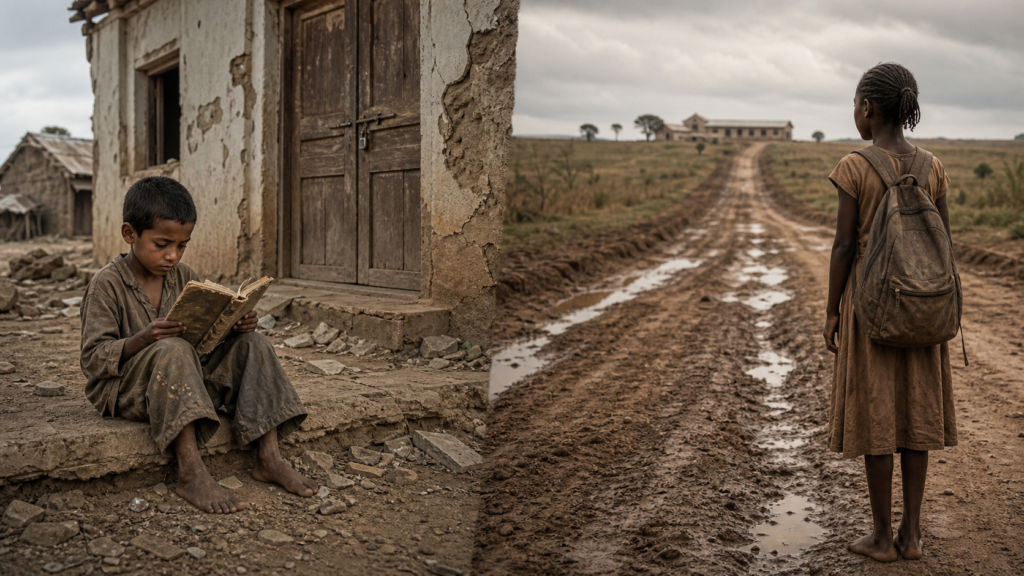
This is the most widespread barrier worldwide. Families living in poverty cannot always afford school fees, uniforms, books, or transportation. Beyond the direct costs, there is also an opportunity cost. A child in school is a child not working. For families who depend on every pair of hands to survive, keeping a child in school can feel like a luxury they cannot afford.
2. Geographic Isolation
Many children live in remote or rural areas where the nearest school is hours away. Rough terrain, a lack of roads, extreme weather, and no transportation options mean that even willing families cannot get their children to a classroom. This barrier hits hardest in sub-Saharan Africa and parts of South Asia.
3. Gender Discrimination
Girls are disproportionately affected when access to education is limited. Cultural beliefs, early marriage, safety concerns during travel to school, and a lack of female teachers in conservative communities all push girls out of the education system. Gender parity in education remains an unfinished task for much of the world.
4. Disability
Children with physical or cognitive disabilities face unique challenges. Schools in many countries are not built to include them. Teacher training often does not cover how to work with students who have different learning needs. Negative attitudes from peers and even teachers can make school an unwelcoming place, driving children with disabilities away from learning.
5. Conflict and Displacement
Armed conflict destroys schools, displaces families, and makes sending children to school dangerous. About 50 percent of all primary-age children who are out of school live in conflict-affected areas. Countries like Sudan, the Democratic Republic of Congo, Myanmar, and Somalia are home to millions of children who have lost access to schooling because of war and instability.
6. Weak School Infrastructure
In many low-income countries, there simply are not enough schools. The ones that exist may lack trained teachers, clean water, electricity, books, or safe buildings. Recruiting and paying qualified teachers in remote areas is expensive, and international aid often does not cover enough of that cost.
7. Cultural and Social Attitudes
In some communities, deeply rooted beliefs about who should learn and who should not block access for certain groups. This includes attitudes toward marginalized communities, indigenous children, and children from certain ethnic backgrounds. When families do not see the value of formal schooling, or when they distrust the school system, keeping children enrolled becomes very difficult.
What Is SDG 4 and How Does It Address Education Access?
In 2015, world leaders gathered to adopt the Sustainable Development Goals, a set of 17 global targets meant to guide development through the year 2030. SDG 4 is the goal focused specifically on education.
SDG 4 commits every country to providing inclusive and equitable quality education for all people. Its key targets include:
- Free and quality primary and secondary education for all girls and boys by 2030
- Equal access to affordable vocational training and higher education for women and men
- Elimination of gender disparities in education at all levels
- Universal access to early childhood education and care
- Literacy and numeracy skills for all youth and a substantial portion of adults
These targets were shaped by the Incheon Declaration, signed by more than 160 countries, which reaffirmed education as a fundamental human right and pledged at least 12 years of free, quality schooling for all children.
Progress toward SDG 4 has been slow. Primary school completion rates rose from 85 percent in 2015 to 88 percent in 2024. Upper secondary completion climbed from 53 percent to 60 percent over the same period. Those gains are real, but not nearly fast enough.
Right now, only 1 in 10 countries have education finance policies with a strong enough focus on equity to reach the most disadvantaged students. The countries that have committed to reducing the out-of-school population by 165 million by 2030 are racing against time, with under five years left on the clock.
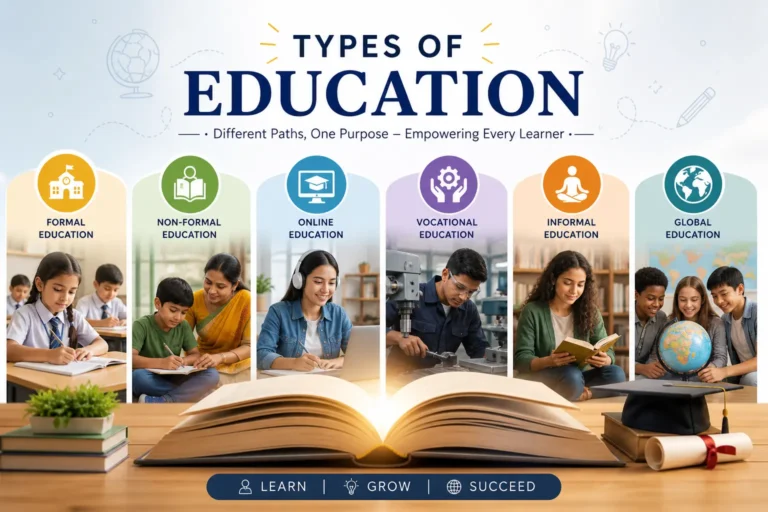
Exploring the different types of education covered under SDG 4 helps show how wide the scope of this commitment really is, from early childhood programs all the way through adult skill-building.
What Progress Has Been Made Toward Universal Education?
The situation is urgent, but the picture is not entirely bleak. The world has made real, measurable progress over the past 25 years.
Since the year 2000, 327 million more children are now enrolled in school compared to when the Education for All movement was gaining momentum. Early childhood education has expanded dramatically. More girls are completing primary school than at any point in history. Adult literacy rates have improved significantly in many regions.
Some specific achievements worth noting:
- Primary school completion rates have risen in nearly every region of the world
- Gender parity in primary education has improved significantly since 1990
- The number of countries offering at least one year of free pre-primary education has increased
- Mobile learning and digital platforms have brought schooling to millions of students who previously had no access at all
The UNESCO Institute for Statistics (UIS) tracks these gains across more than 200 countries and territories every year. The data shows a world that is making progress, even if it is not making it fast enough to meet the 2030 deadline.
How Can Universal Access to Education Be Achieved?
Solving this problem requires action at many levels, from international funding to local community decisions. There is no single answer, but research and real-world experience point to several strategies that work.
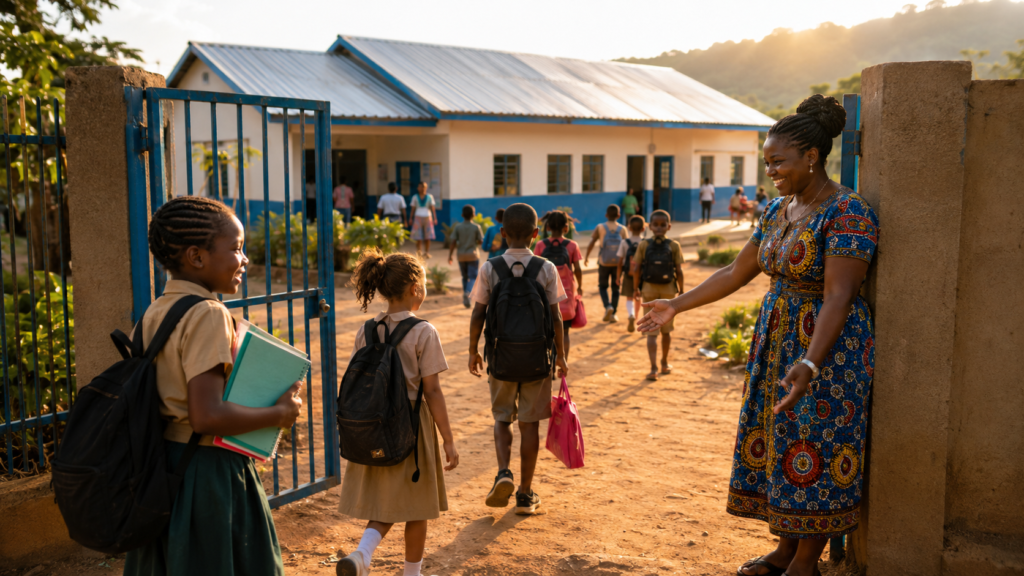
1. Eliminate School Fees
Direct costs are one of the biggest reasons families keep children out of school. When governments make primary and secondary education truly free, including covering uniforms, books, and meals, enrollment goes up quickly and dropout rates fall.
2. Use Conditional Cash Transfers
Several countries have had success paying low-income families a small amount of money on the condition that their children attend school regularly. Programs like this in Brazil and Mexico have shown strong results in keeping children enrolled, especially girls.
3. Build Community-Based Schools
Bringing schools closer to the children who need them, rather than expecting families to travel long distances, removes one of the most common barriers. Community schools staffed by local teachers have proven especially effective in rural and remote areas.
4. Train and Support Teachers in Underserved Areas
Even when schools exist, they are not effective without trained, motivated teachers. Investing in teacher training, providing fair pay, and offering ongoing support in underserved communities makes a direct difference in learning outcomes.
5. Expand Scholarships and Targeted Support
Scholarships for girls, children with disabilities, and students from the lowest-income households address both financial and social barriers at the same time. Targeted support programs prevent vulnerable students from dropping out before completing their education.
The Role of Technology in Expanding Education Access
Technology has become one of the most exciting tools in the push for universal access. E-learning platforms, mobile learning apps, and digital content can reach students in areas that traditional schools cannot serve. During conflicts or natural disasters, online learning has allowed millions of children to keep learning even when physical schools are closed.
However, the digital divide in education is real. Children in low-income countries and rural areas are far less likely to have access to a device, a stable internet connection, or electricity at home. Expanding technology access without addressing these underlying gaps only helps the students who are already better off.
Organizations like Education Cannot Wait, UNICEF, and UNESCO are working to fund both the technology side and the infrastructure side of this challenge. The goal is to make sure that digital tools reach the children who need them most, not just those who already have advantages.
Understanding how universal education goals connect to broader global policy makes it easier to see why this work matters so much for the next generation.
The Road to 2030: What Needs to Happen Next
The 2030 deadline for SDG 4 is less than five years away. At the current pace, the world will not meet its goals. Every two seconds, one more child needs to enter school just to stay on track.
What the world needs most right now:
- Increased international funding for education in low-income and conflict-affected countries
- Stronger national commitments to equity-focused education finance policies
- Better data to track which children are being left behind and why
- More community involvement to make sure local needs drive local solutions
- Consistent focus on the hardest-to-reach children, not just improving averages
The human cost of falling short is enormous. Every child who misses out on a quality education is a person whose potential is lost, not just for themselves but for their family, their community, and the world. Education is not just a personal benefit. It is the engine that drives healthier societies, stronger economies, and a more peaceful world.
Universal access to education is not a distant dream. It is a goal that the world has already agreed on. The only question is whether nations will act with enough urgency to make it real before time runs out.