AI in Education: A Simple 2026 Guide to How It Works, the Benefits, and the Risks
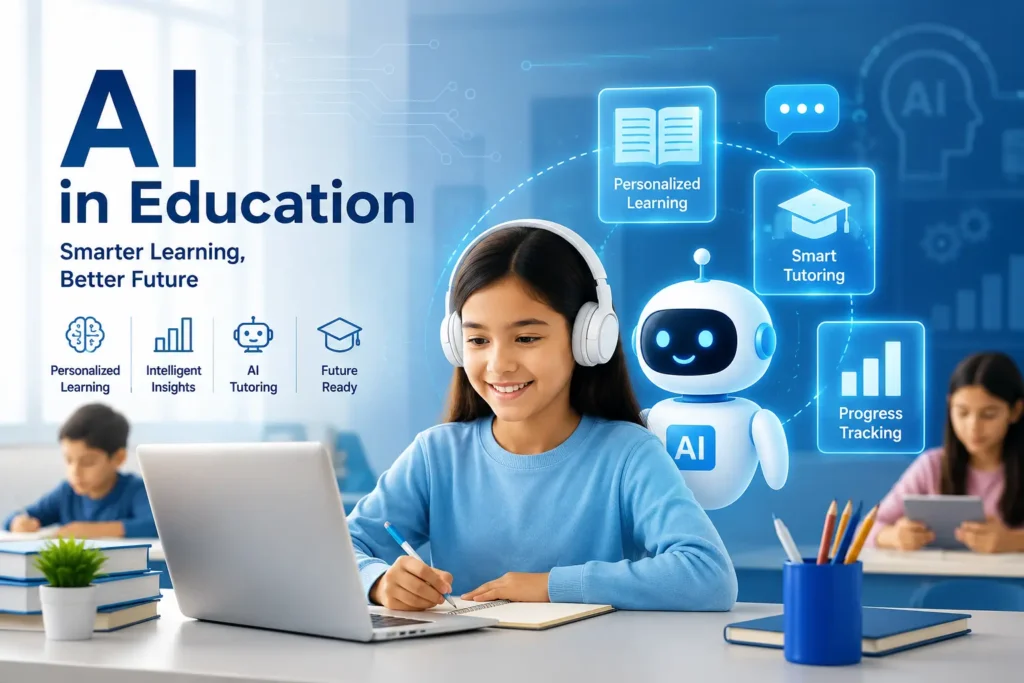
AI in education means using artificial intelligence, like adaptive learning, tutoring systems, and generative AI tools such as chatbots, to help with teaching, learning, and school tasks. In 2025 and 2026, more teachers and students started using it. The benefits include personalized learning, faster feedback, and time savings. But there are real risks around academic integrity, over-reliance, bias, and data privacy. Used with human care, AI can help. Used without care, it can hurt learning.
AI in education is not a far-off idea anymore. It is here today. Teacher classroom AI use nearly doubled, jumping from 34% in 2023 to 61% in 2025. More than half of teens now use AI chatbots for schoolwork. So what does all this really mean for students, teachers, and parents? This guide explains what AI in education is, how it is used, its benefits and risks, what the research shows, and where it is heading. You will get clear answers, not hype.
What Is AI in Education?
AI in education is the use of artificial intelligence to help students learn, help teachers teach, and help schools run smoothly. It can personalize lessons, grade work, plan classes, and answer questions. It ranges from simple study chatbots to smart tutoring systems that adjust to each learner.
The main types of AI you will hear about are:
- Machine learning: software that gets smarter as it sees more data about how students learn.
- Natural language processing (NLP): the tech that lets tools understand and reply to human language, like a chatbot.
- Generative AI: tools like ChatGPT, made by OpenAI, that can write, explain, and create new content.
- Adaptive learning algorithms: systems that change the lesson based on how well a student is doing.
The U.S. Department of Education says AI should always keep a human in the loop. In other words, teachers stay in charge, and AI is just a helper. Many of these tools live inside a learning management system, which is the online space where classwork happens.
How Is AI Used in Education?
AI in the classroom shows up in many ways. Some tools help students. Some help teachers. Some help the whole school. Below are the most common examples of AI in education.
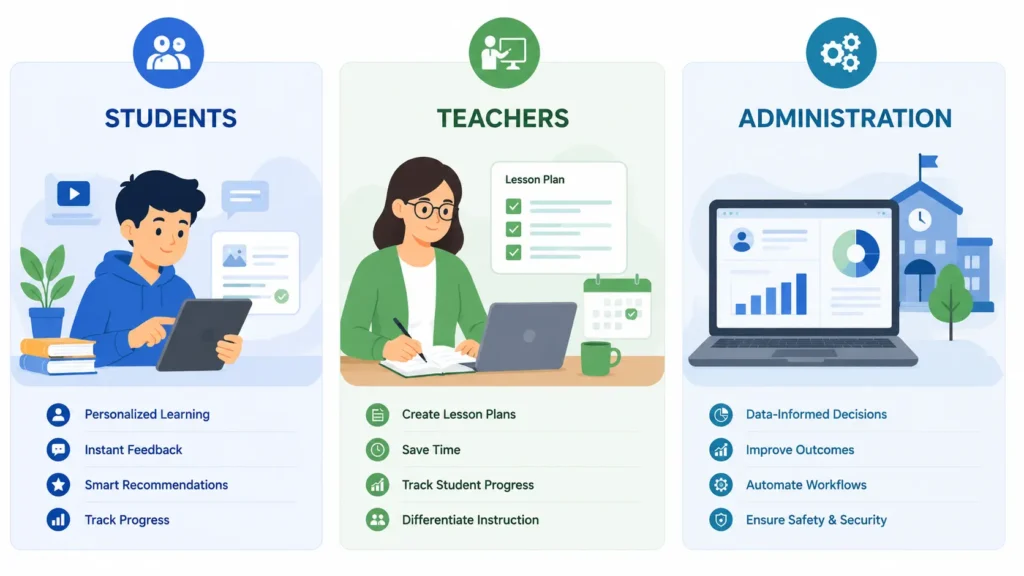
AI for Students
Students use AI to study, practice, and get help fast. Common uses include:
- Intelligent tutoring systems that give hints and step-by-step help.
- Chatbots and virtual assistants that answer questions any time of day.
- Writing and study help to check work or explain a hard topic.
- Accessibility and assistive tech that reads text aloud or helps students with different needs.
AI for Teachers
Teachers use AI to save time and support students better. Common uses include:
- Lesson planning to draft plans and worksheets quickly.
- Automated grading and instant feedback on student work.
- Learning analytics that spot which students may need extra help.
If you want more ideas, see our list of productivity tools for teachers.
AI for School Administration
Schools use AI behind the scenes too. It can sort schedules, track progress, and handle other online tasks. Tools like these often connect through platforms and online course platforms that keep everything in one place. Beyond the classroom, AI also powers other school systems, such as AI-powered school security.
How Does AI Personalize Learning?
AI personalizes learning by watching how each student does and then changing the content, speed, and feedback to fit them. Adaptive learning platforms and intelligent tutoring systems build a small model of each learner. Then they target the exact skills that student needs to work on.
This is where AI can really shine. Well-built tutoring tools have shown real learning gains, with effect sizes of about d = 0.40 to d = 0.85 for students who need extra support. The key word is “well-built.” Tools that give hints work better than tools that just hand over answers. To learn more about learner needs, see our learning styles guide. The upside is real, but so are the trade-offs.
The Benefits of AI in Education
AI in education brings some clear wins for students and teachers when it is used the right way. Here are the top benefits of AI in education:
- Personalized learning: each student can learn at their own pace and level.
- Time savings for teachers: teachers who used ChatGPT spent about 30% less time on lesson prep, saving around 25 minutes a week, with no drop in lesson quality.
- Faster feedback: students get help right away instead of waiting days.
- Better accessibility: assistive tech helps students with different needs and learning styles.
- More student engagement: interactive tools can make learning feel more fun and active.
- Data-driven insight: learning analytics help teachers see who is struggling early.
Most teachers feel hopeful too. About 81% of educators say they are optimistic about the future of AI in education. Smart tutoring tools have also helped, raising how well students master topics, with even bigger gains for students of less experienced tutors. Still, we must look at the other side of the coin.
What Are the Risks and Challenges of AI in Schools?
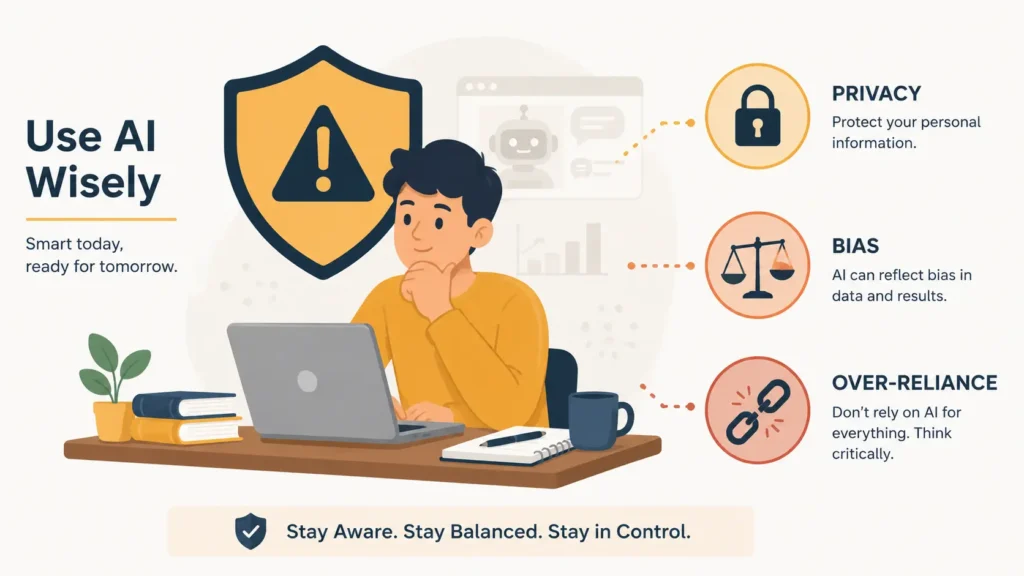
AI in schools is not all good news. There are real risks, and families and teachers should know them. The main challenges of AI in education include:
Academic Integrity and Over-Reliance
The biggest worry is cheating and lost critical thinking. When students lean on AI too much, they may stop thinking for themselves. This is called over-reliance. Research shows this danger clearly. In one study, students with open AI access got better practice grades but then scored 17% lower on exams they took without AI. This is often called the “crutch effect.”
Bias and Accuracy
AI is not always right. Generative AI can make up wrong answers, which experts call “hallucinations.” AI can also show algorithmic bias, meaning it may treat some groups unfairly because of the data it learned from. Students should always double-check what AI tells them.
Privacy and Equity
Schools must protect student data under laws like FERPA and COPPA. Data privacy is a big deal when kids are involved. There is also an equity problem, sometimes called the digital divide. AI is “not inherently equitable”. Schools with more money may get better tools, while others get left behind. Too much screen time can also add stress, so students may want a plan to avoid burnout during online learning.
AI in Education at a Glance: Pros and Cons
Here is a quick look at the advantages and disadvantages of AI in education. This table sums up the key points above.
| Pros (Advantages) | Cons (Disadvantages) |
| Personalized and adaptive learning | Risk of cheating and lost critical thinking |
| Saves teachers time on planning and grading | Over-reliance can weaken independent learning |
| Instant, helpful feedback | Wrong “hallucinated” answers |
| Better accessibility for all students | Algorithmic bias and unfair results |
| More student engagement | Data privacy concerns (FERPA, COPPA) |
| Data-driven help for struggling students | Digital divide and unequal access |
So how should schools and families use AI the right way? The research gives us a clue.
Does AI Actually Improve Learning?
The honest answer is that the research is mixed. AI does improve student work while students are using it, and it saves teachers real time. But the gains often shrink when the AI is taken away. This is the part many articles skip.
Here is what stands out from the:
- Students often do better with AI help, but worse on their own later.
- Smart tutoring tools raised topic mastery by about 4 percentage points, and up to 9 points for students of lower-rated tutors.
- Teachers saved a lot of time without lowering lesson quality.
The lesson is simple. Tools that give hints and guide thinking help learning. Tools that just give full answers can hurt it. To build strong habits, mix AI with proven teaching and learning methods like note-taking and practice. Next, let us look at how to use AI safely.
How to Use AI in Schools Responsibly
Using AI in schools well takes a few smart rules. When teachers, students, and parents follow them, AI helps far more than it hurts. Here is a simple guide for each group.
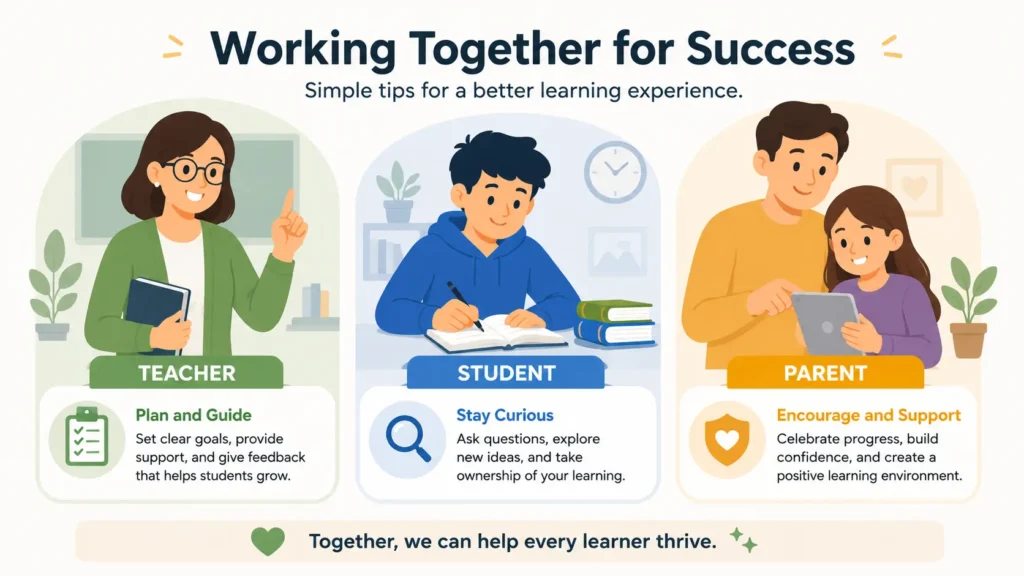
For teachers:
- Keep a human in the loop and stay in charge of grades and big choices.
- Use AI for drafts and ideas, then check and fix the output.
- Teach AI literacy so students learn how the tools work and where they fail.
For students:
- Use AI for practice and hints, not for final answers you copy.
- Always fact-check what AI tells you.
- Do the hard thinking yourself so your brain grows stronger.
For parents:
- Talk with your child about honest AI use.
- Watch for over-reliance and screen-time stress.
- Ask your school how it protects student data privacy.
Groups like UNESCO have set clear guidance, including an age limit of 13 for using generative AI, and have helped 58 countries build AI skill programs. Schools can also use platforms, such as Clever, to manage which tools students can safely reach.
What Is the Future of AI in Education?
The future of AI in education points to wider use, smarter tutors, and stronger rules. AI is going from a novelty to a normal part of school life.
The money side shows how fast this is moving. The AI in education market is set to grow from about $8.3 billion in 2025 to $11.4 billion in 2026, and then to $57.2 billion by 2033. At the same time, UNESCO and the OECD are pushing for ethics, equity, and AI literacy to stay front and center.
One thing experts agree on: teachers are not going away. AI will handle routine tasks, but human care, trust, and mentoring cannot be replaced by a machine. To see where classrooms are heading next, read our guide on the future of education.
Final Thought
AI in education is powerful, but it is only a tool. The real magic still comes from good teachers, curious students, and caring parents. When AI in schools is used with clear rules, honest habits, and human guidance, it can make learning more personal, faster, and fairer. When it is used carelessly, it can weaken the very skills school is meant to build. The smart path is balance. Let AI do the busy work, and let people do the thinking. That is how we get the best of AI in schools without losing what makes learning human.