Ewmagwork vs Agile vs Scrum vs Traditional HR: Which Fits Best?
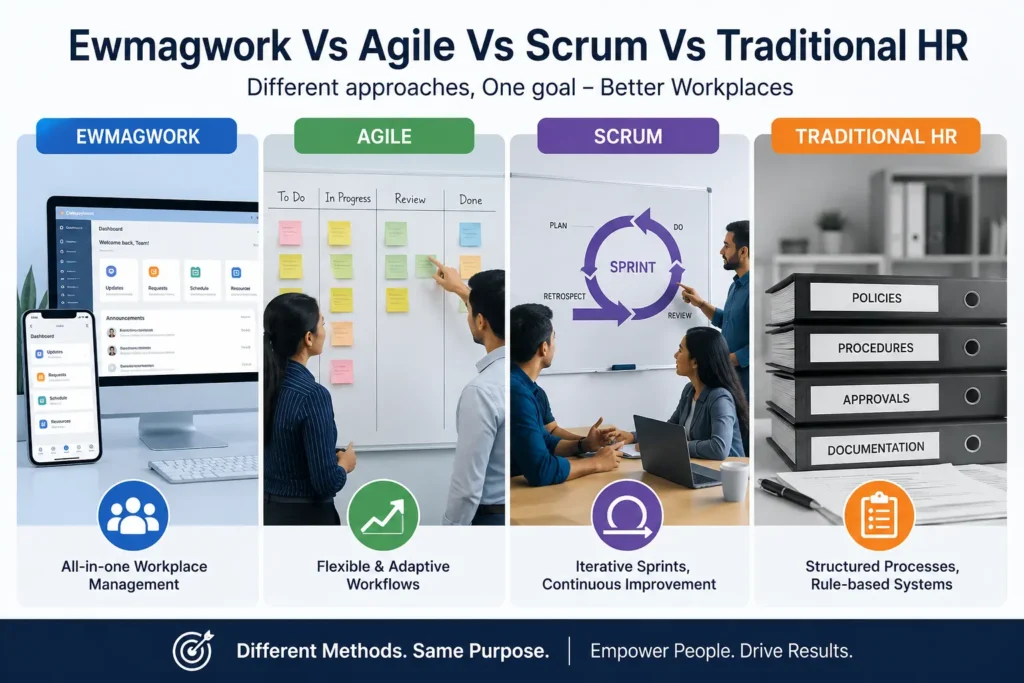
Ewmagwork, Agile, Scrum, and traditional HR are all useful, but they solve different problems. Ewmagwork appears to focus on workplace coordination and daily operations, Agile focuses on flexibility, Scrum gives teams a structured sprint system, and traditional HR supports policies and formal people processes. The best choice depends on whether your team needs smoother workflow, faster change, better project delivery, or stronger structure and compliance.
Many teams hear words like Ewmagwork, Agile, Scrum, and traditional HR in the same meeting, but these are not the same thing. That is why the keyword Ewmagwork Vs Agile Vs Scrum Vs Traditional HR matters so much, because people are trying to compare systems before they make a change. Some teams want better workplace coordination, some want faster delivery, and some still need strong rules and stable people processes.
This guide compares all four in simple language so you can see what each one does, where it fits best, what its limits are, and which one may work better for your team type, goals, and work style.
Ewmagwork Vs Agile Vs Scrum Vs Traditional HR at a Glance
Before going deep, it helps to see the full picture in one place. The table below compares the main purpose, work style, structure, and best use case for each model.
| System | Main focus | Best for | Work style | Level of structure | Good fit for |
| Ewmagwork | Workplace coordination, operational workflow, people, process, and tools alignment | Teams that want smoother daily work and better workplace system design | Practical and coordination -based | Medium | Teams improving workflow clarity, team coordination, and workplace management |
| Agile | Flexibility, adaptation, collaboration, and fast response to change | Teams in fast-changing environments | Iterative and adaptive | Medium | Product, project, and modern people teams that need continuous feedback |
| Scrum | Structured Agile method using sprints, backlog, reviews, and daily scrum | Teams that want a clear project delivery framework | Time-boxed and iterative | High | Teams managing work in short cycles with strong rhythm and accountability |
| Traditional HR | Policies, hierarchy, administration, and standardized people processes | Organizations that need stable processes and compliance support | Formal and policy-driven | High | Companies needing structure, control, and clear rules |
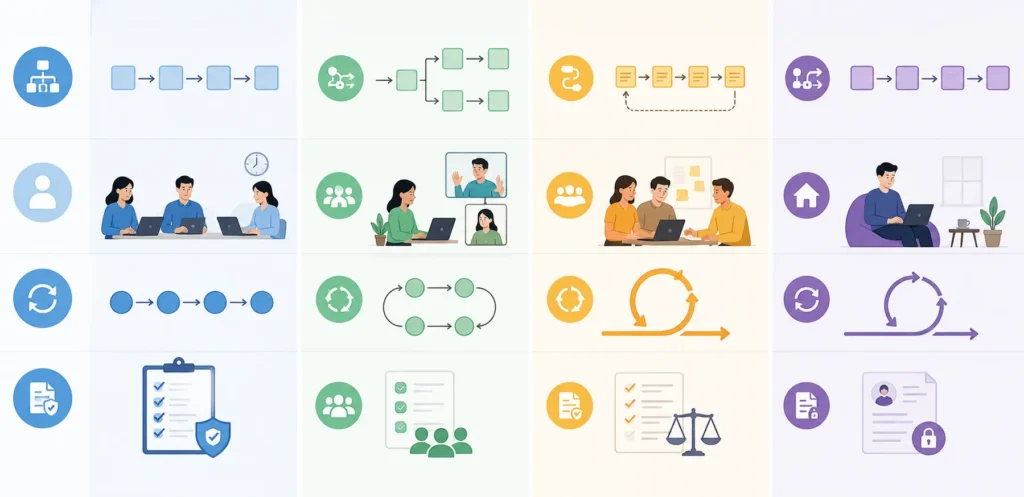
This table shows one important truth. These four options are not direct copies of each other. Agile and Scrum are closely related, but Scrum is only one method inside Agile, while Ewmagwork and traditional HR serve different workplace needs around coordination and people operations.
A simple way to think about it is this. Ewmagwork helps the workplace run smoothly, Agile helps teams adapt, Scrum helps teams deliver in short cycles, and traditional HR helps the company stay organized with stable rules and systems.
For a deeper background on the first term in this comparison, read this internal guide on workplace management ewmagwork.
What Is Ewmagwork and How Is It Different From the Others?
Ewmagwork appears to be a workplace coordination framework or workplace system that helps align people, processes, tools, and daily work in one practical flow. Public pages describe workplace management ewmagwork as a simple system for planning, organizing, and running day-to-day work so teams can get better results with less confusion. Some pages also describe it in platform-like terms, which is why some readers may see it as both a method and a system.
This is different from Agile, Scrum, and traditional HR because Ewmagwork seems to focus most on operational workflow and workplace coordination. It looks at how tasks move, how people work together, what tools they use, and how the daily workplace system supports results. That makes it broader than a simple project method and more practical than a theory-only model.
A useful outside definition comes from the Work Management Institute, which says work management is the discipline of clarifying, coordinating, and completing organizational work in a predictable and effective way. That idea fits well with the public descriptions of Ewmagwork, which seem to center on clarity, coordination, ownership, and smoother operations.
So when people search what is ewmagwork or workplace management ewmagwork, they often want to know whether it is closer to a workplace system, a work management model, or a project framework. The safest answer is that it appears closest to a workplace coordination model that helps organize people, process, tools, and daily work.
How Do Agile and Scrum Differ From Each Other?
Many people mix up Agile and Scrum, but they are not the same. Agile is a broad way of working that values flexibility, teamwork, fast learning, and steady improvement. Scrum is one specific Agile framework that gives teams a structured way to do that work.
Agile is more like the mindset. It tells teams to respond to change, improve often, and work in smaller steps instead of one big fixed plan. Scrum is the method that turns those ideas into a real routine through sprint planning, sprint backlog, daily scrum, sprint review, and other clear roles and steps.
Here is the easiest way to compare Agile and Scrum:
| Topic | Agile | Scrum |
| What it is | A way of working or mindset | A specific Agile framework |
| Main goal | Adapt fast and improve often | Deliver work in short, clear cycles |
| Structure | Flexible | More structured agilest |
| Main tools | Continuous feedback, collaboration, iteration | Sprint planning, sprint backlog, daily scrum, sprint review |
This matters in the bigger comparison because Agile and Scrum are closely linked, while Ewmagwork and traditional HR play different roles. If a team says it wants to be “Agile,” that does not always mean it needs Scrum. Some teams only need more continuous feedback and better teamwork, while other teams need a full project delivery framework with strict sprint rules.
That is why the keyword agile vs scrum vs traditional hr can confuse readers. Agile is the broad idea, Scrum is one method inside that idea, and traditional HR is not a delivery framework at all.
Where Does Traditional HR Still Work Better?
Traditional HR still has real value, even though many modern teams now talk more about Agile HR and flexible work models. Sorwe explains that traditional HR is more hierarchical, more process-driven, and more focused on long-term planning and standard policies. That can be a strength when a company needs control, consistency, documentation, and stable people administration.
Traditional HR works better when an organization needs:
- Clear hierarchy and approval paths
- Standardized policies for many employees
- Strong focus on compliance and record-keeping
- Stable rules for hiring, leave, reviews, and employee management
This is important because some articles make traditional HR sound old or weak, but that is not a fair view. In many industries, structure matters. Formal people processes still help protect the business and support fairness, compliance, and repeatability.
At the same time, traditional HR can feel slow in fast-changing workplaces. It may not be the best fit when teams need decentralized decision-making, quick feedback loops, or flexible cross-team collaboration. That is why Agile HR and Scrum in HR get more attention in modern work discussions.
So when comparing Ewmagwork vs traditional HR, the main difference is simple. Ewmagwork appears more focused on daily workplace coordination and work flow, while traditional HR is more focused on people policy, administration, and formal structure.
Which Option Fits Different Team Types Best?
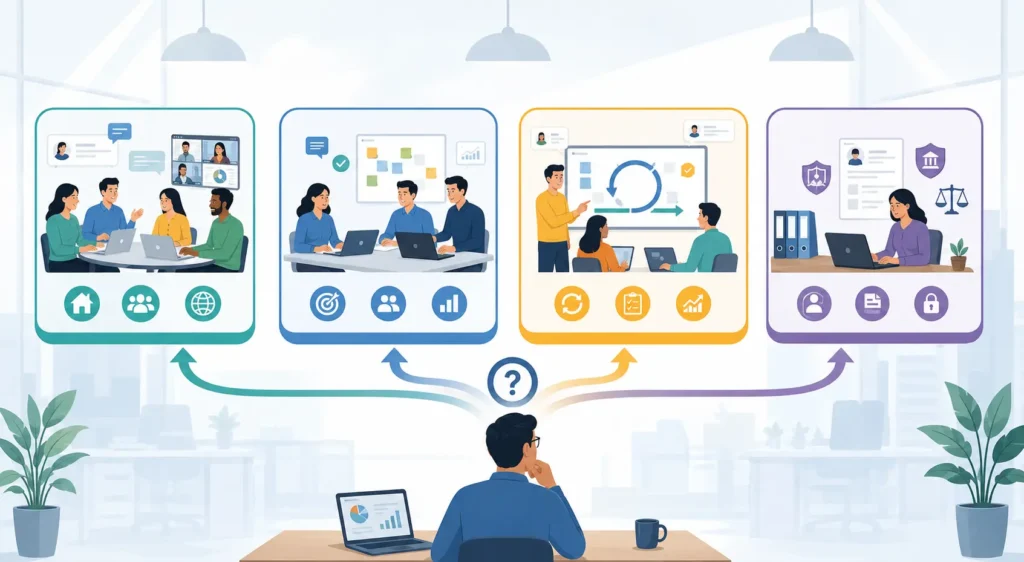
This is the most useful question in the whole article because the right choice depends on the kind of team you have and the kind of problem you need to solve. No system wins every time. The best option is the one that fits your real work, not the one with the trendiest name.
Ewmagwork for workplace coordination
Ewmagwork looks best for teams that need stronger workplace coordination and smoother operational workflow. If your team struggles with role clarity, task ownership, messy handoffs, scattered workplace tools, or unclear day-to-day process, Ewmagwork may be the best fit. It appears especially useful when the problem is how work moves through the workplace, not just how a project is delivered.
Agile for flexible and fast-changing teams
Agile works well when change happens often and teams need to adjust quickly. It fits teams that want continuous feedback, more collaboration, and less rigid planning. It can help product teams, service teams, and people teams that want more flexibility and faster learning.
Scrum for teams that need rhythm and delivery structure
Scrum works best when a team needs a strong project delivery framework with clear steps and accountability. It is useful when work can be planned in short cycles and reviewed often. Teams that like a set rhythm may do well with sprint planning, sprint backlog, daily scrum, and sprint review routines.
Traditional HR for policy-heavy or stable environments
Traditional HR still fits best when the workplace depends on stable rules, clear structure, and standard people processes. Large organizations, highly regulated teams, or companies with strong hierarchy may still need traditional HR systems at the core.
Here is a quick team-fit view:
| Team need | Best fit |
| Better workplace coordination and smoother daily operations | Ewmagwork |
| Fast adaptation and flexible teamwork | Agile |
| Short delivery cycles with strong structure | Scrum |
| Stable policies and formal people systems | Traditional HR |
Hybrid work also matters here. Coworker notes that remote work software supports communication, collaboration, project management, and productivity across distributed teams. LinkedIn Top Content also points out that high-performing hybrid teams often create 2 to 3 hours of daily overlap for live work and should protect execution time by avoiding too many meetings. That means teams working across office and remote settings often need strong team coordination, role clarity, and smart workflow design, all of which affect whether Ewmagwork, Agile, Scrum, or traditional HR will fit best.
What Are the Main Strengths and Limits of Each Approach?
Each option has strengths, and each one can fail if used for the wrong reason. A balanced comparison should show both sides.
Ewmagwork strengths and limits
Ewmagwork appears strong in workplace coordination, operational workflow, and aligning people, process, and tools. It may help teams that need clearer daily work systems and better workplace management. Its limit is that public evidence still looks newer and less formal than long-established models, so some teams may want more proof, case examples, or defined standards before full adoption.
Agile strengths and limits
Agile is strong when teams need flexibility, continuous feedback, and faster response to change. It encourages collaboration and learning over rigid plans. Its limit is that teams can use the word “Agile” loosely without building enough real structure, which can create confusion if nobody knows who owns the work or how progress is tracked.
Scrum strengths and limits
Scrum gives teams structure, routine, and clear project delivery steps. It helps when work can be divided into short cycles and reviewed often. Its limit is that it may feel too strict or too meeting-heavy for some teams, especially if they misuse the process or add too much ceremony.
Traditional HR strengths and limits
Traditional HR is strong in policy control, clear rules, and standardized people processes. It helps protect consistency and support large-scale administration. Its limit is that it may feel too slow or rigid for fast-changing teams that need more continuous feedback and more decentralized decision-making.
A clear side-by-side summary is below:
| Approach | Main strength | Main limit |
| Ewmagwork | Strong workplace coordination and operational workflow support | Less formal public evidence and fewer established standards |
| Agile | Flexible, adaptive, and feedback-friendly | Can become vague without enough |
| Scrum | Clear structure and strong delivery rhythm | Can feel too rigid or meeting-heavy if overused |
| Traditional HR | Stable policies and strong people administration | Slower to adapt in fast-changing environments |
Which One Should You Choose?
The right choice depends on your main problem. If you choose based on trend instead of need, you may end up with the wrong system. The better path is to match the model to the work.
Choose Ewmagwork if:
- Your biggest issue is workplace coordination
- Daily work feels messy or unclear
- You need stronger role clarity and smoother handoffs
- You want better operational workflow across people, tools, and tasks
Choose Agile if:
- Your work changes fast
- You need flexibility and continuous feedback
- Your team works best with learning, adapting, and improving often
Choose Scrum if:
- You need a specific project delivery framework
- Your team likes short work cycles and regular check-ins
- You want sprint planning, daily scrum, sprint backlog, and clear review points
Choose Traditional HR if:
- Your company depends on stable policy systems
- You need structure, hierarchy, and formal people administrations
- Compliance and standardized processes matter more than speed of change
Some teams may also combine them. For example, a company may keep traditional HR for formal people processes, use Agile HR ideas for feedback and collaboration, run one team with Scrum, and improve daily workplace management through Ewmagwork-style coordination. The point is not to force one answer for every team. The point is to solve the real workplace problem in front of you.
Final Comparison Verdict
Ewmagwork vs Agile vs Scrum vs traditional HR is not a simple winner-takes-all comparison. Each one does a different job. Ewmagwork appears best for workplace coordination and smoother daily operations, Agile works well for flexibility and change, Scrum helps teams that need a structured iterative method, and traditional HR remains useful when formal policies and clear structure matter most.
The smartest choice is the one that matches your real team need. If your problem is daily workflow and team coordination, Ewmagwork may fit best. If your problem is speed and adaptation, Agile may help more. If your team needs a strong project delivery framework, Scrum may be better. If your workplace depends on order, policy, and stability, traditional HR still has a strong role.