Factors of Teaching: 8 Key Elements That Shape the Teaching-Learning Process
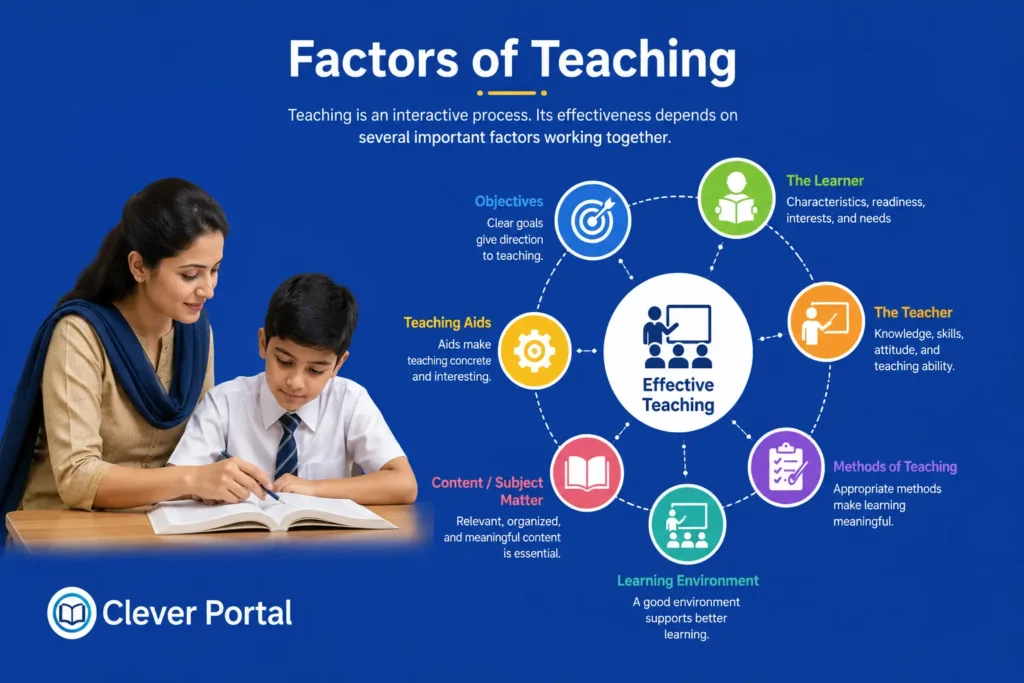
The factors of teaching are the core elements that influence the entire teaching-learning process. These include the teacher, the learner, the curriculum, teaching methods, the learning environment, instructional resources, evaluation, and institutional support. Each factor plays a unique role in shaping how well a teacher can deliver instruction and how effectively students reach their learning outcomes. Understanding all eight factors helps educators create better learning experiences inside and outside the classroom.
What Are the Factors of Teaching?
Teaching is not a simple act. It is a complex interaction between multiple elements that all work together at the same time.
When educators talk about the factors of teaching, they are referring to the key variables or elements that directly influence the teaching-learning process. These factors determine how effectively knowledge is transferred from a teacher to a learner.
It is important to note that factors of teaching are different from the qualities of a good teacher. Factors include structural, environmental, and personal elements together. They are both internal (such as teacher skills and student motivation) and external (such as classroom conditions and school policies).
Research consistently shows that no single factor works alone. A World Bank study of 3,000 classrooms found that a one-point improvement in teaching quality predicts a two-point improvement in student literacy scores. This means that how well all the factors combine is what truly matters.
Here are the 8 core factors of teaching that shape the teaching-learning process:
- The Teacher – the independent variable who plans and delivers instruction
- The Learner – the dependent variable who receives and responds to instruction
- The Curriculum – the intervening variable that defines what is taught and in what sequence
- Teaching Methods – the strategies used to deliver content effectively
- The Learning Environment – the physical and psychological conditions of the classroom
- Instructional Resources and Technology – the tools and materials that support teaching
- Evaluation and Assessment – the feedback process that confirms learning has occurred
- Institutional and Administrative Factors – the school-level conditions that shape the teaching context
Each of these factors is explained in detail in the sections below.
What Is the Role of the Teacher as a Factor of Teaching?
The teacher is considered the most important and independent variable in the teaching-learning process. A teacher’s personal and professional qualities shape everything that happens inside the classroom.

Subject Matter Knowledge
A teacher can only give what they know. Strong subject matter knowledge allows a teacher to explain concepts clearly, answer student questions with confidence, and connect ideas across topics. When a teacher lacks deep knowledge in a subject, that gap is passed directly on to the students.
Pedagogical Skills
Knowing the subject is not enough. A teacher also needs strong pedagogical skills, which means the ability to plan lessons, choose the right instructional methods, manage classroom time, and adjust instruction based on student needs. The Sutton Trust research report identifies quality of instruction as one of the top predictors of student learning outcomes.
Professional Qualification and Experience
A teacher’s educational qualifications and years of classroom experience both play a major role in teaching effectiveness. The National Council of Educational Research and Training (NCERT) highlights that core teaching skills, developed through professional training, are essential for productive instruction. More experienced teachers tend to better understand student misconceptions and adjust their teaching accordingly.
Personality and Approachability
A teacher’s behavior, attitude, and personality directly affect how students feel in the classroom. Teachers who are approachable, warm, and consistent act as positive role models. Good mental health and emotional stability in teachers also contribute to a positive learning atmosphere for all students.
How Does the Learner Influence the Teaching Process?
The learner is the dependent variable in teaching. The entire teaching-learning process is designed with the student in mind, and student-related factors have a strong impact on how effective any instructional method will be.
Every student comes into the classroom with a different set of characteristics. These individual differences include age, maturity level, prior knowledge, intelligence, motivation, language background, and socioeconomic status. A teaching approach that works well for one group of learners may not work for another.
Student motivation is especially important. Students who are genuinely interested in a subject participate more actively, retain information longer, and achieve better learning outcomes. Teachers who understand their students’ aspirations, interests, and cultural backgrounds are better equipped to make lessons meaningful and relevant.
Psychological and physiological readiness also matters. A student who is anxious, hungry, or emotionally distressed will struggle to focus, no matter how skilled the teacher is. Effective teachers assess learner readiness before choosing their instructional approach.
What Role Does Curriculum Play in Teaching?
Curriculum is the intervening variable in the teaching process. It stands between the teacher and the learner and acts as the content bridge that connects instruction with learning objectives.
The curriculum defines what is taught, in what sequence, and toward what purpose. A well-designed curriculum is organized around clear educational objectives. It matches the developmental level of learners and gives teachers a structured path to follow throughout the academic year.
Poor curriculum design creates problems for both teachers and students. When content is too advanced, too vague, or not aligned with real-world needs, even a skilled teacher will find it difficult to achieve meaningful learning outcomes. The OECD’s 2025 report Unlocking High-Quality Teaching emphasizes that curriculum design and scope are critical institutional levers for improving teaching quality nationwide.
The sequence of content also matters. Teachers need to build on what students already know, moving from simple to complex ideas in a logical order.
Why Do Teaching Methods Matter as a Factor?
Teaching methods are the strategies a teacher uses to deliver instruction. They are one of the most visible and adjustable factors of teaching.
Common teaching methods include:
- Lecture method – the teacher explains content directly to students
- Discussion method – students participate in guided conversations about a topic
- Demonstration method – the teacher shows how something is done before students try it
- Inquiry-based learning – students explore questions and find answers through guided investigation
- Project-based learning – students apply knowledge to solve real-world problems
No single method works best in every situation. The right teaching method depends on the subject matter, the learner’s age and ability level, the available resources, and the learning objectives. A mismatch between method and context reduces the effectiveness of even a well-prepared lesson.
Choosing the right instructional strategy is a core part of a teacher’s pedagogical knowledge. Teachers who can adapt their methods to different learners and topics consistently produce better student engagement and stronger learning outcomes.
How Does the Learning Environment Affect Teaching?
The learning environment is the setting in which teaching and learning happen. It includes both physical conditions and psychological conditions. Both have a direct impact on the teaching-learning process.

Physical Environment
Physical factors include classroom size and layout, lighting, temperature, noise level, seating arrangement, and the availability of teaching materials and technology. A crowded, noisy, or poorly lit classroom makes it harder for both the teacher to teach and the student to focus.
Class size is also a critical physical factor. The OECD highlights that teacher-to-student ratio significantly shapes how much individual attention each learner receives. Smaller classes allow teachers to give more targeted support.
Psychological Environment
Psychological safety is equally important. Students learn best when they feel respected, included, and safe to make mistakes without fear of judgment. A classroom culture built on trust and mutual respect increases student participation and risk-taking in learning.
Teachers play a key role in creating this psychological environment. Their tone, body language, and how they respond to student errors all shape the emotional climate of the classroom.
What Is the Role of Instructional Resources and Technology?
Instructional resources are the tools and materials that support the teaching-learning process. These include textbooks, workbooks, charts, audio-visual aids, laboratory equipment, and digital technologies.
The availability of quality resources directly affects what a teacher can achieve. A teacher with access to a well-stocked library, a digital projector, and internet connectivity can offer learning experiences that a teacher with only a chalk and blackboard cannot.
Technology has become an increasingly important instructional factor since 2020. Digital tools allow teachers to present information in multiple formats, reach students with different learning styles, and provide instant feedback through online assessments.
However, resources alone do not guarantee good teaching. Resources must be used purposefully and matched to the learning objectives and the learner’s level for them to add real value to the teaching process.
How Does Evaluation Function as a Factor of Teaching?
Evaluation is the feedback mechanism of the teaching-learning process. It allows teachers to check whether learning objectives have been met and decide what needs to be adjusted.
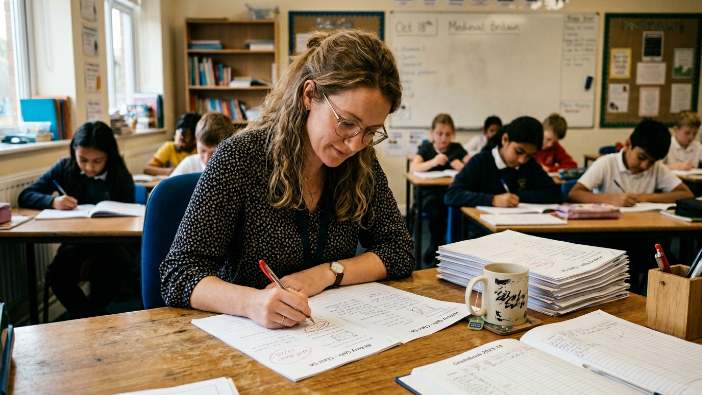
There are two main types of evaluation used in teaching:
- Formative evaluation – ongoing checks during instruction, such as quizzes, classroom questions, and observation of student work
- Summative evaluation – final assessments at the end of a unit or course, such as exams and project submissions
Without regular evaluation, a teacher cannot confirm whether students have actually understood the content taught. Evaluation also helps identify students who need extra support before moving on to new material.
Skilled teachers use evaluation results to adjust their instructional methods, revisit difficult topics, and personalize support for individual learners. This makes evaluation an active and ongoing factor throughout the entire teaching process, not just a final step.
What Are the Institutional and Administrative Factors in Teaching?
Institutional and administrative factors are the school-level and system-level conditions that shape the context in which teaching takes place. These are often outside a single teacher’s direct control, but they still have a powerful influence on teaching quality.
Key institutional factors include:
- Teacher-student ratio – how many students each teacher is responsible for
- School infrastructure – physical facilities, library access, science labs, and sanitation
- School leadership – the management style and vision of the principal and administration
- Institutional policies – timetables, curriculum mandates, and examination schedules
- Professional development opportunities – training, workshops, and peer learning programs for teachers
The OECD’s 2025 findings confirm that school climate and administrative support are just as important as individual teacher quality in determining overall teaching effectiveness. A motivated and skilled teacher working inside a poorly managed institution will face serious barriers to effective instruction.
Final Thoughts
The factors of teaching show us that effective instruction is never the result of one person or one skill alone. It is the combined interaction of the teacher, the learner, the curriculum, the methods, the environment, the resources, the evaluation process, and the institution that determines how well the teaching-learning process works.
When educators and student-teachers understand all eight factors, they are better prepared to identify what is working, what needs improvement, and where to focus their professional development efforts. Strong awareness of these elements is also a core foundation for any B.Ed curriculum and competitive teaching examination preparation.
To continue building your knowledge of the teaching process, explore more topic guides here on CleverPortalUS:
- Principles of Teaching – the guiding rules that shape effective instruction
- Phases of Teaching – how teaching unfolds across planning, delivery, and review
- Functions of Teaching – what the teaching process is ultimately designed to achieve