Peace Education: What It Is, Why It Matters, and How It Works
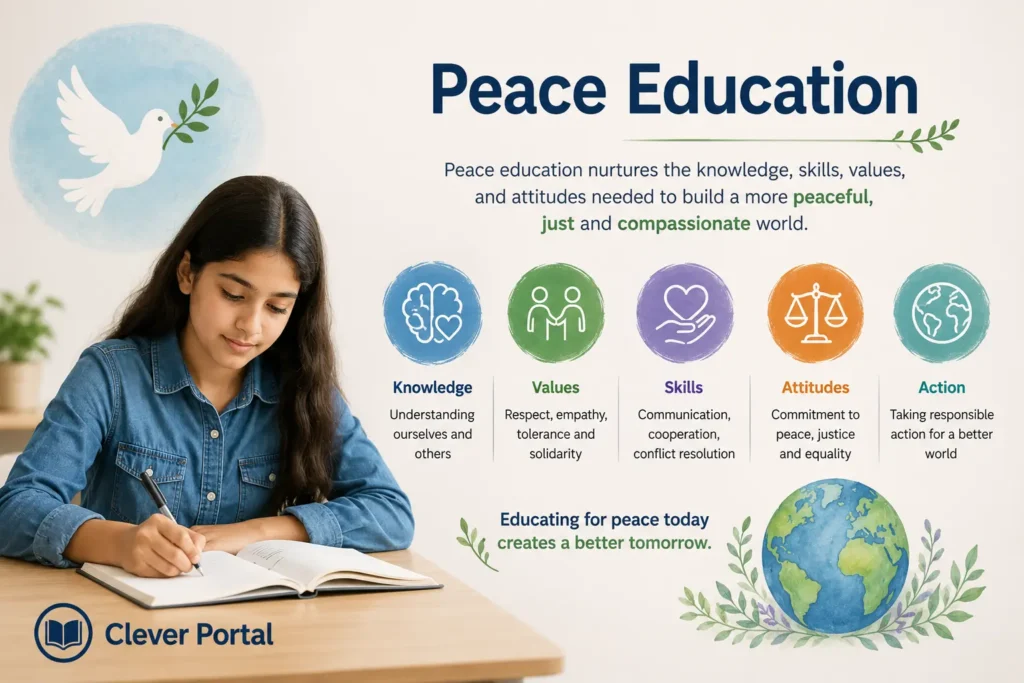
Peace education teaches people the values, knowledge, skills, and behaviors needed to prevent conflict, resolve disputes peacefully, and build lasting social harmony. It is delivered in formal schools, universities, and community programs worldwide. Its core goals include promoting human rights, tolerance, empathy, and nonviolent communication. UNESCO and UNICEF both champion peace education as an essential strategy for sustainable peacebuilding in the 21st century.
In 2024, the United Nations reported 41,000 documented attacks on schools, students, and teachers, a 44% rise compared to prior years. At the same time, 272 million children and young people were out of school globally, with half of them living in Africa. These numbers show that conflict and education are deeply connected. Peace education is the world’s most direct response to this crisis. This article explains what peace education is, what it teaches, why it matters, and how it is applied in real classrooms and communities around the world.
What Is Peace Education?
Peace education is the process of acquiring values, knowledge, attitudes, skills, and behaviors to live in harmony with oneself, others, and the natural environment. It is not just about stopping fights. It is about building a genuine culture of peace where every person feels safe, respected, and valued.
Peace education works in two directions. First, it is education about peace, which means learning what peace looks like, what causes conflict, and why violence happens. Second, it is education for peace, which means actively building the skills and mindsets needed to create peaceful change in the world.
Peace education is taught to people of all ages. It happens in formal schools, universities, NGO programs, community centers, and even homes. It applies equally in peaceful societies, in areas of active conflict, and in post-conflict regions rebuilding after war.
As an area of learning, peace education connects directly to the broader landscape of types of education that schools and communities use to shape how people think, feel, and act.
What Are the Goals of Peace Education?
The main goal of peace education is to prevent violent conflict before it starts. Beyond that, it builds the tools people need to resolve existing conflicts without turning to violence. It also works to create long-term social conditions where peace can actually last.
Peace education pursues these specific goals:
- Build skills in active listening, dialogue, and nonviolent communication
- Promote core values like respect, trust, freedom, and solidarity
- Develop a commitment to human rights and social justice
- Foster empathy and understanding across different cultures and backgrounds
- Support gender equality and environmental responsibility
- Strengthen democratic participation and civic responsibility
- Reduce bullying, discrimination, and intolerance within communities
Education International identifies nonviolence and social justice as the two central pillars of peace education. Nonviolence shows up through respect for human rights and trust. Social justice appears through equality, shared responsibility, and solidarity. Together, these pillars shape every peace education program around the world.
What Are the Types of Peace Education?
Peace education is not a single subject. It is an umbrella term that covers many different types of programs, each targeting a specific root cause of conflict. Below are the main types.
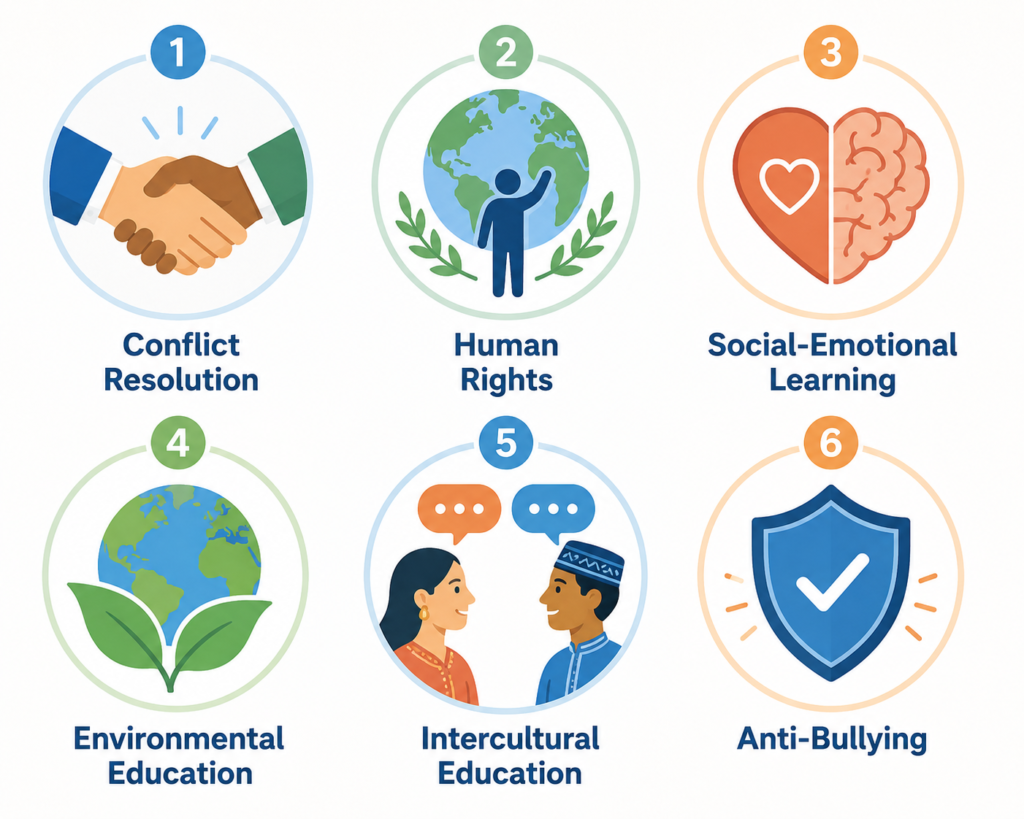
Conflict Resolution Education
Conflict resolution education teaches people how to handle disagreements without anger or violence. Students learn negotiation, mediation, and problem-solving skills. These skills help in classrooms, families, workplaces, and communities. Conflict resolution education is one of the most widely practiced forms of peace education in schools today.
Human Rights Education
Human rights education teaches people about the basic rights that every human being deserves. It is grounded in the Universal Declaration of Human Rights and connects directly to UN SDG 4, which calls for quality education for all. This type of peace education helps students recognize injustice and take peaceful action against it.
Social-Emotional Learning
Social-emotional learning (SEL) builds emotional intelligence, self-awareness, and relationship skills. The CASEL framework is one of the most recognized SEL models used globally. SEL helps students manage their own emotions, show empathy, and work cooperatively with others. It is a foundational approach inside many peace education programs.
This type of learning overlaps strongly with social science education, which also addresses civics, human behavior, and community life.
Environmental Peace Education
Environmental peace education links caring for the planet with caring for people. It teaches that environmental destruction often causes conflict over resources, land, and survival. By developing environmental responsibility, this approach builds a deeper form of positive peace that addresses structural causes of violence.
Intercultural and Interfaith Education
Intercultural education helps people appreciate differences in culture, language, ethnicity, and religion. Interfaith education specifically builds respect and understanding between people of different religious backgrounds. Conflict often grows from fear of the “other,” and this type of peace education directly challenges that fear through dialogue and shared learning.
This approach naturally connects with themes explored in religious education, which similarly promotes moral values and mutual respect.
Anti-Bullying and Disarmament Education
Anti-bullying programs apply peace education principles at the school level. They build a safe climate where students feel protected and respected. Disarmament education zooms out to the global level, teaching students about the dangers of weapons and the importance of reducing armed conflict worldwide.
Creative arts also play a powerful role in this area. Drama, music, drawing, and storytelling help young people process emotions and express peace values. This connects naturally with approaches explored in arts and craft education.
What Is Taught in a Peace Education Curriculum?
A peace education curriculum covers three main dimensions: cognitive (what you know), affective (what you feel and value), and behavioral (what you do). All three must work together for peace education to create real change.
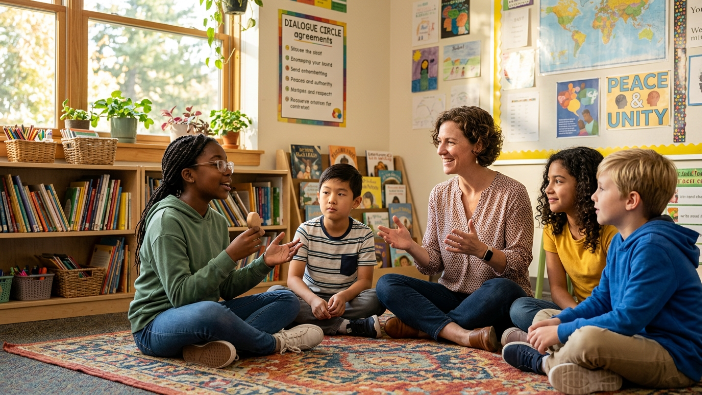
Here is what a typical peace education curriculum includes:
| Topic Area | Classroom Activity Example |
| Communication skills | Role-play exercises where students practice resolving conflicts through respectful dialogue |
| Emotional intelligence | Journaling activities that help students identify and name their own feelings |
| Nonviolent conflict resolution | Group problem-solving scenarios with no “winning” outcome |
| Active listening | Partner exercises where one student speaks and the other reflects back what they heard |
| Cultural awareness | Story sharing sessions where students explore different cultural traditions |
| Human rights knowledge | Case study discussions using real-world human rights events |
| Cooperative learning | Team projects requiring collaboration across different student groups |
Nonviolent communication (NVC) is one of the most widely used frameworks inside peace education classrooms. It was developed by Marshall Rosenberg and teaches people to express needs without blame and to listen with empathy. Teacher training in NVC and similar tools is considered essential for any successful program.
Why Is Peace Education Important?
Peace education is important because the world urgently needs it. The 44% rise in school attacks in 2024 documented by the United Nations shows that conflict is not retreating. It is growing. Without a systematic way to change values and behaviors, violent conflict gets passed from one generation to the next.
At the individual level, peace education builds confidence, self-worth, communication skills, and empathy. Researcher Ian Harris found that peace education helps children develop a sense of dignity, the courage to question their values, and a genuine awareness of others.
At the community level, peace education improves school climate, reduces bullying, and creates safer environments for teachers and students alike. Rhonda Jeffries and Ian Harris both found that peace education helps students learn alternatives to violence and build compassion rather than resentment.
At the global level, peace education is one of the key tools for sustainable peacebuilding. The United Nations includes education as a core component of its peacebuilding strategy. UNESCO frames peace education as central to achieving UN SDG 4, which calls for inclusive, quality education that promotes global citizenship.
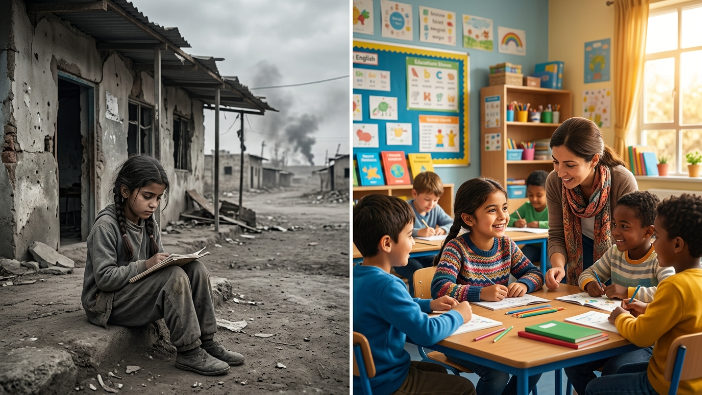
It is also worth understanding the difference between negative peace and positive peace. Negative peace means the absence of war or direct violence. Positive peace means the presence of justice, equality, cooperation, and social systems that meet everyone’s needs. Peace education targets both. It helps stop active violence while also building the social foundations for lasting positive peace.
Real-World Examples of Peace Education Programs
Peace education is not just an idea. It is being practiced in countries around the world right now.
Rwanda offers one of the most integrated examples. Peace education runs through all school subjects in Rwanda. The Aegis Trust, working with Rwanda’s Basic Education Board, developed a peace and values education program with teacher guides and model lesson plans that embed peace concepts across every subject area.
Armenia made peace education a formal requirement in schools starting in 2015. The program used a whole-of-school approach, integrating peace concepts into school culture, classroom teaching, and student life. It helped build trust between students and teachers across communities.
UNESCO’s Culture of Peace projects have been launched in multiple countries including Cambodia, the Dominican Republic, and others. These projects train teachers, administrators, and students together, building a shared school culture around nonviolence and cooperation.
UNICEF has also developed country-based peace education programs that work at the school and community level simultaneously. These programs are designed for conflict-affected settings and focus on rights-based learning for real, lasting behavior change.
These examples confirm what the research shows: when peace education is built into school systems and communities with proper teacher training and institutional support, it produces measurable results.
What Are the Challenges of Peace Education?
Peace education faces real barriers that limit how widely it can be applied.
- Political resistance: Some governments resist peace education because it encourages students to question authority or challenge existing power structures
- Lack of teacher training: Teachers must be skilled in peace pedagogy to deliver it well. Without proper training, programs lose their impact
- Underfunding: UNESCO’s 2025 Global Education Monitoring Report warned that international aid to education could fall by more than a quarter between 2023 and 2027, with a 12% decline already observed in 2024
- Measuring outcomes: Peace values and attitudes are hard to measure with standard tests, making it difficult for schools to assess program success
- Cultural context differences: A peace education program that works well in one country may not translate directly to another without adaptation to local conflict dynamics and cultural values
These challenges are real, but they are not impossible to solve. Countries like Rwanda and Armenia show that with political will and proper funding, peace education can be scaled effectively.
The Future of Peace Education
Peace education is gaining new momentum in 2025 and 2026. In February 2025, UNESCO reaffirmed its Recommendation on Education for Peace at a major international summit, calling on all nations to integrate peace values into their national education systems. This was a landmark signal that peace education is moving from the margins of policy to the center.
UNESCO’s 2026 International Day of Education placed youth at the heart of education change, framing young learners as co-creators rather than passive recipients of education. This shift supports a more active, student-led model of peace education that empowers learners to build the world they want to live in.
Technology is also opening new doors. Online platforms, digital storytelling tools, and virtual exchange programs are helping schools deliver peace education across borders, even in conflict-affected regions where physical access is limited. As these tools improve, the reach and impact of peace education programs will continue to grow.
The connection between technical vocational education and community peace-building is also growing, as skills-based training programs increasingly embed conflict resolution and cooperative values alongside practical job skills.
Peace Education Is a Shared Responsibility
Peace education belongs to everyone. It is not only the job of schools or NGOs or governments. Every family, community leader, and institution plays a role in passing on the values of nonviolence, empathy, tolerance, and respect for human rights.
The evidence is clear. Countries that invest in peace education see stronger school climates, reduced bullying, and more socially aware graduates. Organizations like UNESCO, UNICEF, the Peace Education Campaign, and Education International are actively expanding these programs across the globe.
If you want to explore more educational approaches that shape how people learn and grow together, read our complete guide to types of education for a full look at the educational frameworks making a real difference in classrooms worldwide.