Broad and Narrow Meaning of Education Explained
The broad and narrow meaning of education describes two distinct ways of understanding what learning really is. The narrow meaning confines education to schools, trained teachers, and formal curricula. The broad meaning extends it to every experience a person has from birth through old age. Both views shaped how societies build their schools and how teachers approach their work. This article explains what each meaning stands for, how they differ in practice, what philosophers said about them, and why both views still shape education today.
What Is the Narrow Meaning of Education?
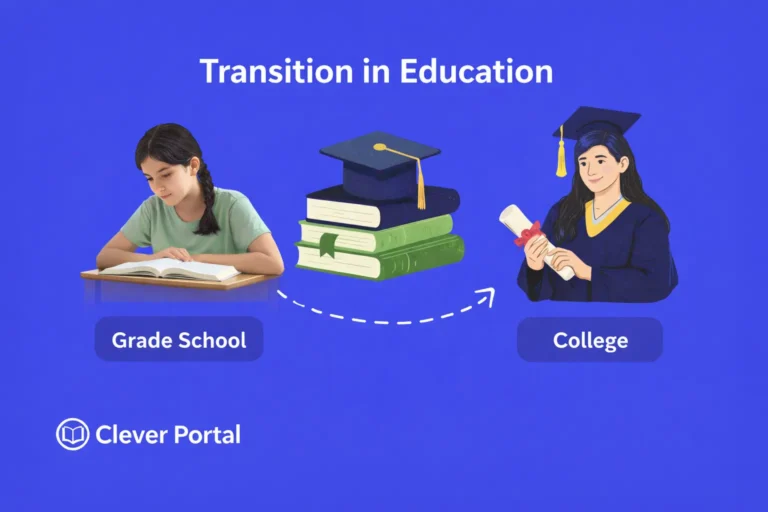
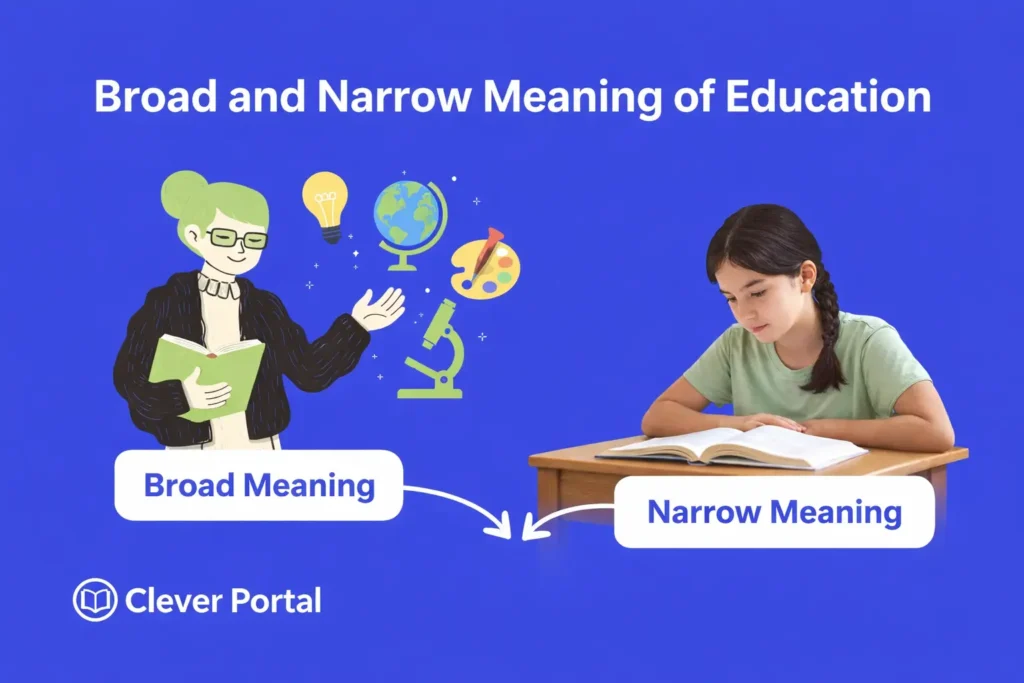
The narrow meaning of education refers to planned, school-based learning delivered by trained teachers inside formal schools and colleges. It starts when a child enters school and ends when they complete their formal course of study.
Philosopher T. Raymont defined it clearly: “In the narrower and more definite sense, education does not include self-culture and the general influences of one’s surroundings.” S.S. Mackenzie added that narrow education means “any consciously directed effort to develop and cultivate our powers.”
Based on our review of educational philosophy texts, the narrow meaning appears most often in national policy documents and academic examinations. This is because it is easy to measure, fund, and organize at scale.

To understand how this formal system grew over centuries, read the full guide on the origin and meaning of education and how structured schooling developed from ancient scribal training.
Characteristics of Education in the Narrow Sense
The narrow meaning of education carries specific features that set it apart from broader learning. 6 key characteristics of education in the narrow sense are listed below.
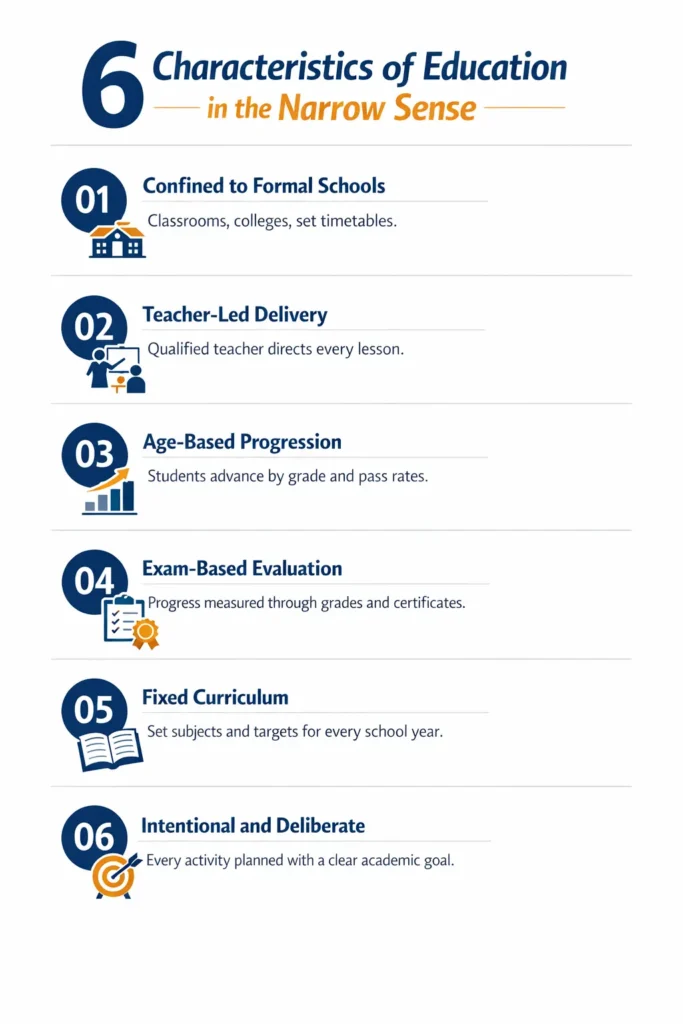
- Confined to formal schools — Learning happens inside schools, colleges, and universities with physical classrooms and set timetables for each subject.
- Teacher-led delivery — A qualified teacher directs the lesson while the student receives knowledge in a structured and planned sequence.
- Age-based progression — Students move through grade levels by age and pass rates, progressing through the formal examination system step by step.
- Exam-based evaluation — Progress is measured through tests, grades, and official certificates issued by recognized educational bodies.
- Fixed curriculum — A set list of subjects and topics covers each school year with specific learning targets for every student to reach.
- Intentional and deliberate — Every learning activity is planned in advance with a clear academic goal set for the student to achieve.
Limitations of the Narrow Meaning
The narrow meaning has clear benefits, yet it also has limits that affect how fully a student can grow as a person.
- It focuses so heavily on academic achievement that emotional, moral, and creative development are often left out
- It treats learning as something that can only happen inside a building with a teacher present
- It tends to reward memorization rather than genuine understanding of ideas and concepts
- It does not account for the learning people gain through family life, culture, and lived experience
What Is the Broad Meaning of Education?
The broad meaning of education covers all learning experiences throughout a person’s entire life, far beyond the walls of any school. It starts from birth and continues until death.
Philosopher Lodge put it simply: “All experiences are said to be educative.” G.H. Thompson described it as “the influence of the environment on the individual with a view to producing a permanent change in his habits of behaviour.”
The broad meaning includes what schools provide, yet it extends much further to cover family life, community interactions, cultural traditions, and personal discovery. According to the World Economic Forum, 50% of the global workforce will need reskilling by 2025. That fact shows why lifelong learning and the broad view of education matter more than ever before.
Characteristics of Education in the Broad Sense
The broad meaning has its own distinct set of features that separate it from formal schooling. 6 key characteristics of education in the broad sense are listed below.
- Lifelong process — Learning starts at birth and continues through every stage of adult life with no fixed end point or graduation ceremony.
- Happens anywhere — Education takes place at home, in communities, at work, in nature, and through personal relationships throughout daily life.
- Both planned and unplanned — Some broad education is intentional, yet much of it happens naturally through everyday experience without any set plan.
- Focuses on the whole person — It aims at personality development, covering moral values, emotional health, and social skills alongside academic knowledge.
- Tied to the individual — Broad education develops the natural abilities and talents each person is born with, at their own pace.
- Free and flexible — It is not controlled by any curriculum or graded by examiners, so it adapts freely to the person’s own path through life.
Real-Life Examples of Broad Education
Broad education is present in everyday life, even when people do not recognize it as learning. 4 real-life examples of broad education are listed below.
- Family values — A child learns honesty, respect, and responsibility by watching how parents behave at home each day without a lesson plan.
- Financial awareness — A person learns to budget and save by managing a household over time, not by studying a finance textbook in class.
- Digital skills — An adult learns to use new software through self-study, online tutorials, and trial and error at their own pace.
- Cultural knowledge — Community elders pass down local history, language, and traditions to younger generations through storytelling and shared practice.
Key Differences Between Broad and Narrow Meaning of Education
The broad and narrow meaning of education differ in scope, setting, duration, and purpose. The narrow meaning restricts learning to a set period inside a school. The broad meaning treats learning as a condition of being alive.
Based on our analysis of educational philosophy literature, both meanings are often presented as opposites. In practice, they describe two different yet equally necessary parts of the same process.
UNESCO’s Sustainable Development Goal 4 calls for inclusive and equitable quality education for all. Meeting that goal requires both kinds of education working together at every level of society.
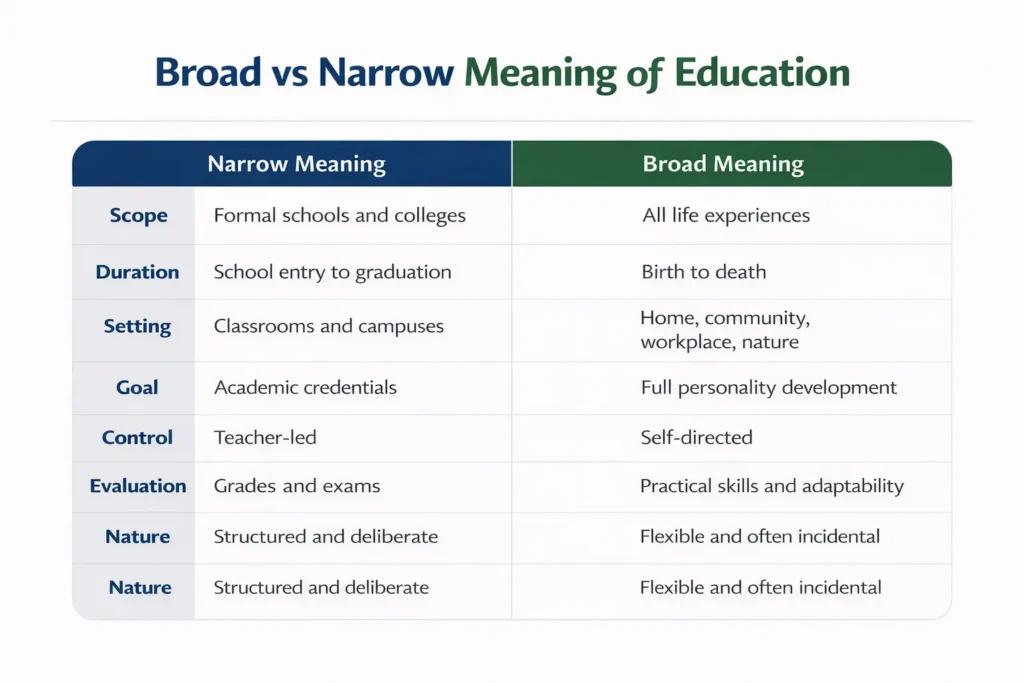
The table below shows the key differences at a glance.
| Aspect | Narrow Meaning | Broad Meaning |
|---|---|---|
| Scope | Formal schools and colleges | All life experiences |
| Duration | School entry to graduation | Birth to death |
| Setting | Classrooms and campuses | Home, community, workplace, nature |
| Goal | Academic knowledge and credentials | Full personality development |
| Control | Teacher-led and curriculum-bound | Self-directed and experience-driven |
| Evaluation | Grades, exams, degrees | Practical skills and adaptability |
| Nature | Structured and deliberate | Flexible and often incidental |
How Did Philosophers Define Broad and Narrow Education?
Philosophers across centuries shaped both views through their own observations about how people truly learn. Their definitions still appear in B.Ed programs and teacher training courses worldwide.
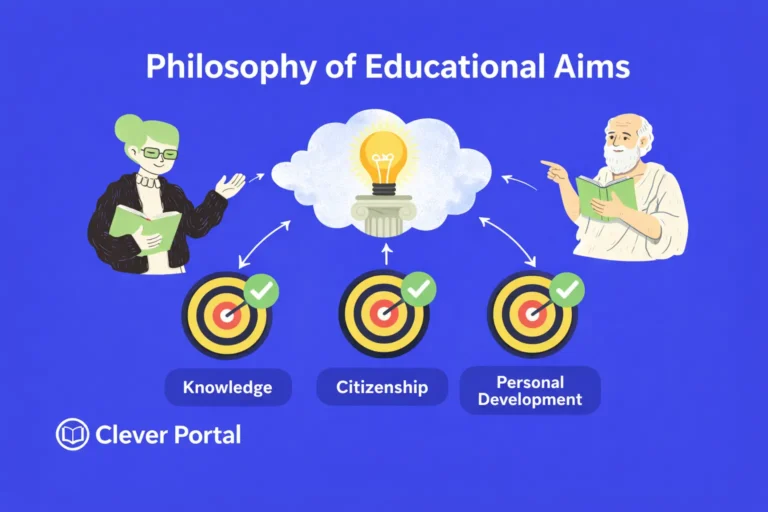
For a deeper look at how these ideas connect to teaching practice, the guide on philosophy of educational aims explains how each tradition shaped classroom design.
5 major philosophers and their views on broad and narrow education are listed below.
- Aristotle — Viewed education as a deliberate process of developing virtue and reason, which reflects the narrow, planned approach to formal learning and character building.
- Jean-Jacques Rousseau — Argued that nature educates the child best, placing him firmly in the broad camp of experiential and lifelong learning beyond any school.
- John Dewey — Stated that “education is not preparation for life; education is life itself,” a direct and clear endorsement of the broad meaning of education.
- Rabindranath Tagore — Believed children should learn in natural settings through creative activity, making him one of the strongest voices for broad education in Asia.
- Drever — Defined education as “the process in which the individual’s experience is shaped by the knowledge, character, and behaviour of the group,” bridging both meanings in one definition.
Why Both Meanings of Education Matter Today
The broad and narrow meaning of education are not competing ideas. They are two lenses that together create a complete picture of what it means to learn and grow as a human being.
The narrow meaning gives education its structure. It creates pathways, qualifications, and shared academic standards that societies depend on. The broad meaning gives education its depth. It builds empathy, creativity, and adaptability that no exam can ever fully measure.
According to the World Bank, each extra year of formal schooling raises a person’s earning potential by 8 to 10 percent. Yet formal schooling alone cannot develop the full range of skills people need for work and life in a changing world.
UNESCO also reports that 244 million children worldwide still have no access to school. For those children, broad informal education is not one option among many. It is their only path to gaining knowledge and skills.
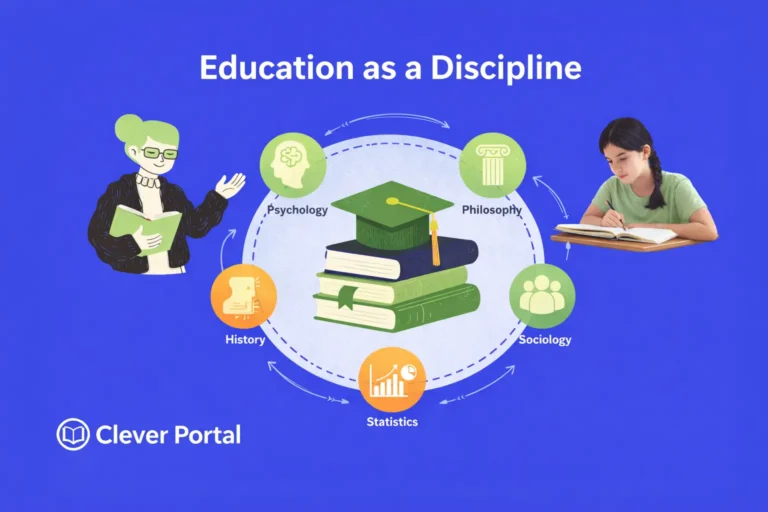
The study of education as a discipline draws on both meanings to build a formal academic field that examines how and why people learn across every context.
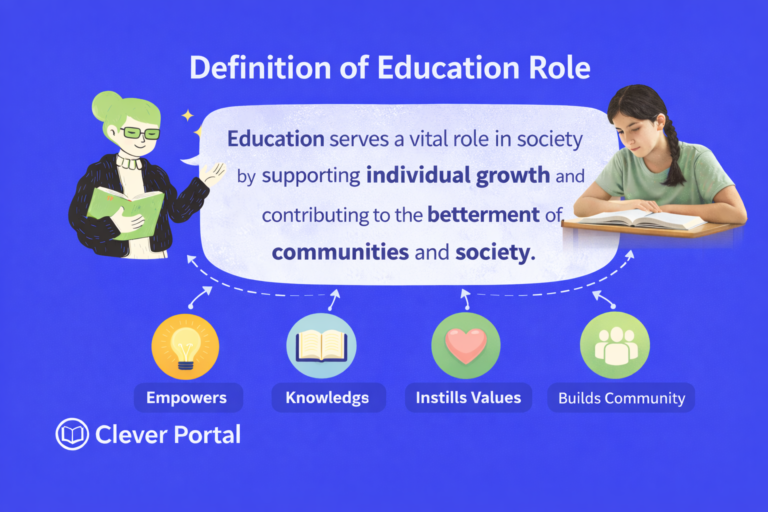
Both meanings also connect directly to the definition and role of education as a social force that shapes every community and generation.
Frequently Asked Questions
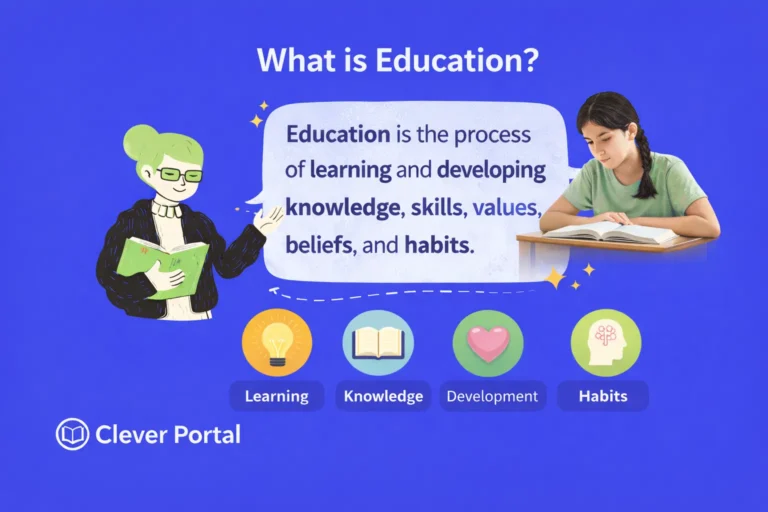
What is Education?
“Education is the most powerful weapon which you can use to change the world.” – Nelson Mandela
Education is more than just schooling; it is the fundamental instrument used to shape and refine the human experience. It serves as the primary catalyst for evolution across all dimensions of society, be it social, cultural, spiritual, political, or economic.
At its core, education empowers individuals to navigate both their personal and social lives with success. By teaching us how to adapt to a constantly changing environment, it enables us to meet our needs and achieve our life’s purpose. In the modern world, education has become as essential to human survival and dignity as food, clothing, and shelter.
Is school the only form of education?
No, school is not the only form of education. School represents the narrow meaning of education, which is only one part of a much larger process. People learn through family life, cultural experience, personal relationships, and work every single day. The broad meaning of education recognizes all of these experiences as genuine and valuable forms of learning.
Which meaning of education is more important?
Neither meaning is more important than the other, because both serve different purposes. The narrow meaning provides structure, qualifications, and shared academic standards. The broad meaning provides lifelong growth, personal values, and real-world adaptability. Both work together to develop a fully rounded person. Prioritizing one at the expense of the other creates gaps that affect both individuals and the societies they live in.
What are the characteristics of education in the narrow sense?
The narrow meaning of education has six main characteristics. It is confined to formal schools and colleges. It is teacher-led, with the student receiving knowledge in a structured way. It follows an age-based grade structure with fixed progression steps. It measures progress through exams and official certificates. It uses a planned, fixed curriculum with specific targets. Every learning activity is intentional and designed in advance to reach clear academic goals.
How did philosophers define the broad meaning of education?
Philosophers like Rousseau, Dewey, and Tagore each defined broad education in their own way, yet all agreed that genuine learning happens far beyond the classroom. Rousseau believed nature educates the child. Dewey called education life itself. Tagore argued for learning through creative experience in natural settings outside formal schools. Together, they built the foundation for the modern broad view of education as a lifelong and life-wide process that never truly ends.
Conclusion
The broad and narrow meaning of education represent two essential ways of understanding learning. The narrow view gives it structure, measurability, and clear academic pathways. The broad view gives it scope, depth, and lifelong relevance. A truly educated person needs both: the formal knowledge that school provides and the lived wisdom that daily experience builds over a lifetime.
Three key takeaways from this article:
- The narrow meaning covers school-based, formal, teacher-led, and measurable learning
- The broad meaning covers lifelong, experiential, and informal learning across all life settings
- Both meanings work together to develop a fully rounded individual and a stronger society
The next step is to explore how these two views fit into the larger picture of what education really means as a concept, a practice, and a social force.