Types of Education: A Complete Guide for Students and Parents
Education comes in three core types: formal, informal, and non-formal. Formal education follows a structured curriculum in schools and universities. Informal education is unplanned learning from daily life. Non-formal education is organized but outside the school system. Beyond these three, modern types like vocational, online, and special education also play a big role. Understanding all types helps students, parents, and educators choose the right learning path.
Not all learning happens in a classroom. A child learning to cook with their grandparents, a student earning a college degree, and an adult taking an online coding course are all learning. But each one is experiencing a different type of education.
So, what are the main types of education? In this guide, you will discover every major type, from formal schooling to everyday informal learning. You will find clear definitions, real examples, and a side-by-side comparison table to help you understand how they work and which one fits your goals.
What Are the Main Types of Education?
Experts and organizations like UNESCO recognize three core types of education: formal, informal, and non-formal. These three form the foundation of how learning is classified around the world.
Beyond the core three, there are also extended types of education. These include vocational education, special education, online education, and distance learning. Each type has its own setting, structure, and purpose.
Here is a quick overview before we go deeper:
| Type | Setting | Structured? | Leads to Credentials? |
|---|---|---|---|
| Formal | Schools, colleges, universities | Yes | Yes |
| Informal | Home, community, daily life | No | No |
| Non-Formal | Workshops, online platforms, community centers | Partly | Sometimes |
| Vocational | Trade schools, apprenticeships | Yes | Yes (trade certifications) |
| Online/Digital | Internet-based platforms | Varies | Varies |
| Special Education | Schools with support services | Yes | Yes |
To understand how these types compare in more depth, you can also read about formal, informal, and non-formal education differences.
What Is Formal Education?
Formal education is a structured, institution-based learning system. It follows a defined curriculum, is delivered by trained teachers, and leads to recognized certificates or degrees. It covers everything from pre-kindergarten through higher education and is governed by national or regional standards.
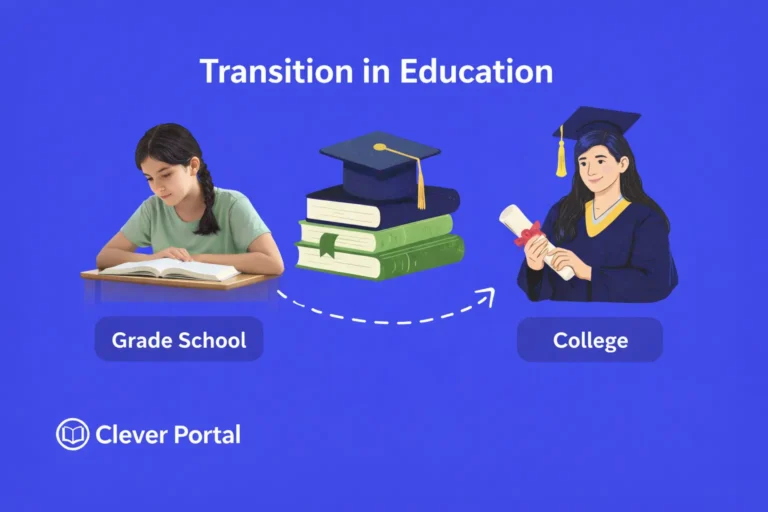
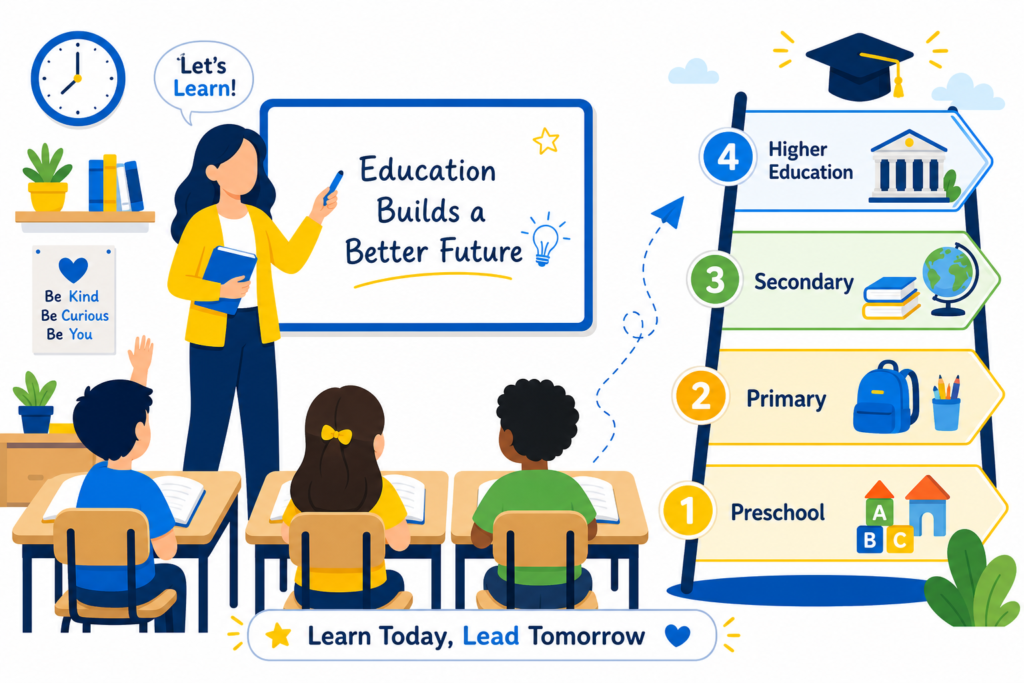
Think of formal education as the organized ladder of learning. You start at the bottom in preschool and move up through primary school, secondary school, and then on to college or university.
Levels of Formal Education
Formal education is divided into clear levels:
- Pre-Primary Education: Preschool and kindergarten programs that prepare young children for structured learning
- Primary Education: Elementary school, covering foundational skills like reading, writing, and math (usually grades 1 to 6)
- Secondary Education: Middle school and high school, where students begin specializing in subjects (grades 7 to 12)
- Higher Education: Colleges, universities, and graduate programs that award bachelor’s, master’s, and doctoral degrees
- Vocational Training within Formal Systems: Some countries include accredited trade schools as part of their formal education structure
According to the OECD Education at a Glance 2025 report, tertiary (higher) education completion rates continue to rise globally, with more adults earning formal degrees than ever before.
Advantages and Disadvantages of Formal Education
Advantages:
- Recognized credentials that employers and institutions accept
- Structured progression with clear learning outcomes
- Access to trained teachers, libraries, and academic resources
- Social development through interaction with peers
Disadvantages:
- Can be rigid and may not fit every learning style
- Often expensive, especially at the higher education level
- Time-bound schedules may not work for everyone
- Less flexibility compared to other types of learning
What Is Informal Education?
Informal education is unplanned, spontaneous learning that happens through everyday experiences. It has no set curriculum, no scheduled timetable, and no formal certification. Yet it shapes critical life skills and social behavior throughout a person’s entire life.
Brock University’s Foundations of Education program describes informal education as lifelong learning that never stops. You learn informally when you talk with family, observe your community, watch a documentary, or figure out how to fix something around the house.
Examples of informal education include:
- Learning cultural values and traditions from parents and grandparents
- Picking up a new language by talking with friends
- Developing social skills through play and group activities
- Learning financial habits by watching how adults manage money
- Gaining knowledge through reading books, blogs, or watching videos
Informal education is deeply connected to who you become as a person. To understand why this type of learning matters so much, read more about the importance of informal education.
Unlike formal education, there is no teacher giving grades. Unlike non-formal education, nothing is planned in advance. Informal learning simply happens as you live your life.
What Is Non-Formal Education?
Non-formal education is organized, intentional learning that takes place outside the traditional school system. It is planned and purposeful, but it does not always lead to nationally recognized degrees or diplomas.
UNESCO describes non-formal education as a flexible way to provide learning opportunities to people of all ages. This includes adult literacy programs, skill development courses, and community health workshops.
Examples of non-formal education include:
- Online courses on platforms like Coursera, Udemy, or Khan Academy
- Community language classes or cultural workshops
- Youth leadership programs and scouting organizations
- Short-term professional development seminars
- Adult education programs for people who missed formal schooling
Non-formal education is especially valuable for working adults who want to build new skills without going back to school full time. It is also a key part of lifelong learning, the idea that education does not stop after you leave school.
Key advantages of non-formal education:
- Flexible scheduling that fits around work and family
- Usually more affordable than formal programs
- Focused on practical, real-world skills
- Open to learners of any age and background
- No strict entry requirements in most cases
Research shows that structured social-emotional learning (SEL) programs, which are a form of non-formal education, improve academic achievement by an average of 8.4 percentile points. This shows that organized learning outside the classroom has measurable real-world impact.
What Are the Other Types of Education?
Beyond formal, informal, and non-formal education, there are several other important types that shape how people learn in modern society. These types often overlap with the core three but deserve their own explanation.
Vocational and Technical Education
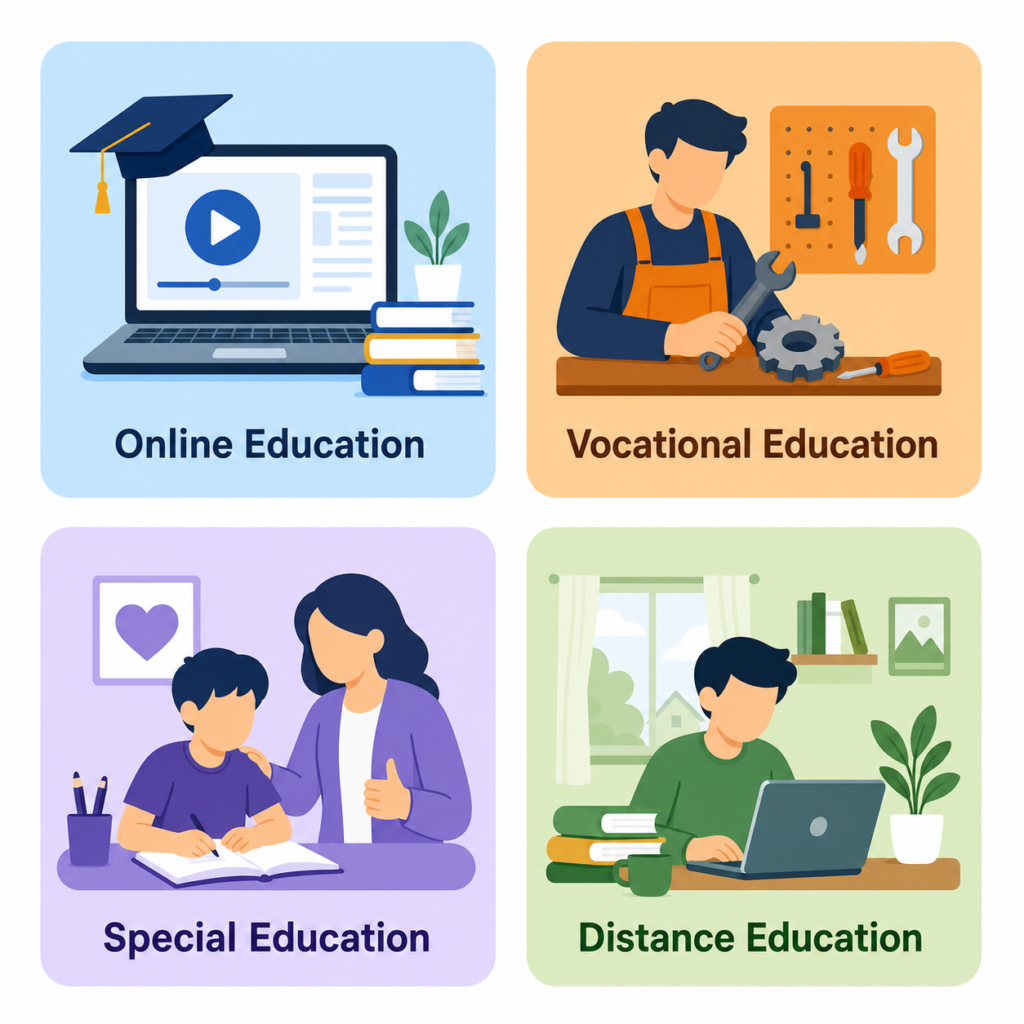
Vocational education focuses on teaching specific job skills and career-ready knowledge. Instead of a broad academic curriculum, students in vocational programs learn trades like plumbing, electrical work, healthcare, cooking, auto repair, or information technology.
Vocational programs are offered through trade schools, apprenticeships, community colleges, and some high schools. In the United Kingdom, T-Levels were introduced to give students a recognized vocational qualification alongside academic options.
If you want to learn more about how skills-based learning works, explore our full guide on technical and vocational education.
Vocational education is a smart path for students who prefer hands-on learning and want to enter the workforce with job-ready skills.
Special Education
Special education provides customized learning support for students with physical, cognitive, emotional, or developmental disabilities. Teachers in special education use modified curricula, assistive technology, and Individualized Education Programs (IEPs) to meet each student’s unique needs.
Special education is a formal type of education, but it uses personalized methods to ensure every learner can access quality schooling. Inclusive education models aim to place students with disabilities into mainstream classrooms with additional support.
Online and Digital Education
Online education delivers learning through the internet. It can be formal (like an accredited online university degree) or non-formal (like a free video course on YouTube). The rise of platforms like Coursera, Udemy, and Khan Academy has made online education one of the fastest-growing types of learning worldwide.
According to Exploding Topics, online learning, microlearning, and AI-assisted education are among the top 12 emerging education trends for 2025 and 2026. Hybrid learning models that combine in-person and online instruction are also becoming the standard at many schools and universities.
Online education has made it possible for people in remote areas to access quality learning. This connects closely to the goal of universal education, which aims to make quality learning available to everyone around the world.
Distance Education
Distance education is a type of learning where the student and the teacher are physically separated. Lessons are delivered through mail, broadcast, or digital platforms. Distance education can be self-paced or follow a set schedule.
Distance education is especially useful for adult learners, people in rural communities, and students who cannot attend traditional classes. It has evolved significantly with technology, moving from printed correspondence courses to real-time video lectures.
What Is the Difference Between Formal, Informal, and Non-Formal Education?
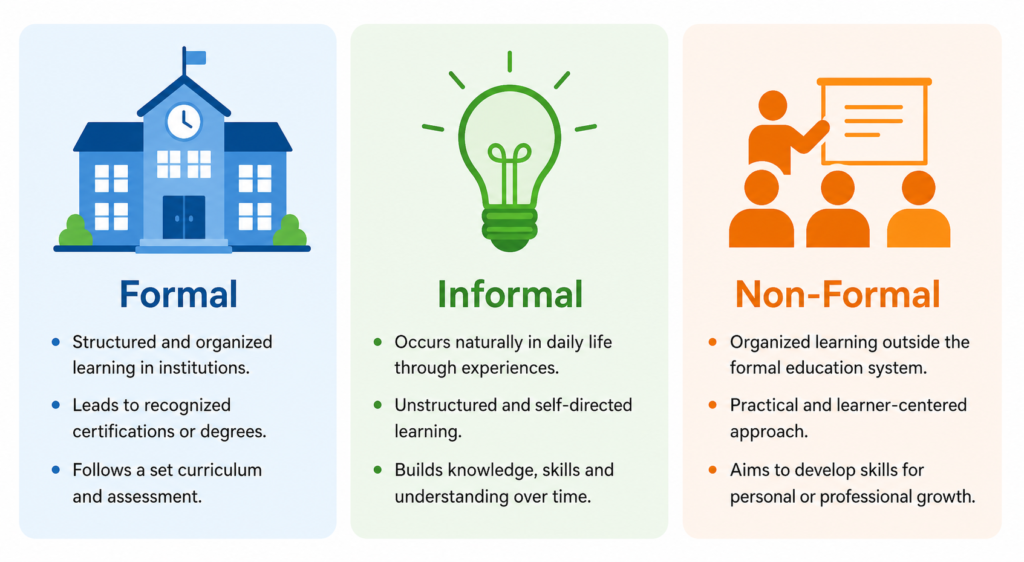
The key difference lies in structure and certification. Here is a full comparison to make it easy to understand:
| Feature | Formal Education | Non-Formal Education | Informal Education |
|---|---|---|---|
| Setting | Schools, colleges, universities | Workshops, online platforms, community centers | Home, community, daily life |
| Structure | Highly structured | Organized but flexible | Unstructured |
| Curriculum | Defined and standardized | Purpose-based, flexible | No set curriculum |
| Certification | Yes (degrees, diplomas) | Sometimes (certificates) | No |
| Age Restrictions | Usually follows age groups | Open to all ages | No restrictions |
| Flexibility | Low | Medium | High |
| Examples | K-12, bachelor’s degree | Udemy course, adult literacy class | Learning from parents, watching documentaries |
As you can see, all three types serve different purposes and meet different learner needs. Most people experience all three throughout their lives, often at the same time.
For example, a student might attend high school (formal), take a weekend photography class (non-formal), and learn how to navigate social situations from friends (informal), all in the same week.
Which Type of Education Is Best for You?
There is no single best type of education. The right choice depends on your goals, your current life stage, and your learning style. Here is a simple way to think about it:
- Young students in K-12: Formal education is the foundation. It builds literacy, numeracy, and critical thinking skills needed for adult life.
- Adults looking to change careers: Non-formal education, such as professional certification courses or vocational training, offers fast, practical skill-building.
- People who learn best from experience: Informal education is always happening. Seek out mentors, travel, read widely, and engage with your community.
- Students in underserved areas: Online and distance education can provide access to quality learning when physical schools are not available.
- Learners with disabilities: Special education with personalized IEPs ensures everyone gets the support they need to succeed.
Education is not a one-size-fits-all experience. The smartest learners combine types. They earn formal credentials, pursue non-formal skill-building, and stay curious through informal everyday experiences.
This is what lifelong learning is all about, and it is the foundation of personal and professional growth at every stage of life.
Frequently Asked Questions
What are the 3 main types of education?
The three main types are formal, informal, and non-formal education. Formal education takes place in schools with a structured curriculum. Informal education is unplanned daily learning from life experiences. Non-formal education is organized but outside the traditional school system. All three contribute to a person’s complete learning journey.
What is an example of non-formal education?
Examples include online courses on Coursera or Udemy, community health workshops, adult literacy programs, language classes at cultural centers, and skill-based bootcamps. These are organized and intentional but are not part of the formal school system and usually do not award academic degrees.
Is online education formal or informal?
Online education can be either. An accredited university degree delivered online is formal education. A free skill course on YouTube or Udemy is non-formal education. The difference depends on whether the program is credentialed by a recognized institution, not the delivery method.
How does UNESCO classify types of education?
UNESCO recognizes formal, non-formal, and informal education as the three core categories. Its SDG 4 framework covers primary, secondary, early childhood, vocational, and tertiary education as part of its global education targets for 2030. These goals are closely linked to the broader idea of universal access to education for all people worldwide.
What is the difference between informal and non-formal education?
Informal education is unplanned and occurs naturally through experience, like learning cultural values from family. Non-formal education is deliberately organized outside schools, like a weekend cooking class. The key difference is intentionality: non-formal education is planned, while informal education is not.
What are the modern types of education emerging in 2025 and 2026?
Modern types of education include online learning, hybrid classrooms, microlearning, AI-assisted learning, and project-based learning. These formats blend traditional methods with technology to meet the needs of today’s learners. Digital education platforms have made it easier for students of all ages to access quality learning from anywhere.