Universal Education: What It Is, Why It Matters, and Where the World Stands Today
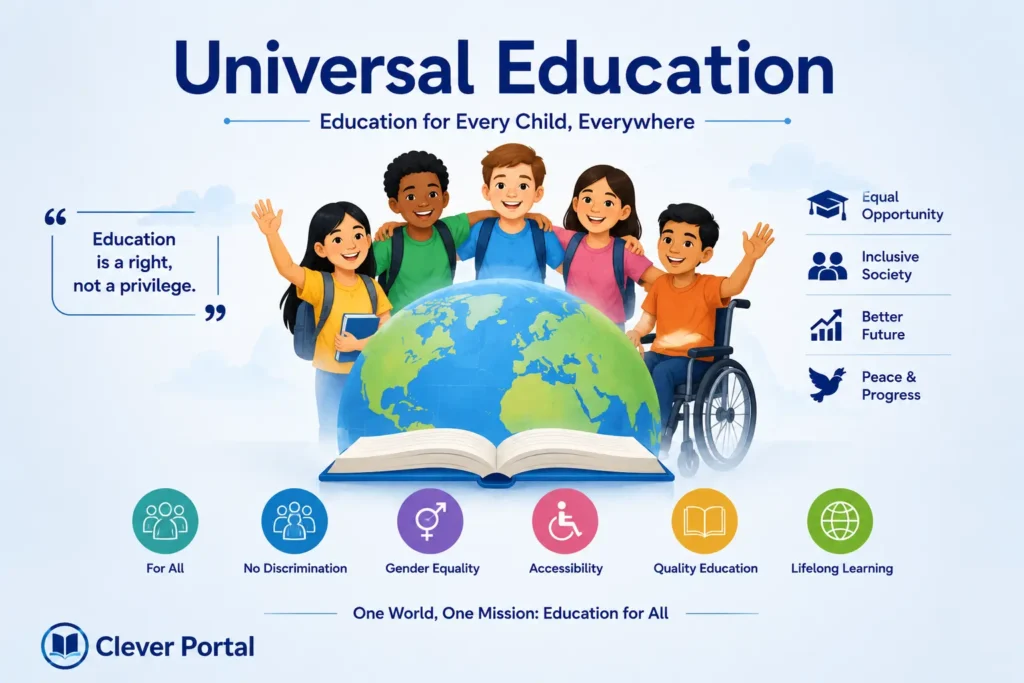
Universal education is the commitment to give every person, regardless of gender, income, location, or disability, an equal right to quality education. It is a globally recognized human right anchored in the United Nations’ Sustainable Development Goal 4 (SDG 4), which targets 12 years of free, quality schooling for all by 2030. Despite real progress since 2000, 273 million children remain out of school worldwide. Closing funding gaps, removing social barriers, and building stronger inclusive education systems are the most urgent steps forward.
In 2024, 273 million children and young people were still out of school. That means 1 in 6 school-age children is growing up without a basic education, right now, in a world that has made this same promise for over 75 years. Universal education is the global commitment to change that reality. It is the idea that no child should be left behind because of where they were born, how much money their family has, or what gender they are. This article explains what universal education really means, what goals drive it, why it matters so much, and what stands in the way of making it real for every child on Earth.
What Is Universal Education?
Universal education is the commitment to provide free, quality education to every person, regardless of socioeconomic background, gender, ethnicity, disability, or geographic location. It is recognized as a fundamental human right and is central to the United Nations’ Sustainable Development Goal 4 (SDG 4), which aims for inclusive, equitable education for all by 2030.
The word “universal” here does not mean the same classroom or the same textbook for everyone. It means equal opportunity. Every person, no matter their background, should have a real chance to learn, grow, and reach their potential.
Universal education also covers more than just primary school. It includes:
- Early childhood education and care
- Primary school (ages 6 to 12 roughly)
- Secondary school through to age 18
- Vocational and technical training
- Higher education access based on merit
- Adult literacy and lifelong learning programs
One important thing to understand is that universal education and universal access to education are closely connected but slightly different ideas. Universal education is the broader goal that everyone should have quality schooling. Universal access focuses more specifically on removing the barriers that stop people from entering school in the first place. Both concepts work together and neither one is possible without the other.
A Brief History of Universal Education
The idea of universal education did not appear overnight. It grew over decades through international agreements and global movements.
Here are the key milestones that shaped the modern meaning of universal education:
- 1948: Article 26 of the Universal Declaration of Human Rights declared education a basic human right for every person on Earth. This was the first time the world formally agreed that access to schooling was not a privilege but a right.
- 1989: The United Nations Convention on the Rights of the Child formalized education as a children’s right. The UNESCO Education for All (EFA) initiative was launched, calling on every country to open their school doors to all children.
- 2000: The Millennium Development Goals (MDGs) set a specific target: achieve universal primary education for all children by 2015. This made primary school enrollment a measurable global priority for the first time.
- 2015: The Incheon Declaration replaced the MDGs with a broader vision. SDG 4 was adopted, expanding the promise from primary school only to 12 years of free, quality education for everyone, including early childhood, secondary school, and lifelong learning.
Each of these moments added a layer of urgency and accountability. Today, SDG 4 is the world’s most detailed roadmap for what universal education should look like by 2030.
What Are the Goals of Universal Education?
The primary goal of universal education is to ensure every child completes at least 12 years of free, quality schooling, with a minimum of 9 years mandatory. Goals also include eliminating gender disparities, providing inclusive education for people with disabilities, achieving universal literacy and numeracy, and supporting lifelong learning for all adults.
SDG 4 breaks this down into specific, measurable targets. Here are the five most important ones in plain language:
- Free quality primary and secondary education: Every girl and boy should complete 12 years of schooling that leads to real learning outcomes, not just attendance.
- Early childhood development: All children should have access to quality care and pre-primary education before they start primary school.
- Gender parity: Girls and boys should have equal access at every level, and gender discrimination in schools must be eliminated.
- Inclusive education: Children with disabilities, from ethnic minorities, and from indigenous communities must be included in mainstream schooling, not excluded or placed in separate systems.
- Literacy, numeracy, and lifelong learning: All young people and adults must reach minimum reading and math skills, and education systems must support learning throughout a person’s whole life.
These goals are ambitious. But they are not unrealistic. More than 100 countries have already guaranteed free pre-primary education in law. The challenge is making that law a lived reality, especially in low-income nations.
Why Is Universal Education Important?
Universal education is one of the most powerful tools the world has for reducing poverty, improving health, and creating fair societies. When more people have access to quality schooling, entire communities benefit.
Universal Education and Poverty Reduction
Education breaks the cycle of poverty in a direct way. Children who complete secondary school are far more likely to earn higher incomes as adults. A World Bank study found that every year a girl spends in secondary school increases her future earning power by 18 percent. That is not a small gain. Over a lifetime, education transforms economic outcomes for individuals, families, and whole communities.
The connection between education and poverty reduction is also why child labor is such a serious problem. When families are very poor, they sometimes pull children out of school to work. This creates a cycle that traps future generations in the same poverty. Universal education, paired with financial support for poor families, is one of the most effective ways to break that cycle.
Health, Gender Equality, and Social Benefits
The benefits of universal education go far beyond earning power. Children of educated mothers are 50 percent more likely to survive past age 5. Education gives people the knowledge to make better health decisions, seek medical care, and protect their families.
Gender equality is also deeply tied to educational access. When girls go to school, they are less likely to face early marriage, more likely to participate in public life, and more likely to raise healthy, educated children of their own. UNESCO describes education as “the most sustainable investment” a society can make because its benefits compound across generations.
At a broader level, societies with higher education rates tend to have lower crime, stronger democratic participation, and faster economic growth. These are not small side effects. They are the core reason why universal education is treated as a global priority rather than just a nice idea.
What Are the Main Barriers to Universal Education?
Progress toward universal education has been real but painfully slow. In 2024, 251 million children and youth remained out of school globally, a reduction of just 1 percent since 2015. Understanding why requires looking at the real barriers that keep children away from classrooms.
The Funding Gap
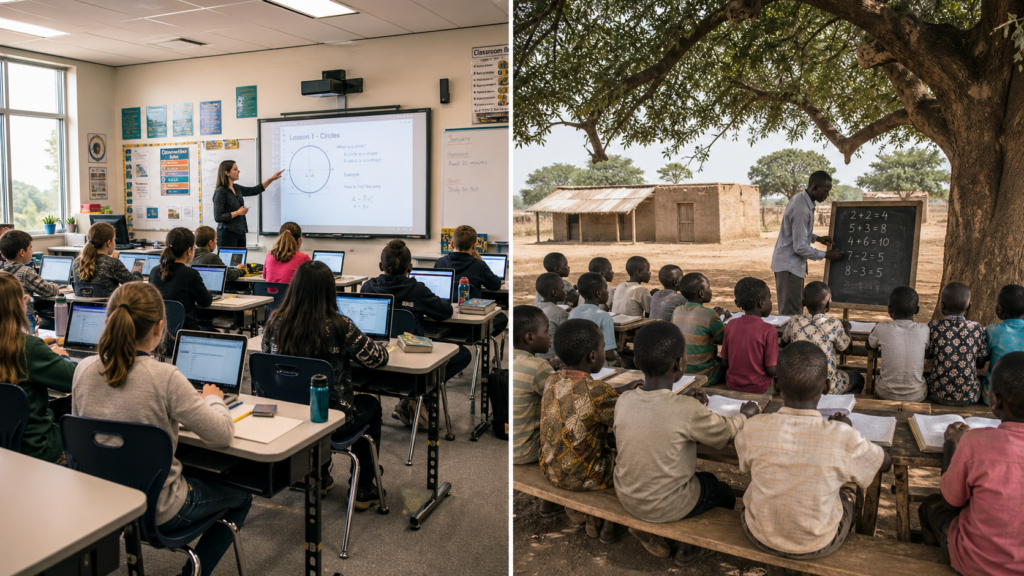
Money is at the heart of the problem. The world currently faces a 97 billion dollar annual funding gap to meet SDG 4 by 2030. Low-income countries spend just 55 dollars per learner each year, compared to 8,543 dollars per learner in high-income countries. That is a ratio of more than 150 to 1. No system can close a learning gap that wide without massive new investment.
Countries are also moving in the wrong direction on education spending. Public education budgets as a share of national income were further below the recommended thresholds in 2023 than they were back in 2015. That trend is deeply concerning for the goal of universal education by 2030.
Beyond funding, here are the other key barriers that keep children out of school:
- Poverty and child labor: In the world’s poorest countries, more than 1 in 5 children are engaged in child labor instead of attending school. Families in extreme poverty often cannot afford school fees, uniforms, or supplies, even when tuition is technically free.
- Geographic isolation: Children in remote and rural areas often face long, dangerous journeys to school. Many families in these areas keep children home rather than risk the travel.
- Gender discrimination: In some regions, cultural norms still prevent girls from attending school, especially at the secondary level. This is one of the biggest remaining obstacles to gender parity in education.
- Disability exclusion: Between 120 and 150 million children under 18 live with disabilities globally. Over 90 percent of disabled children in developing nations are not receiving an education. Schools in many countries lack ramps, sign language instruction, and other basic accommodations.
- Conflict and crisis: Children living in war zones and emergency situations face the most severe access barriers. The Education Cannot Wait fund estimates that tens of millions of crisis-affected children have no access to schooling at all.
Where Does the World Stand Today?
The world has made genuine progress toward universal education since 2000. School enrollment rates have risen significantly. More girls are in classrooms than at any point in history. The share of young children in pre-primary education has grown to nearly 75 percent globally.
But the pace of progress is stalling. Three key data points tell the story clearly:
- 273 million children and young people were out of school in 2024, according to UNESCO.
- The global out-of-school population has fallen by just 1 percent since 2015, despite 110 million more students enrolling. Population growth and conflict are erasing the gains.
- Countries are off track on every major SDG 4 benchmark. The worst gaps are in teacher training (7 percentage points behind), early childhood education (9 points behind), and minimum reading proficiency by end of primary school (11 points behind).
The UNESCO GEM Report 2024 found that public education spending levels are actually moving in the wrong direction in many countries. Without a major change in global investment and political will, the 2030 deadline for SDG 4 will pass without universal education being achieved.
The regions most at risk are Sub-Saharan Africa and South Asia, where population growth is outpacing enrollment gains, and where poverty and conflict create the most severe barriers.
How Can Universal Education Be Achieved?
Achieving universal education is not impossible. Countries that have made the most progress share common strategies. They invest heavily in public education, remove financial barriers for poor families, train more teachers, and build inclusive learning environments.
Here are six practical pathways that research and global policy consistently point to:
- Increase public education funding: Countries need to meet the international benchmark of spending at least 4 to 6 percent of GDP on education. Right now, too many fall far below that threshold.
- Eliminate school fees and hidden costs: Even small fees for uniforms, meals, or materials push children from poor families out of school. Government subsidies and free school meal programs are proven tools for keeping them in.
- Invest in teacher training: SDG 4 cannot be met without enough qualified, well-supported teachers. Countries are currently the most behind on this metric. Training more teachers and paying them fairly must be a top priority.
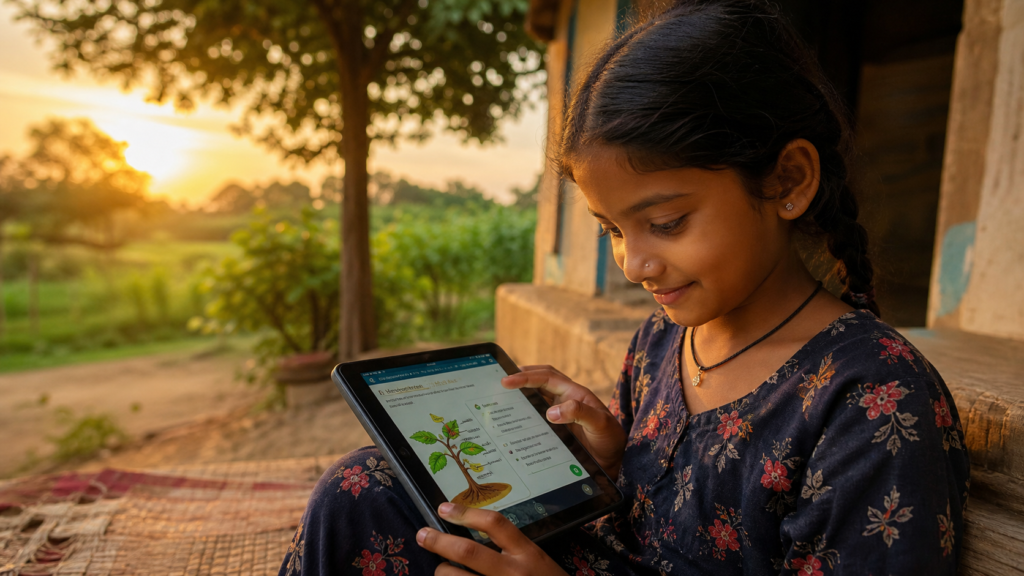
- Use technology to reach remote learners: Mobile learning tools and AI-powered teaching platforms are making it possible to deliver quality education to children in areas where building a physical school is not yet practical. The OECD’s 2025 Trends Shaping Education report highlights technology as a critical enabler for the next decade.
- Build truly inclusive schools: Schools need ramps, accessible bathrooms, trained special education teachers, and curricula that reflect the diversity of the students they serve. Inclusion is not an add-on. It is a foundation of universal education.
- Protect education in conflict zones: Organizations like Education Cannot Wait and UNICEF work to maintain schooling for children displaced by war and disasters. Funding these programs is part of the global commitment to universal education.
Discover the many types of education that contribute to a complete, inclusive learning system and how each one plays a role in making universal education a reality.
The Road Ahead
Universal education has been a stated global goal for more than 75 years. The world has made progress, but not nearly enough. Every year that passes without full commitment to SDG 4 is another year that millions of children grow up without the skills they need to build a better life.
The gap between the promise of the Universal Declaration of Human Rights and today’s reality is still too wide. But it is a gap that can be closed. When countries invest in their schools, train their teachers, include their most marginalized learners, and fund education in crisis zones, progress happens fast.
Universal education is not just a policy goal. It is the foundation of every other goal the world wants to achieve, from ending poverty to building healthy communities to creating equal societies. The question is not whether it is possible. The question is whether the world will choose to make it happen.