Progress Learning Reading: Features, Grade Levels, and How to Access It
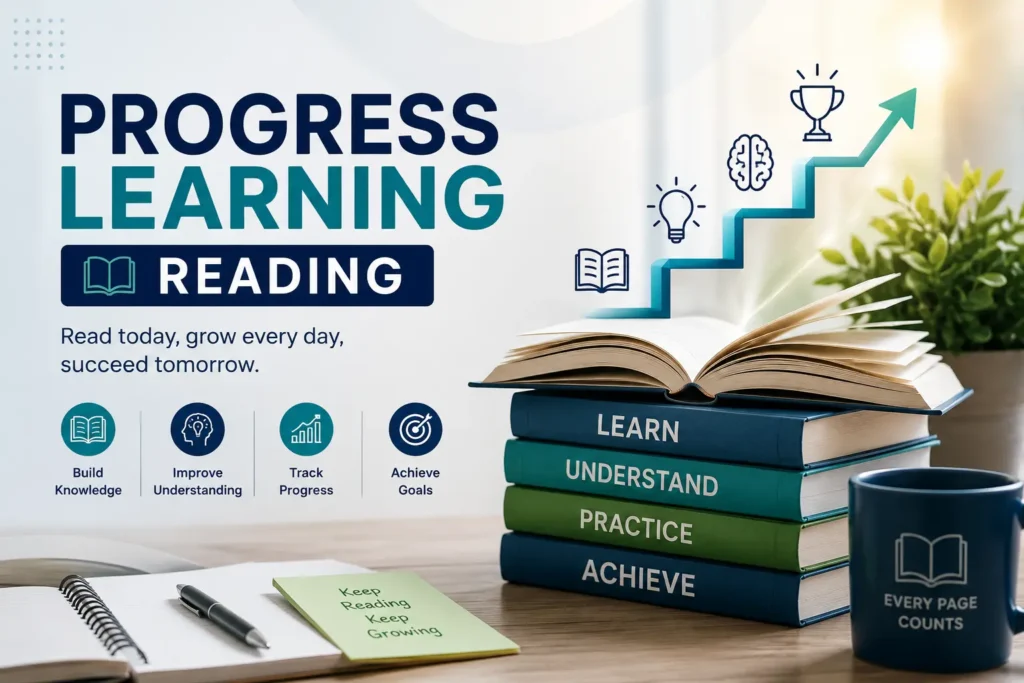
Progress Learning offers a full set of reading and ELA tools for K-12 students. These include standards-aligned ELA practice, a Science of Reading-based phonics program, and the Liftoff adaptive reading intervention for below-grade-level students in Grades 2-8. Two published research studies show real reading score gains in schools that use the platform. Students can access reading features through Clever Portal, ClassLink, Canvas, Google Classroom, or a direct login at app.progresslearning.com.
About 64% of fourth-grade students across the United States are not reading at a proficient level, according to the National Literacy Institute’s 2024-2025 data. That means more than six out of ten fourth graders are struggling with reading right now. Schools are looking for tools that can help close that gap.
Progress Learning reading tools are built for that work. This guide covers what Progress Learning includes for reading and ELA, how those features work at each grade level, what published research shows about reading outcomes, and how students and teachers access reading content through Clever and other platforms.
What Is Progress Learning Reading?
Progress Learning is a K-12 reading platform and supplemental learning tool used by more than 6,000 schools across the United States. The platform covers math, science, social studies, and ELA. When people search for “Progress Learning Reading,” they are usually looking for the platform’s ELA and literacy tools specifically.
One thing worth clearing up before going further: some searches for “Progress Learning Reading” return results about Microsoft Reading Progress, which is a completely separate tool inside Microsoft Teams for Education. This guide covers the Progress Learning platform only, which is found at progresslearning.com.
The platform grew out of two older products:
- USATestprep, which focused on high school test preparation
- Education Galaxy, which was built for K-5 gamified learning
When those two programs merged to form Progress Learning, the result was a single K-12 reading and ELA platform with coverage across every grade level, from kindergarten through 12th grade.
For a full overview of how the entire platform works, read our complete Progress Learning guide.
What Reading Features Does Progress Learning Include?
Progress Learning has four main tools related to reading. Each one works differently and targets a different group of students.
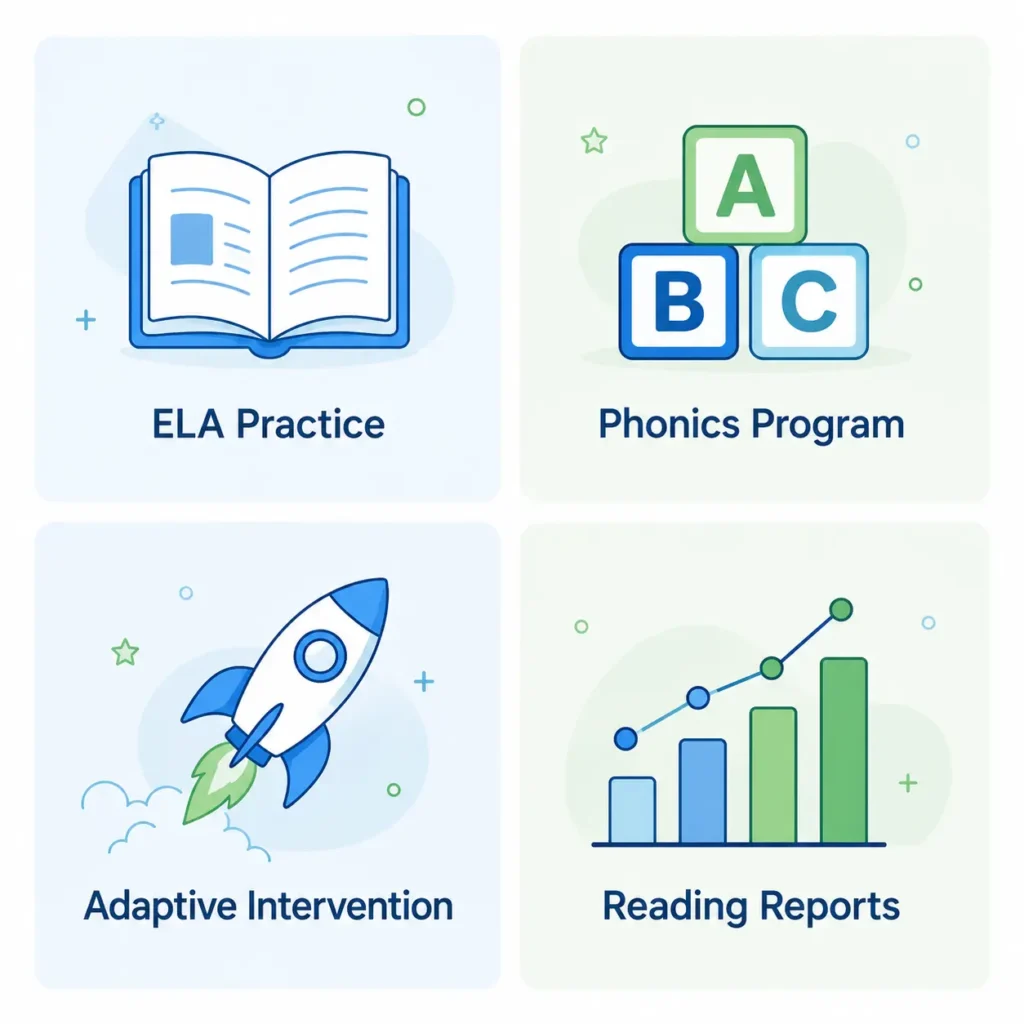
ELA Practice and Assessments
Progress Learning ELA practice covers all K-12 grade levels. Every question is connected to state standards for all 50 US states. A teacher in Texas works with content tied to TEKS. A teacher in Georgia works with content tied to Georgia Milestones standards.
The ELA and reading practice section includes:
- Standards-aligned reading comprehension questions for every grade
- Bell-ringer activities that open class with a short reading review
- Printable worksheets built for small-group instruction
- Reading passages measured by Lexile reading levels, sourced through MetaMetrics
- Technology-Enhanced Items (TEIs) that include audio and video inside assessments
- Benchmark and diagnostic assessments for state ELA exams, including STAAR and Georgia Milestones
Lexile measures help teachers match students to reading passages that fit their current reading level. Teachers can track reading growth by monitoring Lexile data inside Progress Learning throughout the school year.
Phonics and Foundational Literacy
Progress Learning phonics is a supplemental program for foundational literacy instruction. It is built around the Science of Reading, which is the research-based method for teaching children how to read.
The phonics program covers:
- Phonics: how letters and sounds connect to form words
- Phonological awareness: the ability to hear, identify, and work with sounds in spoken words
- Reading fluency: reading with accuracy at a steady pace
- Encoding and decoding skills
- Morphology, including how prefixes, suffixes, and root words work together
- Syllable pattern practice
The program is cross-curricular. Literacy tools carry into science and social studies reading, not just ELA class. A student working on decoding in ELA also gets to apply those same skills when reading a science or social studies passage.
This phonics content is a supplement, not a replacement for a school’s primary ELA curriculum. Teachers can add it to their daily routine without dropping their existing program.
Liftoff Adaptive Reading Intervention (Grades 2-8)
Liftoff is the most targeted reading tool inside Progress Learning. It is built for Tier 2 and Tier 3 students in Grades 2-8 who are working below grade level in reading, math, or science.
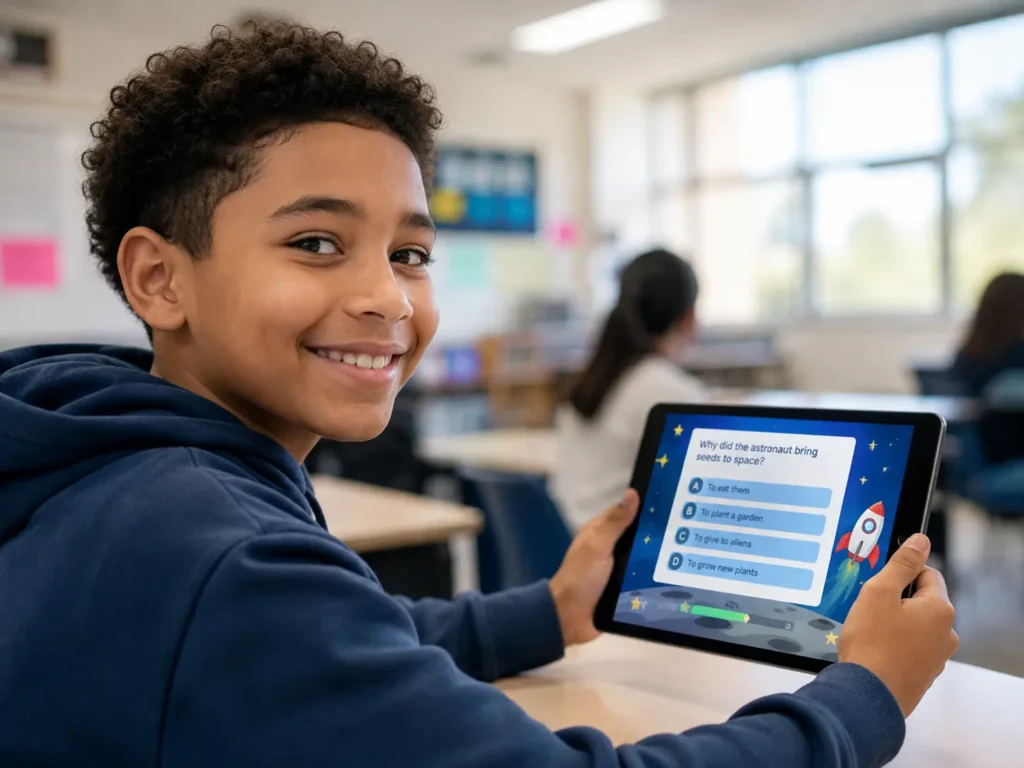
For reading specifically, Liftoff works this way:
- Runs a built-in reading diagnostic to identify each student’s specific skill gaps
- Pulls in NWEA MAP reading scores automatically if a district uses MAP Growth testing
- Builds a personal learning path based on where each student actually is, not where they should be
- Adjusts in real time: students move forward when they master a skill and go back to review when they need it
- Shows a short video explanation when a student gets a question wrong, so they understand what to do differently before moving on
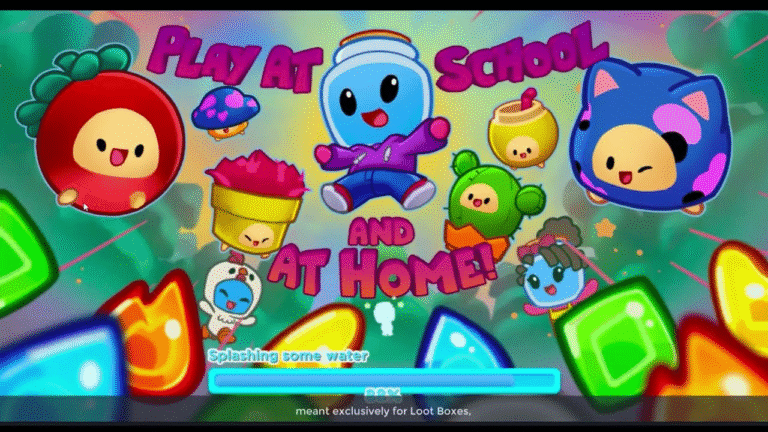
- Uses a space-themed game world with avatars, rockets, galaxy missions, and star rewards to keep students engaged
- Offers English and Spanish language options with text-to-speech built in for all reading content
Liftoff is not the same as the regular Progress Learning ELA practice. Standard grade-level ELA practice is for students working at or above their grade level. Liftoff goes below grade level to address foundational reading gaps that are holding students back.
For a detailed breakdown of the program, read our full guide to Liftoff adaptive intervention for Grades 2-8.
Reading Progress Monitoring and Reporting
Teachers do not have to guess which students need reading help. Progress Learning gives teachers a clear set of monitoring tools:
- Class and individual dashboards showing reading mastery and growth by standard
- Time-on-task reports that show how long students spend on reading practice
- Quick Click Remediation to send targeted reading review directly to a student’s account
- NWEA MAP reading data that imports directly into Liftoff for side-by-side growth tracking
- Data export options for parent conferences, MTSS reading meetings, and district-level reporting
- Built-in support for MTSS and RTI frameworks, including documentation useful for IEP progress tracking
These tools help teachers spot reading problems early and respond with the right materials before small gaps become bigger ones.
Is Progress Learning Aligned to the Science of Reading?
Yes. The phonics program inside Progress Learning is built around the Science of Reading. This is a body of research about how the brain learns to read. It focuses on five core areas: phonemic awareness, phonics, fluency, vocabulary, and comprehension.
Progress Learning covers the three foundational pillars most directly:
- Phonics
- Phonological awareness
- Fluency
The Science of Reading is now driving reading policy decisions across many US states. Georgia launched updated K-12 ELA standards in the 2025-26 school year, placing a strong focus on phonics-based reading instruction. Progress Learning updated its ELA content to match those new Georgia standards for the current school year.
North Carolina is also revising its ELA standards, with a statewide rollout set for 2027-28. Progress Learning’s phonics content already covers encoding, decoding, morphology, and syllable work, which means it can support students from early reading through middle school reading intervention.
One clear limit to keep in mind: the phonics program is a supplement to an existing ELA curriculum, not a standalone reading program. Schools still need a primary ELA curriculum. Progress Learning reading tools work best alongside that main program.
How Does Progress Learning Reading Work by Grade Level?
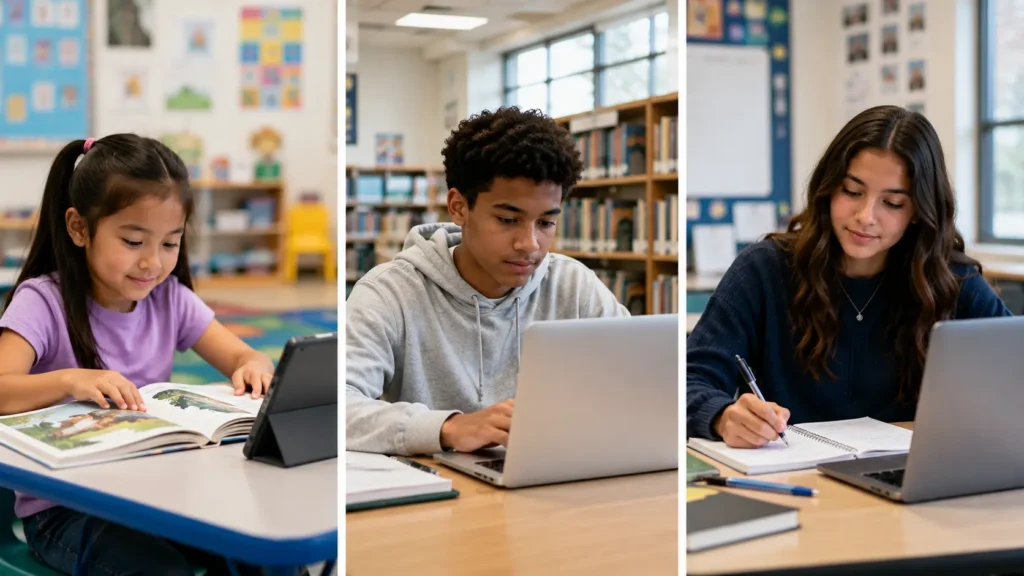
Reading needs change at every stage of school. Progress Learning addresses those differences across three main grade groups.
K-5 Elementary School
Elementary students get the most reading-focused experience on Progress Learning. Features at this level include:
- Phonics and phonological awareness instruction for early readers
- Fluency practice tied to Science of Reading principles
- ELA standards-aligned reading comprehension questions by grade
- Lexile-leveled reading passages from MetaMetrics
- Liftoff reading intervention starting from Grade 2
- Game-based rewards after correct answers to keep younger students on task
For students in Grades 2-5 who are reading below grade level, Liftoff is the main intervention tool. It runs a short diagnostic, then builds a personal reading recovery plan based on each student’s results.
Grades 6-8 Middle School
Middle school is where reading gaps from earlier grades show up most clearly. According to NWEA data, nearly 70% of eighth graders are not reading at a proficient level. Progress Learning addresses middle school reading with:
- Liftoff reading intervention through Grade 8, covering students who still need below-grade reading support
- Benchmark reading assessments tied to state ELA testing standards
- NWEA MAP reading data import for more precise reading placement
- Game Arcade access to keep older students engaged
- Reading comprehension practice tied to state testing requirements
Many middle school teachers use Liftoff because it gives struggling readers a way to work at their actual reading level without standing out from classmates. The Liftoff interface looks the same as regular Progress Learning, which protects student confidence while still targeting the right foundational reading skills.
Grades 9-12 High School
Liftoff does not extend past Grade 8, but Progress Learning still offers ELA and reading support for high school students:
- End-of-course ELA assessments and practice
- SAT and ACT reading preparation, covering evidence-based reading and verbal reasoning sections
- AP Literature and AP Language reading resources
- State ELA exit exam preparation, including STAAR and Georgia Milestones EOC assessments
- Standards-aligned reading comprehension questions for all 50 states
High school reading work on Progress Learning centers on college readiness and test preparation. For 9th graders who still have foundational reading gaps, teachers should check whether those students had access to Liftoff during middle school, or look at the phonics remediation tools available inside the main Progress Learning platform.
How Do Teachers Use Progress Learning for Reading Instruction?
Progress Learning supports reading instruction in several practical ways:
- Run Liftoff reading diagnostics for below-grade-level readers. Students take a built-in reading assessment that places them at their actual skill level.
- Assign grade-level ELA practice for on-level and advanced readers, tied to specific reading standards.
- Build reading benchmark assessments using the assessment tools, matched to state ELA standards.
- Use Quick Click Remediation to send targeted review to individual students who miss specific reading questions.
- Import NWEA MAP reading scores into Liftoff so student placement starts right away without re-testing anyone who already has MAP data.
- Check the reading dashboard weekly to spot students who are falling behind before the gap grows larger.
- Export reading reports for MTSS discussions, RTI meetings, and parent-teacher conferences.
Most teachers run Progress Learning reading sessions as part of a 20-to-40-minute block, three to five times per week. The platform works for whole-class instruction, small-group reading intervention, and independent student practice at school or at home.
What Does the Research Say About Progress Learning Reading Results?
Evidence for ESSA rates Progress Learning as “Promising” for reading outcomes. That rating comes from two studies conducted during the 2022-23 and 2023-24 school years.
Study 1: Forney Independent School District, Texas (2023-24)
A study by Cook and Ross (2025) found a statistically significant positive effect on NWEA MAP reading scores for students in Grades 3-6. The effect size was +0.10. Students whose teachers used Progress Learning showed stronger reading score growth compared to students in classrooms that did not use the platform.
Study 2: Douglas County, Georgia (2022-23)
Middle school students whose teachers used Progress Learning showed larger gains on the Georgia Milestones ELA assessment compared to students in classrooms without the platform. The effect size was +0.06.
Both studies are quasi-experimental, which means they are not randomized controlled trials. They show a strong connection between Progress Learning use and reading score gains, reviewed and published by an independent evidence organization. These are honest findings from real school systems, not claims from the company’s own marketing.
Teachers in the field share similar experiences. One middle school teacher in Texas noted that after Liftoff was added to her classroom, students with IEPs were hitting their reading goals and tracking their own progress without being prompted.
For independent research on the platform, the Evidence for ESSA database is a solid starting point for verification.
How Do Students Access Progress Learning Reading Through Clever?
Students whose schools use Clever Portal can reach Progress Learning reading features in just a few steps.
Steps to access Progress Learning reading through Clever:
- Go to your school’s Clever login page or visit clever.com/login
- Sign in with your school username and password
- Find the Progress Learning tile on your Clever dashboard
- Click the tile: Clever’s single sign-on connects you directly without needing a separate password
- Once inside Progress Learning, open your reading assignments or click the Liftoff rocket icon to start adaptive reading practice
Students do not need a separate Progress Learning username or password when their school uses Clever. The single sign-on connection links directly to their dashboard, where reading assignments, Liftoff, and ELA practice are ready to go.
Other ways to reach Progress Learning reading:
- ClassLink: use the same single sign-on process through your school’s ClassLink portal
- Canvas: click the Progress Learning button inside Canvas and authorize the connection
- Google Classroom: sign in using your school Google account that is linked to Progress Learning
- Direct login: visit app.progresslearning.com/login and enter your school’s Account ID, your username, and your password (a teacher or school IT team can provide these details)
If reading assignments are not loading after login, try refreshing the browser first. If the problem continues, check with a teacher. Most access problems come from a mistyped Account ID or a browser that needs updating.
For a step-by-step guide covering every login method, see our Progress Learning login guide.
FAQ: Progress Learning Reading
Does Progress Learning have a dedicated reading or ELA program?
Yes. Progress Learning includes ELA and reading practice for all K-12 grade levels, a supplemental phonics program built on the Science of Reading, and Liftoff, which is an adaptive reading intervention for students in Grades 2-8 who are working below grade level. All ELA practice is tied to state standards for all 50 states.
What is the difference between Progress Learning reading practice and Liftoff?
Regular Progress Learning ELA practice is grade-level work aligned to current standards. It is a good fit for on-level and advanced students. Liftoff is a separate adaptive reading intervention for Tier 2 and Tier 3 students in Grades 2-8 who are reading below grade level. Liftoff runs a reading diagnostic first, then builds a personal recovery plan that targets each student’s specific skill gaps.
Is Progress Learning’s phonics program aligned to the Science of Reading?
Yes. The phonics program covers the three core Science of Reading pillars: phonics, phonological awareness, and fluency. It is built as a supplement to a school’s main ELA program and provides explicit, structured literacy instruction that teachers can add without changing their existing curriculum.
What grade levels does Progress Learning reading cover?
Progress Learning covers ELA and reading for Grades K-12. The Liftoff adaptive reading intervention is available for Grades 2-8. The phonics and foundational literacy tools are designed primarily for K-5 but can support middle school reading intervention. High school ELA content centers on SAT and ACT prep, AP courses, and state ELA exit exams.
How can I access Progress Learning reading through Clever?
Log into your school’s Clever Portal, find the Progress Learning tile, and click it. Clever’s single sign-on connects you directly to your reading assignments and Liftoff without a separate login. If the tile is not on your dashboard, ask your teacher or school administrator to check your account settings.
Does Progress Learning have bilingual reading support?
The Liftoff reading intervention offers English and Spanish language options with text-to-speech for all reading content. Teachers can set language preferences individually for each student, which works well for English Language Learners and bilingual classrooms. Standard Progress Learning ELA practice is primarily in English.
Is there research showing Progress Learning improves reading scores?
Yes. Evidence for ESSA rates the platform as “Promising” for reading. A 2025 study in Forney Independent School District, Texas by Cook and Ross found a statistically significant effect size of +0.10 on NWEA MAP reading scores for Grades 3-6. A separate study in Douglas County, Georgia found greater ELA gains on Georgia Milestones assessments for middle school students, with an effect size of +0.06.
Get Started with Progress Learning Reading
Progress Learning has a practical set of reading tools for K-12 students, from phonics basics for kindergartners to SAT reading prep for seniors. Liftoff fills the gap for students who need targeted reading intervention, and the Science of Reading-based phonics program gives teachers a ready-made resource that fits into any ELA class routine.
If your school uses Clever, getting started takes only a few clicks. Log into Clever Portal, click the Progress Learning tile, and your reading assignments and Liftoff access are ready.
To learn more about the full platform, visit our Progress Learning overview guide. For help with access or login, check our Progress Learning login guide.