What Is The Question Answer Method In Teaching? 4 Steps
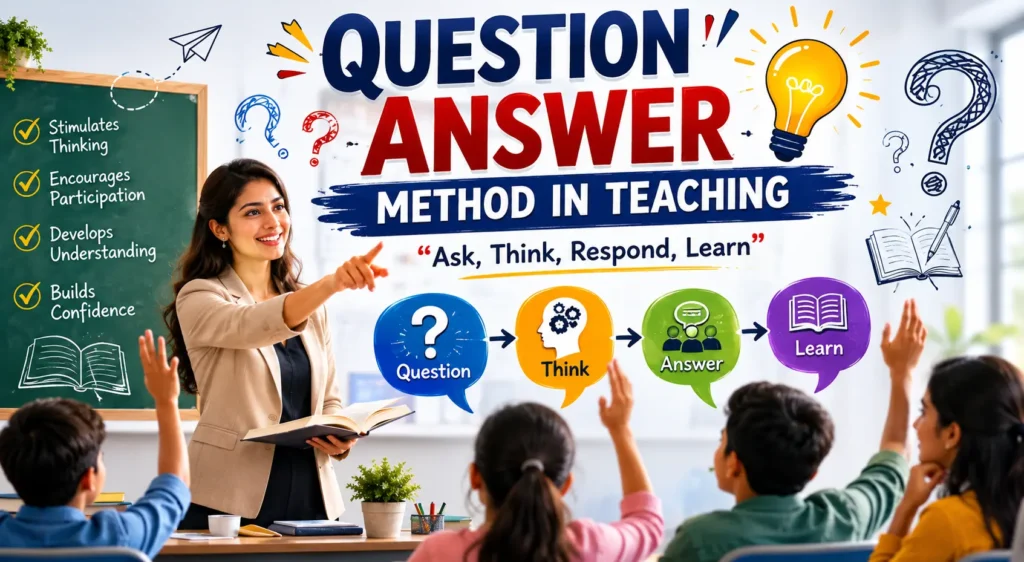
The question answer method is a teaching method where the teacher leads the lesson by asking questions and students respond with answers.
It is not random questioning. The questions are planned to match the topic and the learning goals.
In this method, the teacher and students take part in a short dialogue.
The teacher asks, students think, and then they answer in their own words.
This makes the lesson more active and less like a one way lecture.
You can read more about other teaching and learning methods on the CleverPortalUS teaching methods page, which shows where the question answer method fits among lecture, discussion, and other methods.
How Did The Question Answer Method Develop?
The question answer method has a very old history.
It comes from the way the Greek thinker Socrates taught his students.
Socrates did not just give facts.
He asked short, clear questions and guided students to discover ideas by themselves.
This style is called the Socratic method of teaching.
Modern teachers use the same idea in classrooms today.
They plan a sequence of linked questions that move from simple facts to deeper thinking.
This keeps students involved and brings knowledge to the conscious level.
Aims And Principles Of The Question Answer Method
The main aim of the question answer method is to reach clear learning goals by using guided questions instead of long talks.
It is especially strong for cognitive objectives, such as understanding, remembering, and applying ideas.
Key aims include:
- Help students recall what they already know
- Connect old ideas with new content
- Check how well students understand during the lesson
- Develop clear speaking and listening skills
- Encourage active participation and curiosity
Important principles are:
- Move from known to unknown, and from simple to complex questions
- Link each new question with the answer to the last one
- Ask only clear and specific questions
- Give time for students to think before they answer
- Use questions as a tool for formative assessment, not as punishment
These aims and principles make the method more than just “asking questions.”
They turn questioning into a planned teaching method.
Steps Of The Question Answer Method
Good use of the question answer method follows simple, clear steps.
Step 1: Prepare Questions
Before class, the teacher writes questions that match the lesson goals.
The questions should fit the age and level of the students.
Some questions can check facts, while others can ask for reasons or examples.
Step 2: Arrange Questions In Order
Next, the teacher puts the questions in a logical sequence.
A common pattern is:
- Start with easy recall questions
- Move to understanding and explaining
- End with higher order questions that ask students to apply or analyze
This order follows the spirit of Bloom’s taxonomy and helps students build ideas step by step.
Step 3: Present Questions To Arouse Curiosity
In class, the teacher presents the questions in a way that makes students curious.
The teacher can link the first question to a real life situation or a problem students care about.
This pulls them into the topic and makes them want to answer.
Step 4: Link New Questions To Answers
As students answer, the teacher listens carefully.
Then the teacher asks new questions that link to the students’ replies.
For example, in a science lesson on plants:
- “What do plants need to grow?”
- “You said sunlight. Why is sunlight important for plants?”
- “How does this process help the plant make its own food?”
This chain builds a clear picture in the student’s mind and keeps the class engaged.
Types Of Questions That Make This Method Work
The power of this method depends on the types of questions the teacher uses.
Teachers should mix different kinds of questions, such as:
- Factual questions: ask for simple facts or definitions
- Conceptual questions: ask students to explain ideas in their own words
- Application questions: ask students to use the idea in a new situation
- Analytical questions: ask students to compare, contrast, or find reasons
- Evaluative questions: ask students to judge or give opinions with reasons
Closed questions often lead to short, one word answers.
Open ended questions push students to think and speak more.
Both types are useful if used in balance.
Good questioning also needs:
- Clear language
- One idea per question
- Enough wait time after asking
- Listening carefully to all answers
When teachers vary question types and give thinking time, students show deeper understanding and better problem solving.
Advantages Of The Question Answer Method
The question answer method offers many advantages for both teachers and students.
Key benefits are:
- Active participation
Students answer often instead of just listening.
This keeps attention high and makes learning more lively. - Better classroom interaction
There is two way communication between teacher and students.
This builds a friendly learning atmosphere and improves communication skills. - Checks understanding in real time
Questions help the teacher see who understands and who needs more help.
This makes it a strong tool for formative assessment. - Supports critical thinking
When teachers use higher order questions, students learn to explain, analyze, and evaluate ideas. - Builds confidence and expression
Regular answering helps students speak clearly and share ideas in front of others.
Studies on questioning and retrieval practice show that frequent, well planned questions improve memory and long term learning.
Because of these advantages, many teaching methods lists include the question answer method as a core strategy in education.
You can also explore a dedicated page on CleverPortalUS that focuses closely on the advantages of question answer method and gives more examples of benefits in real classrooms.
Disadvantages And Limits Of The Question Answer Method
Like any teaching method, question answer method has some weaknesses.
Common disadvantages are:
- Time consuming
A full question session can take more time than a short lecture, especially in large classes. - Needs skillful teachers
Teachers must frame clear, purposeful questions and handle many different answers.
Without training, questions may stay too simple or confusing. - Unequal participation
If the teacher calls on the same few students, others stay silent and passive.
This reduces the benefit of active participation. - Student anxiety
Some students feel nervous when questioned in front of peers and may avoid eye contact or speaking. - Not ideal for all topics
Some content needs direct explanation, demonstration, or practice tasks.
Question answer method alone may not be enough for skills that need hands on work.
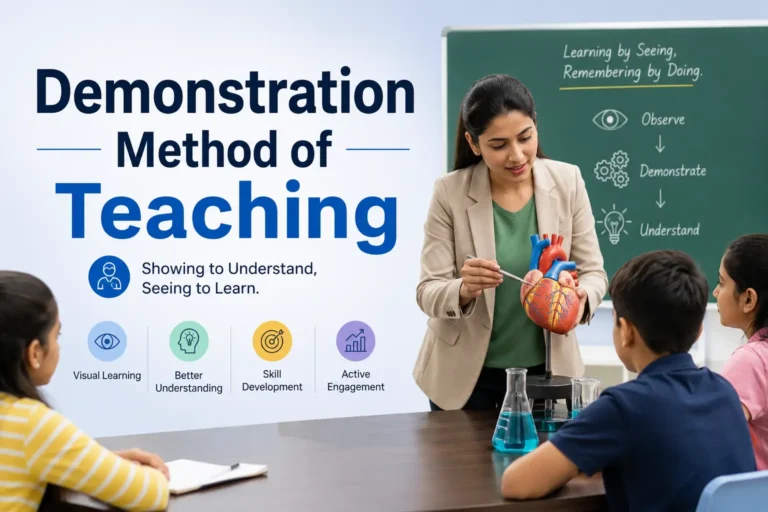
Because of these limits, many experts suggest combining question answer method with other teaching methods like lecture, demonstration, and discussion.
This gives students a better balance of explanation, practice, and guided questioning.
When Should Teachers Use The Question Answer Method?
The question answer method works best in some common situations.
It is especially useful when teachers want to:
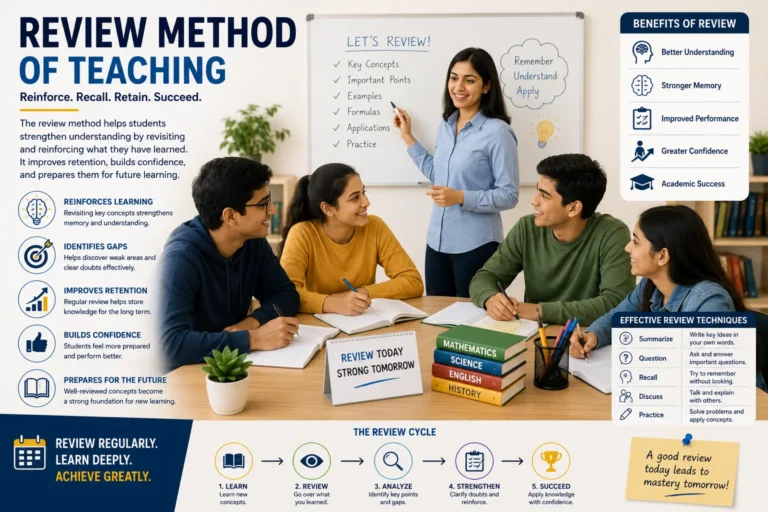
- Review earlier lessons
- Connect old knowledge with a new topic
- Check understanding during or after a lesson
- Diagnose what students find hard
- Warm up the class at the start of a lesson
This method fits well with subjects that are rich in ideas, such as science, social studies, and language arts.
It also works nicely in small to medium sized classes, where many students can answer in turn.
It may be less effective when:
- The class is very large and time is short
- The topic is mostly skill based and needs practice or lab work
- Students are very new to a language and cannot yet form answers easily
In these cases, teachers can still use a few simple questions, but should rely more on lecture, demonstration, or group work to deliver content.
How To Use Question Answer Method In Real Classrooms
To use the question answer method well in class, teachers can follow some practical tips.
Planning Question Sequences
Before class, list the main ideas of the lesson.
Write questions that cover each idea in order.
Make sure the sequence starts with easy questions and then climbs to deeper thinking.
For example, in a social studies lesson on maps, a teacher might ask:
- “What is a map?”
- “How is a map different from a globe?”
- “Why do we need different types of maps?”
- “How could this map help us in a flood or storm?”
This simple sequence uses the question answer method to go from recall to application.
Managing Participation And Feedback
During the lesson, good management makes a big difference.
Teachers should:
- Spread questions across the class, not just to a few students
- Allow 3 to 5 seconds of wait time after asking a question
- Listen carefully and respond to both correct and incorrect answers
- Give positive feedback, then add or correct as needed
- Encourage peer comments and allow students to build on each other’s answers
This kind of balanced questioning helps students feel safe, valued, and willing to take part.
Using Question Answer Method In Online And Blended Learning
Today, many lessons happen online or in blended classrooms.
The question answer method still fits well in these spaces if teachers use the right tools.
Some useful ways to apply it are:
- Discussion boards and forums
Teachers post questions on a course forum and ask students to reply and comment on each other’s answers. - Live video sessions
In live classes, the teacher can ask questions, let students answer by voice or chat, and then give feedback. - Polls and quick quizzes
Short polls or low stakes quizzes use question answer method to check understanding while students are learning online. - Small breakout groups
Students can discuss a guiding question in small groups and then share their answers with the whole class.
Researchers note that using question and answer strategies in modern online classes can build analytical skills and deeper learning when students must explain their thinking, not just click choices.
To keep online Q and A effective, teachers should:
- Set clear rules for how and when to answer
- Give timely and helpful feedback
- Use a mix of factual and open ended questions
- Maintain a respectful and safe space so students feel free to share ideas
Summary Of Merits, Demerits And Key Tips
You can think of the question answer method as a structured classroom conversation.
Used well, it can make learning more active and thoughtful.
Main merits:
- Makes students think and speak
- Improves classroom interaction and communication
- Checks understanding at each step
- Supports critical thinking and problem solving
- Works in both face to face and online lessons
Main demerits:
- Needs careful planning and skilled questioning
- Can be slow with very large groups
- May leave quiet students behind if not managed well
- Does not replace hands on practice in skill based subjects
Key tips for teachers:
- Plan your questions around clear learning goals
- Mix simple and higher order questions
- Give students time to think before they answer
- Spread questions around the class
- Combine question answer method with other teaching methods so students get a full learning experience
Final Thoughts
The question answer method is a classic teaching method that still fits perfectly in modern classrooms and online learning spaces.
By asking the right questions in the right order, teachers help students connect ideas, practice speaking, and think more deeply about what they learn.
If you want to see how this method compares with other teaching styles, take some time to explore the main teaching and learning methods guide on CleverPortalUS and look at the dedicated page on the advantages of question answer method for more classroom based examples.
Then, try planning one lesson using a clear sequence of questions and notice how your students respond when their thinking is at the center of the lesson.