Progress Learning Math: Features, Grade Levels, and How to Access It
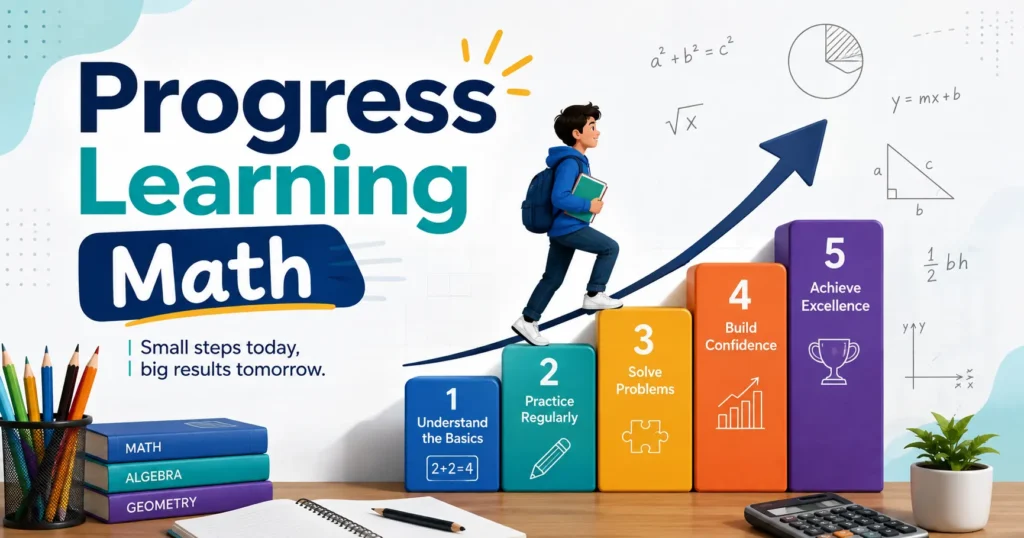
Progress Learning Math is a K-12 tool that gives students standards-aligned math practice, tests, and reports built around each state’s own standards. It also includes Liftoff, a program that helps students in grades 2 through 8 catch up on math skills they missed. Independent research rates its effect on math scores as Promising. Students log in through Clever, ClassLink, Canvas, Google Classroom, or a direct login page.
In 2024, only 28 percent of 8th graders in the United States scored proficient in math on the Nation’s Report Card, also known as NAEP. That means most middle school students are behind where they should be in math. Many schools use extra practice tools to help close that gap, and Progress Learning Math is one of the most common ones.
This guide covers what Progress Learning offers for math, how it works at each grade level, what real research says about the results, and how students log in through Clever. One quick note before we start. Progress Learning is not the same as Math Progress, a tool inside Microsoft Teams for Education. This guide covers the Progress Learning platform only, found at progresslearning.com.
What Is Progress Learning Math?
Progress Learning is an online learning platform used by more than 6,000 schools across the United States. It covers four main subjects: math, reading, science, and social studies. This guide focuses on the math side of the platform.
The platform grew out of two older programs that joined together. One was USATestprep, which built test practice for high school students. The other was Education Galaxy, which made game-based math lessons for younger kids. When these two programs combined, they formed Progress Learning, a single K-12 tool with math content built for every grade, from kindergarten through 12th grade.
Every math question inside Progress Learning is matched to state standards. A teacher in Texas sees math content matched to Texas standards. A teacher in Georgia sees math content matched to Georgia standards. This state-by-state match is one of the main reasons schools pick the platform for math practice.
One more thing worth knowing before you go further. Progress Learning Math is not the same as Math Progress, a tool built into Microsoft Teams for Education. It is also not the same as Maths Progress, an unrelated math game app for phones and tablets. This guide covers the Progress Learning platform only.
For a full look at the entire platform, including reading and science, read our complete Progress Learning guide.
What Math Features Does Progress Learning Include?
Progress Learning math practice includes several tools that work together to support students and teachers. Here is what you get:
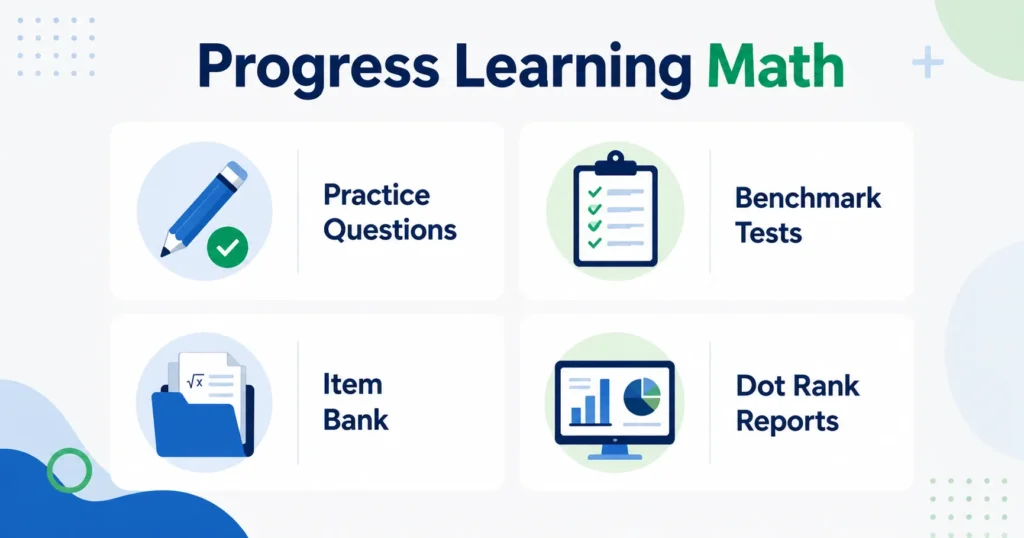
- Standards-aligned practice questions for every grade level
- Bell-ringer activities that open class with a quick math review
- Benchmark and diagnostic tests that check where a student stands
- An item bank with thousands of practice questions teachers can build assignments from
- A teacher dashboard that shows mastery using a simple dot rank system
- Printable worksheets for small group math lessons
Bell-ringers are short questions teachers use to start a math class. They take just a few minutes and give teachers a quick check on what students remember from earlier lessons.
Benchmark tests work differently than daily practice. They are longer tests given a few times a year to check overall progress. Diagnostic tests find specific gaps in a student’s math skills before a teacher builds a practice plan around them.
The dot rank system on the teacher dashboard shows mastery level for each math standard. A green dot means a student has mastered a skill. Other colors show where more practice is still needed. Teachers use this data to plan lessons and pick students for extra help.
How Does Adaptive Math Intervention (Liftoff) Work?
Liftoff math intervention is a separate tool inside Progress Learning built for students in grades 2 through 8. It targets students who are working below their grade level in math and need extra help catching up.
Liftoff works through a few clear steps:
- A student takes a short diagnostic test, or their school imports NWEA MAP Growth scores if the district already uses that test.
- Liftoff builds a personal learning path around the exact skills that student needs to practice.
- As the student answers questions, Liftoff adjusts in real time. Get a skill right, and the program moves forward. Struggle with a skill, and it goes back to review what comes before it.
- Students see their progress through a space theme with avatars, rockets, and stars, which keeps younger students motivated to keep practicing.

Liftoff supports Tier 2 and Tier 3 math intervention inside MTSS and RTI frameworks, the systems many schools use to track and support struggling students. Teachers can use Liftoff data during IEP meetings and parent conferences too.
Research on adaptive learning tools in general backs up this approach. A 2024 study published in the Journal of Educational Computing Research looked at 45 separate research papers on AI-based adaptive learning systems. It found these tools produce a medium to large positive effect on student learning compared to regular, non-adaptive instruction.
For a full breakdown of how Liftoff works, read our guide to Liftoff adaptive intervention for grades 2-8.
Does Progress Learning Improve Math Scores? What Does the Research Show?
This is the question most parents and teachers want answered. Does Progress Learning actually help students learn math better?
Evidence for ESSA, short for the Every Student Succeeds Act, is a research group working with the Center for Research and Reform in Education at Johns Hopkins University (CRRE). This group studied Progress Learning’s math results. It looked at two separate studies covering more than 8,800 students total. Based on these studies, Evidence for ESSA gave Progress Learning math a rating of Promising, a real, positive rating that sits below the highest tier, which is reserved for large, randomized trials.
Here is what the two studies found:
| School District | Test Used | Effect Size |
| Douglas County School System, Georgia | Georgia Milestones Mathematics | +0.09 |
| Forney Independent School District, Texas | NWEA MAP Growth (math) | +0.07 |
| Forney Independent School District, Texas | STAAR Math | +0.08 |
Progress Learning Georgia Milestones math results showed the strongest gain, with middle school students in Douglas County scoring higher than students in classrooms that did not use the platform. Progress Learning STAAR math results in Forney ISD also showed a real, positive gain of +0.08.
An effect size shows how much of a difference a program made compared to classrooms that did not use it. These numbers are small but real and positive, and they line up with results seen in other adaptive learning research.
Both studies were quasi-experimental. That means researchers compared existing classrooms rather than randomly placing students into two separate groups. This method gives useful, honest evidence, but it carries less certainty than a full randomized study would.
For more context, a 2025 meta-analysis of K-12 gamification research found that game-based learning tools produce a moderate to strong positive effect on student motivation, especially for middle and high school students. Since Progress Learning math practice uses games, stars, and rewards throughout, this research helps explain why students stay engaged with it.
Math struggles are not only about skill level. Research from the EdWeek Research Center found that math anxiety affects 20 to 30 percent of students, and 67 percent of teachers surveyed said it is a real problem in their classroom. Low-stakes practice tools that give quick feedback, like Progress Learning, may help ease some of that pressure by letting students retry a problem instead of facing one single high-stakes test.
How Does Progress Learning Math Work by Grade Level?
Progress Learning math grades range from kindergarten through 12th grade, but the tools look different depending on a student’s age.
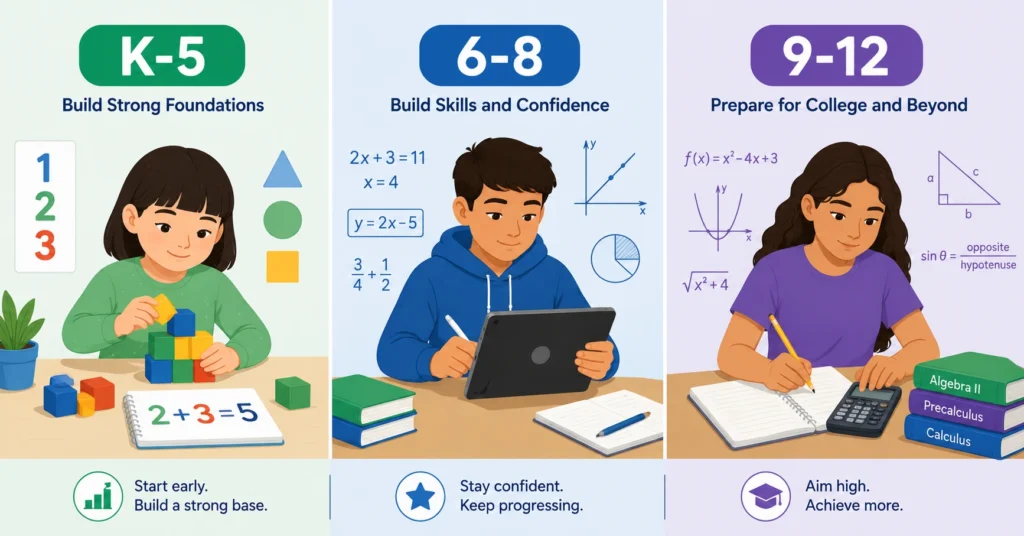
K-5 Elementary School
Younger students get math practice built around games and rewards. Every correct answer earns stars, badges, or a small in-game reward. This keeps young learners motivated during practice.
Elementary math on Progress Learning includes:
- Standards-aligned math questions for every grade, K through 5
- Game rewards after correct answers
- Liftoff math intervention starting in grade 2 for students who need extra support
- Simple, clear question formats built for early learners
Grades 6-8 Middle School
Middle school is often where math gaps become harder to ignore. National data backs this up. In 2024, only 28 percent of 8th graders nationwide scored proficient in math on NAEP, the Nation’s Report Card.
For grades 6 through 8, Progress Learning offers:
- Liftoff math intervention through grade 8 for students below grade level
- Benchmark tests tied to state math testing, including STAAR and Georgia Milestones
- A Game Arcade where students earn tokens for finishing assignments, then trade tokens for games
- Standards-aligned math practice matched to each state’s middle school curriculum
Grades 9-12 High School
Liftoff stops at grade 8, so high school students use different tools inside Progress Learning. These include:
- End-of-course math exam practice
- SAT and ACT math test prep
- Standards-aligned review for every state’s high school math requirements
High school math practice on Progress Learning centers on getting students ready for state exams and college entrance tests. If a 9th grader still has gaps from earlier grades, a teacher can check whether that student had access to Liftoff back in middle school.
How Do Teachers Use Progress Learning for Math Instruction?
Teachers use Progress Learning math tools in several practical ways:
- Run a Liftoff diagnostic for any student working below grade level in math.
- Assign grade-level math practice for students working at or above their current grade.
- Build benchmark tests using the item bank, matched to state math standards.
- Import NWEA MAP Growth scores into Liftoff so student placement starts right away.
- Check the dot rank dashboard weekly to catch students who are falling behind.
- Export math reports for MTSS meetings, RTI planning, and IEP progress checks.
- Use bell-ringers to open class with a fast math review before the main lesson.
Most teachers run math sessions inside Progress Learning for 20 to 40 minutes, three to five times a week. The platform works for whole-class lessons, small group work, and students practicing on their own.
How Do Students Access Progress Learning Math Through Clever?
Progress Learning math login options include Clever, ClassLink, Canvas, Google Classroom, and a direct login page. Students at schools that use Clever can reach their math work in just a few steps.
Steps to access Progress Learning math through Clever:
- Go to your school’s Clever Portal or visit clever.com/login.
- Sign in with your school username and password.
- Find the Progress Learning tile on your Clever dashboard.
- Click the tile. Clever’s single sign-on takes you straight to your math work without asking for a second password.
- Open your math assignments, or click the Liftoff rocket icon if your school uses that program.
Other ways to reach Progress Learning math:
- ClassLink: use the same single sign-on steps through your school’s ClassLink portal.
- Canvas: click the Progress Learning button inside Canvas and approve the connection.
- Google Classroom: sign in with the school Google account linked to your Progress Learning account.
- Direct login: go to app.progresslearning.com/login and type in your school’s Account ID, your username, and your password.
If your math assignments will not load, try refreshing the browser first. If that does not fix it, check with a teacher. Most login problems come from a mistyped Account ID or an old browser that needs an update. For more help, see our guide on what to do if Progress Learning is not working.
For full login steps, read our Progress Learning login guide.
Frequently Asked Questions
Is Progress Learning math free?
Progress Learning is licensed by schools and districts, not sold to single users. As of a 2026 policy change, individual teachers can no longer get a free stand-alone account. Some schools use PTA or PTO funds to help pay for access. Students and teachers at a school with an active license use it at no direct cost to them.
What is the difference between Liftoff and regular Progress Learning math practice?
Regular math practice is grade-level work matched to current state standards, and it is open to all K-12 students. Liftoff math intervention is a separate program for grades 2 through 8, built only for students working below grade level. Liftoff starts with a diagnostic test, then builds a plan around that student’s specific gaps.
Does research show Progress Learning improves math scores?
Yes. Evidence for ESSA, working with researchers from Johns Hopkins University, rated Progress Learning math as Promising. Two studies covering more than 8,800 students found effect sizes between +0.07 and +0.09 on state and national math tests. These were quasi-experimental studies, not randomized trials.
What grade levels does Progress Learning cover for math?
Progress Learning covers math for every grade, kindergarten through 12th grade, with content matched to each state’s own standards. Liftoff math intervention is available for grades 2 through 8 only.
How do I log into Progress Learning math through Clever?
Log into your school’s Clever Portal, find the Progress Learning tile, and click it. Clever’s single sign-on connects you straight to your math assignments without needing a second password.
Is Progress Learning Math the same as Microsoft’s Math Progress?
No. Progress Learning is a separate K-12 platform found at progresslearning.com. Math Progress is a different tool built into Microsoft Teams for Education. This guide covers the Progress Learning platform only.
Can Progress Learning math help with STAAR or Georgia Milestones prep?
Yes. Progress Learning’s math practice and benchmark tests are matched to state testing standards. Independent research measured real gains on both STAAR math in Texas and Georgia Milestones Mathematics in Georgia.
Where can I find Progress Learning math answers?
Progress Learning is built as a practice tool, not a test to pass by finding an answer key. Every wrong answer comes with a short video or tutorial that explains the correct method, so the goal is learning the skill, not skipping to the answer. Working through mistakes this way builds real math skills that carry over to state tests.
Getting Started with Progress Learning Math
Progress Learning gives K-12 students standards-aligned math practice, real assessment data, and a clear catch-up path through Liftoff for students who need it. The research so far shows real, positive results on state and national math tests, even though the studies are quasi-experimental rather than fully randomized.
If your school uses Clever, reaching your math work takes only a few clicks. Log into Clever Portal, click the Progress Learning tile, and your math assignments are ready.
To learn more about the full platform, including reading and science, read our Progress Learning overview guide. For help with login problems, check our Progress Learning login guide.