Independent Study Method: Definition, Steps, Advantages and Disadvantages
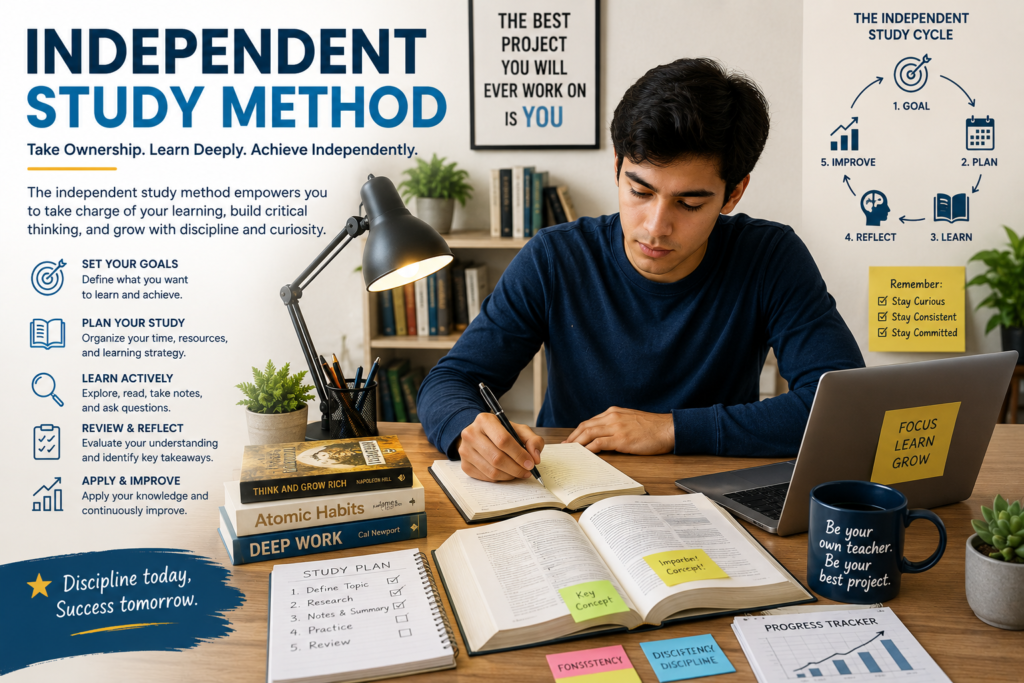
The independent study method is a learner-centered teaching approach where students take primary responsibility for directing their own learning. It involves four key stages: assessing readiness, setting goals, engaging with learning materials, and evaluating outcomes. The teacher acts as a guide rather than a direct instructor. This method builds learner autonomy, critical thinking, and lifelong learning skills. It works best for self-motivated students with a solid academic foundation.
Introduction
Research from the Higher Education Policy Institute found that students who spend more than 20 hours per week in independent study show significantly higher learning gains than those who rely mainly on classroom contact hours. Yet many educators still treat independent study as something students simply do on their own at home. In reality, the independent study method is a formal pedagogical method that teachers plan, design, and support with great care.
This article explains exactly what the independent study method is in education, how it works step by step, its key advantages and disadvantages, and when a teacher should use it. Whether you are a practicing educator, an education student, or a curriculum designer, this guide gives you a clear and practical understanding of this powerful teaching strategy.
What Is the Independent Study Method?
The independent study method is a formal teaching and learning approach where the student takes the lead in directing their own learning. Instead of listening to a teacher explain everything, the student sets goals, chooses resources, and manages their own academic progress.
This method is rooted in the theory of self-directed learning (SDL), developed by educator Malcolm Knowles. Knowles argued that adult and older learners grow faster when they control their own learning path. Today, the independent study method is used across schools, colleges, and universities as a recognized pedagogical method for building learner autonomy and academic independence.
It is important to understand that the independent study method is not the same as doing homework or studying casually on your own. It is a structured method with clear learning objectives, a defined process, and ongoing teacher involvement at key stages.
You can explore how this method fits into the broader family of approaches on our teaching and learning methods hub page.
What Are the Key Characteristics of the Independent Study Method?
The independent study method has several features that make it different from other teaching approaches. These characteristics define how both the student and the teacher behave throughout the learning process.
- Learner-controlled goals: The student plays an active role in deciding what to learn and how to measure success
- Teacher as facilitator: The teacher designs the framework and monitors progress but does not deliver direct instruction throughout the process
- Self-selected resources: Students choose books, online materials, research papers, or primary sources based on their objectives
- Built-in self-evaluation: Students reflect on their progress and compare outcomes against their original goals
- Personalized learning pace: Each student moves at a speed that suits their understanding and schedule
- Intrinsic motivation: Success depends heavily on the student’s inner drive rather than external pressure
These features make the independent study method one of the most effective tools for building metacognitive skills, critical thinking, and self-regulation in learners.
What Are the Types of Independent Study?
The independent study method takes several different forms depending on the subject, the learner’s age, and the goals of the course. Teachers should choose the type that best fits the student’s readiness level and academic context.
Contracted Independent Study
In this type, the student and teacher sign a formal learning contract. The contract outlines the topic, learning objectives, resources, timeline, and evaluation method. This is common at university level where students earn academic credit for self-directed research projects.
Open Inquiry Projects
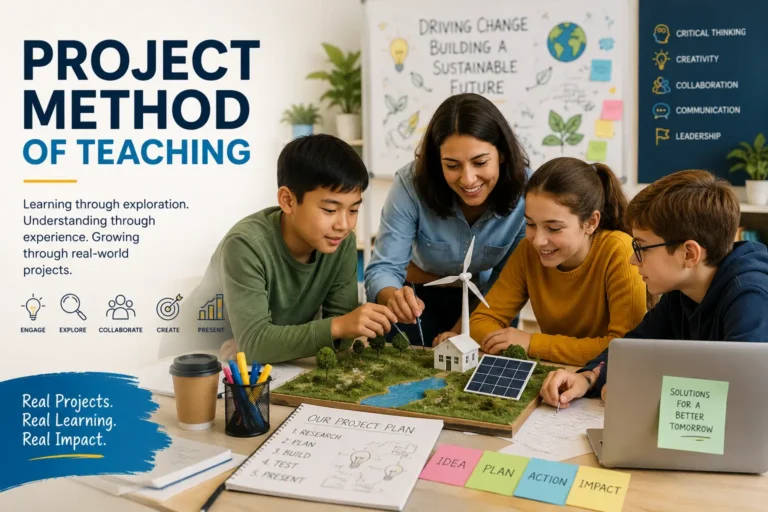
Here, the student explores an open-ended question or problem without a fixed answer. This overlaps with the project method of teaching, where investigation and discovery drive the learning process.
Self-Paced Modular Learning
The student works through a series of pre-designed learning modules at their own pace. Each module has a clear task, set of resources, and a checkpoint for review. This type works well in online and blended learning environments.
Research-Based Independent Study
Students conduct original research on a topic that falls outside the standard curriculum. This type is popular in gifted programs, extended essays, and higher education contexts where specialized knowledge is the goal.
How Does the Independent Study Method Work?
The independent study method follows a clear, four-stage process. Each stage has a specific purpose, and both the teacher and the student play important roles at every step.
Step 1: Assess Learner Readiness
Before anything else, the teacher evaluates whether the student is ready for self-directed work. This means checking the student’s current knowledge, motivation level, time management skills, and ability to work without constant supervision. Not every student is ready to begin independent study immediately.
Step 2: Set Learning Goals
The teacher and student work together to create a learning plan. This plan includes clear learning objectives, a list of approved resources, a timeline, and a method for measuring success. In formal settings, this plan becomes a learning contract that both parties agree to follow.
Step 3: Engage in Independent Learning
The student now executes the learning plan on their own. They read, research, write, create, or practice using the resources they have identified. The teacher does not interrupt this phase but remains available for scheduled check-ins and guidance.
Step 4: Evaluate and Reflect
At the end of the study period, the student reviews their work against the original goals. They submit their output, reflect on what they learned, and receive formative feedback from the teacher. This is a good point to connect with the review method as a tool for consolidating what was learned.
What Are the Advantages of the Independent Study Method?
The independent study method offers strong benefits for students who are well-prepared for self-directed work. Research consistently links this approach to better academic outcomes and deeper personal development.
- Builds learner autonomy: Students learn to take ownership of their academic growth rather than waiting for instruction
- Improves academic performance: Studies show a positive correlation (r = 0.51) between self-directed learning and academic achievement in online and blended learning contexts
- Develops time management skills: Students must plan their schedules and meet self-imposed or teacher-set deadlines, building real-world organizational habits
- Fosters intrinsic motivation: Because students choose their own goals and pace, they tend to stay more engaged with the material
- Supports personalized learning: Each student focuses on areas that match their interests and knowledge gaps rather than following a one-size-fits-all curriculum
- Builds lifelong learning habits: Students who practice the independent study method develop skills that serve them well beyond the classroom, including research skills, self-reflection, and critical thinking
Two separate studies found that students who learn independently work to higher academic standards and show greater self-esteem and motivation compared to students in fully teacher-directed environments.
What Are the Disadvantages of the Independent Study Method?
While the advantages are significant, the independent study method also comes with real challenges that teachers must consider before applying it in the classroom.
- Requires strong self-discipline: Students with low motivation or poor time management skills often struggle to complete tasks without regular supervision
- Risk of knowledge gaps: Without continuous teacher guidance, students may develop misconceptions or miss key concepts that a teacher would normally catch in real time
- Limited peer interaction: Since students work alone, they may miss the social learning benefits of group work, debate, and collaborative problem-solving
- Feedback delays: Unlike teacher-led instruction where feedback is immediate, independent study relies on scheduled check-ins, which can slow down correction of errors
- Not suitable for all learners: Students who rely on teacher connection, structured routines, or external accountability may feel overwhelmed rather than empowered
- Risk of surface-level learning: Without skilled facilitation, some students complete tasks without truly understanding the material at a deep level
A 2024 literature review confirmed that while self-study builds responsibility and confidence, it can also lead to slower learning and difficulty applying theoretical knowledge in practical settings.
How Is the Independent Study Method Different from Supervised Study?
Understanding the difference between the independent study method and the supervised study method helps teachers decide which approach is right for a given group of students or learning objective.
| Dimension | Independent Study Method | Supervised Study Method |
| Teacher role | Facilitator and guide | Active supervisor and monitor |
| Student autonomy | High | Moderate to low |
| Pacing | Student-controlled | Teacher or schedule-controlled |
| Best for | Self-motivated, higher-level learners | Learners who need structure |
| Feedback timing | Periodic and scheduled | Immediate and ongoing |
| Main risk | Lack of direction or isolation | Over-dependence on the teacher |
The two methods are not rivals. Many effective educators use a blend of both, starting with supervised study to build foundational skills and gradually shifting to the independent study method as students grow in confidence and self-regulation.
What Is the Role of the Teacher in the Independent Study Method?
A common misunderstanding about the independent study method is that teachers have little to do once the student begins working. In reality, the teacher’s role is highly intentional, even if it is less visible.
The teacher starts by explaining the method clearly to students, modeling what good independent learning looks like, and helping each student assess their readiness. During the goal-setting phase, the teacher acts as a co-designer, helping shape learning objectives that are challenging but achievable.
Once the student begins their work, the teacher monitors progress through scheduled check-ins rather than constant supervision. They provide curated resources, ask guiding questions to push thinking deeper, and maintain a supportive environment that encourages intellectual independence.
At the evaluation stage, the teacher delivers formative feedback and helps the student reflect on what they learned and what could be improved. The tutorial method can be paired effectively here, giving students a structured one-on-one discussion channel to process what they discovered during independent study.
When Should Teachers Use the Independent Study Method?
The independent study method is a powerful tool, but it is not the right choice for every student, every subject, or every stage of learning. Teachers need to make deliberate decisions about when to apply it.
This method works best when:
- Students already have strong foundational knowledge in the topic area
- Learners demonstrate self-motivation and the ability to manage their own time
- The curriculum allows exploration beyond standard coursework
- The goal is to develop research skills, critical analysis, or extended academic inquiry
- Advanced learners need a challenge beyond the standard classroom pace
On the other hand, the independent study method is not well-suited for:
- Foundational skill-building where direct instruction and modeled practice are essential
- Young learners or students who have not yet developed basic research and study habits
- Complex procedural content that requires step-by-step demonstration by a teacher
- Students with high anxiety, learning difficulties, or strong needs for structured routine
Teachers who want to start introducing the independent study method can begin with short, low-stakes independent tasks before gradually extending the time, scope, and complexity of self-directed work. This scaffolded approach reduces the risk of failure and builds student confidence over time. The drill method is one useful contrast here: it shows how direct repetition and teacher-led practice remain necessary for foundational learning before independence can take over.
Final Thoughts
The independent study method is one of the most valuable tools in a teacher’s professional toolkit. When applied thoughtfully, it builds the kind of learner who does not just pass exams but continues to grow, question, and discover long after the classroom is behind them.
The key is preparation. Teachers who invest time in assessing readiness, designing clear learning contracts, and scheduling meaningful feedback sessions give their students the best chance to thrive through self-directed learning in education. Students who are ready for this method gain skills in academic independence, personalized learning, and self-regulation that stay with them for life.
If you are building a teaching approach that combines structure with independence, explore the full range of teaching and learning methods to find the right mix for your students.