Tutorial Method of Teaching: Definition, Steps, Advantages and Disadvantages
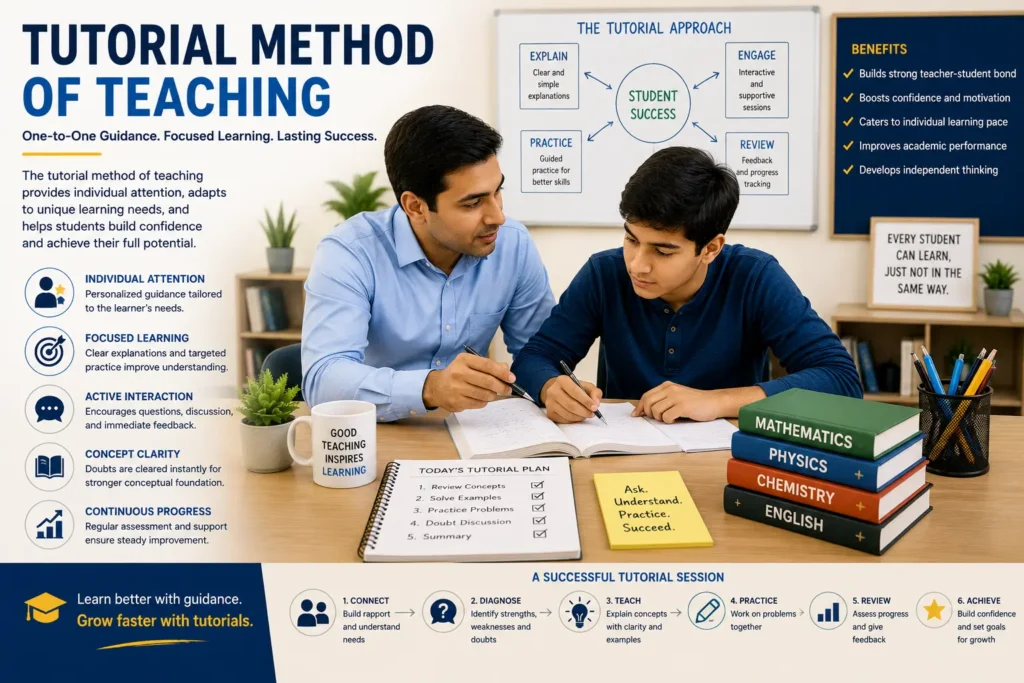
The tutorial method is a student-centered teaching approach where a tutor works with one student or a very small group to build deep understanding through guided dialogue, personalized feedback, and active discussion. It is rooted in the Oxford University collegiate system and the Socratic method. This approach works best in higher education, remedial teaching, and online tutoring settings where personalized learning matters more than broad content coverage.
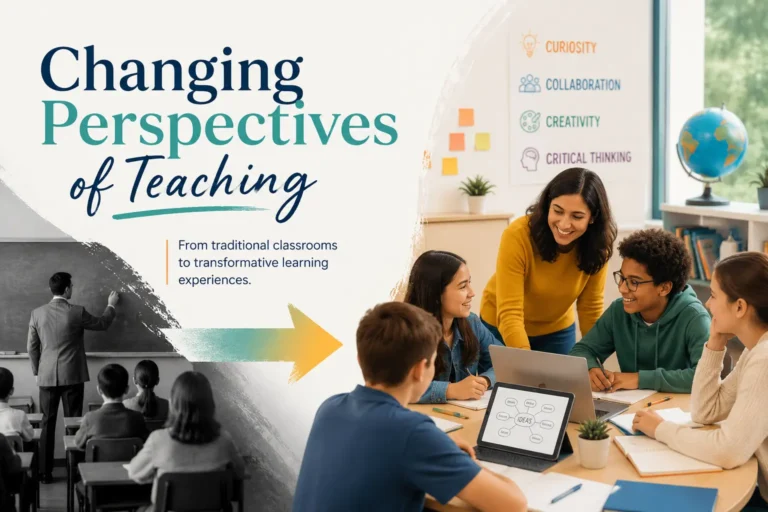
Most classrooms have one teacher standing in front of 30 or more students. Information flows in one direction. Students listen, take notes, and try to keep up. It works for covering content quickly, but it often leaves gaps in real understanding.
The tutorial method of teaching flips that model. Instead of broadcasting to a large group, a tutor works closely with just one student or a tiny group. The goal is not to deliver information. The goal is to build genuine understanding through conversation, questioning, and critical thinking.
This guide explains what the tutorial method is, where it comes from, how it works step by step, and when teachers should use it. You will also find an honest look at its advantages and disadvantages, a comparison with other teaching methods, and practical advice for applying it in online and hybrid classrooms.
What Is the Tutorial Method of Teaching?
The tutorial method is a teaching approach where a tutor guides one student or a small group of two to three students through a subject using focused dialogue, essay review, and personalized feedback. It is not about sitting in rows and absorbing a lecture. It is about active participation, where the student does most of the thinking and the tutor guides that thinking with careful questions.
Unlike a standard classroom lesson, the tutorial method privileges depth over breadth. The tutor and student explore fewer topics but understand them far more completely.
Key defining features of the tutorial method include:
- Small group size, usually one to three students per tutor
- Student comes prepared with an essay, exercise, or solution before the session
- Tutor questions and challenges the student rather than lecturing
- Personalized feedback is given based on the individual student’s work
- Strong focus on independent study and critical thinking development
- Two-way discussion rather than one-way instruction
This teaching approach is student-centered. The student carries the intellectual responsibility, and the tutor acts as a facilitator rather than a source of information.
The Origin of the Tutorial Method
The tutorial method has deep historical roots. It developed within the collegiate system at Oxford and Cambridge Universities, where undergraduate students were taught by college fellows in groups of one to three on a weekly basis. At Oxford, these sessions are called tutorials, while Cambridge refers to them as supervisions. Both follow the same core principle: small, intensive, dialogue-based learning.
The method draws heavily from the Socratic method, named after the ancient Greek philosopher Socrates, who taught by asking probing questions rather than delivering answers. This tradition of tutor-led questioning spread from ancient Greece to the great medieval universities and eventually became the foundation of elite higher education in Britain.
Today, the Oxford tutorial system is widely recognized as one of the most effective models of personalized learning in the world. Its influence now extends far beyond Oxford, shaping tutoring practices in higher education, remedial teaching programs, and online learning platforms around the globe.
Key Characteristics of the Tutorial Method
Small Group or One-on-One Format
The tutorial method works with very small numbers. At Oxford University, tutors work with groups of two to three students at a time. Sessions typically last about one hour and happen once or twice a week. This small size is not accidental. It is what makes individualized instruction possible. In a group of 30, a teacher cannot give each student genuine attention. In a tutorial, every student is seen, heard, and challenged.
Student Preparation Before the Session
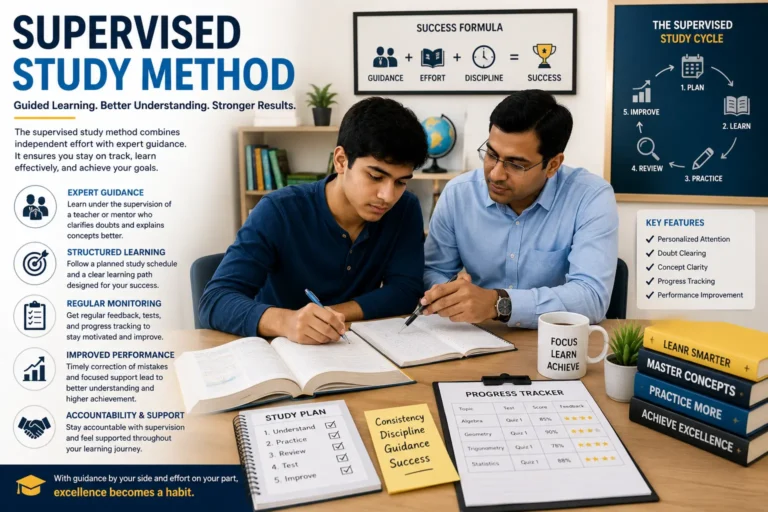
Students do not arrive empty-handed. Before each session, the student prepares an essay, solves a problem, or completes a task related to the topic. This preparation forces independent study and active engagement with the subject before the discussion begins. It also gives the tutor something concrete to respond to. The student’s own work becomes the starting point for the conversation.
Tutor-Led Dialogue and Questioning
During the session, the tutor does not lecture. Instead, the tutor asks questions. These questions are designed to challenge the student’s thinking, expose gaps in understanding, and push the student to reason more carefully. This Socratic dialogue is the heart of the tutorial method. The tutor guides without telling. The student reaches conclusions through their own thinking with the tutor’s skilled direction.
Personalized Feedback and Assessment
At the end of each session, the tutor provides direct, specific feedback on the student’s work and ideas. This is not a generic grade or a ticked checklist. It is a real conversation about what the student understood well and what needs more work. Formative feedback like this is one of the most powerful tools in education, and the tutorial method delivers it in real time.
How Does the Tutorial Method Work? (Step-by-Step Process)
The tutorial method follows a clear cycle. Each step builds on the previous one to create a complete learning experience.
Understanding these steps helps both tutors and teachers implement the method effectively in any setting.
Step 1: Topic or Task Assignment
The tutor assigns a specific topic, question, or problem for the student to work on independently. The assignment is focused and clear, giving the student a defined direction for their preparation.
Step 2: Independent Study and Preparation
The student researches the topic, prepares an essay, solves the problem, or completes the assigned task on their own. This independent preparation is critical. It means the student has already done the thinking before the session begins.
Step 3: Presentation of Work
At the start of the tutorial session, the student presents their prepared work to the tutor. This might mean reading an essay aloud, explaining a solution, or walking through their reasoning. The student takes ownership of their learning from the first moment.
Step 4: Tutor Feedback
The tutor reviews the student’s work and provides detailed, personal feedback. This feedback is based on the individual student’s understanding, not a class average. The tutor identifies strengths, points out errors, and highlights areas for deeper thinking.
Step 5: Open Dialogue and Discussion
After the initial feedback, tutor and student engage in an open discussion. The tutor asks probing questions using Socratic questioning techniques. Group members, if present, can also raise questions and push the presenter’s thinking further. This is where the deepest learning happens.
Step 6: Reflection and Consolidation
After the discussion, the student reflects on what they have learned. This reflection might happen in writing or through a brief verbal summary. The student takes this deeper understanding back to their regular classes and coursework.
This six-step cycle can be repeated weekly, allowing the student to build knowledge and critical thinking skills over time.
What Are the Advantages of the Tutorial Method?
The tutorial method offers benefits that most other teaching approaches simply cannot match. These advantages explain why it has remained the gold standard of personalized learning at institutions like Oxford University for centuries.
- Personalized learning: Every session is built around the individual student’s needs, strengths, and gaps. No two tutorials are the same, even if the topic is identical.
- Immediate formative feedback: The student receives specific, actionable feedback during the session, not days later. This speeds up learning and prevents misconceptions from taking root.
- Deep subject mastery: Because tutorials prioritize depth over breadth, students develop a thorough understanding of fewer topics rather than a surface-level understanding of many.
- Critical thinking development: The Socratic questioning at the heart of the tutorial method trains students to evaluate evidence, question assumptions, and reason carefully.
- Student confidence and accountability: Students who prepare and present their own work regularly become more confident in their ideas. They learn to defend their thinking clearly.
- Active learning: Research confirms that student-centered methods combined with teacher guidance produce superior learning outcomes compared to passive instruction alone.
- Flexible pacing: The tutor can slow down, revisit concepts, or move ahead based entirely on the individual student’s demonstrated understanding.
What Are the Disadvantages of the Tutorial Method?
Honest evaluation of the tutorial method must include its real limitations. No teaching approach is perfect for every situation.
- Difficult to scale: The method requires one tutor for every one to three students. This makes it extremely resource-intensive in traditional school settings where one teacher must serve 30 or more students.
- High demand on student motivation: Students must prepare thoroughly before every session. Students who lack self-discipline or strong study skills may struggle to engage meaningfully with the method.
- Depends on tutor quality: The effectiveness of the tutorial method relies heavily on the skill of the tutor. A tutor who lectures instead of questioning destroys the method’s core value.
- Limited peer interaction: Because group sizes are so small, students get less exposure to the wider range of ideas and perspectives that larger group discussions can provide.
- Not suitable for all content types: The tutorial method works best for subjects that require critical analysis, argumentation, or problem-solving. It is less effective for topics that simply require memorizing large amounts of factual information.
- Cost and time: Running tutorial sessions for all students in a school or university program requires significant time and financial investment.
Tutorial Method vs. Other Teaching Methods
Understanding how the tutorial method compares to other approaches helps teachers make better decisions about when and how to use it. The table below shows the key differences between the tutorial method and four other common methods covered in the teaching methods cluster.
| Method | Group Size | Student Role | Teacher Role | Best Use Case |
| Tutorial Method | 1 to 3 students | Active: prepares, presents, and discusses | Facilitator and questioner | Deep understanding, remedial teaching, higher education |
| Lecture Method | Large class | Passive: listens and takes notes | Transmitter of information | Delivering structured knowledge to large groups quickly |
| Project Method | Small to medium groups | Active: researches and creates a product | Guide and evaluator | Real-world problem solving, collaborative learning |
| Review Method | Whole class or small group | Active: recalls and responds | Reviewer and reinforcer | Reinforcing previous learning before tests or new units |
| Drill Method | Whole class or individual | Repetitive: practices and repeats | Trainer and corrector | Building automaticity in skills like math facts or grammar |
Research comparing lecture and tutorial approaches found that students in audio-tutorial groups spent significantly less time than those in traditional lecture groups while achieving comparable or better learning outcomes.
The tutorial method stands apart from all others because it is the only approach where the session content is built entirely around the individual student’s own prepared work. Every other method starts with the teacher. The tutorial method starts with the student.
When Should Teachers Use the Tutorial Method?
The tutorial method is not the right choice for every classroom moment. It works best in specific situations where personalized learning matters more than broad content delivery.
Teachers should consider the tutorial method when:
- A student needs targeted remedial support after falling behind in a subject
- A gifted learner needs to be pushed beyond the standard curriculum
- A student is preparing for high-stakes assessments like university entrance exams or professional qualifications
- A subject requires deep critical analysis rather than factual recall
- A small group of students shares a specific learning gap that needs focused attention
- Individual students need coaching in study skills, essay writing, or critical thinking
At the university level, the tutorial method is already embedded as the core teaching format at institutions like Oxford and Cambridge. At the secondary level, it is most commonly used in one-on-one tutoring sessions after school or in gifted learner programs. At the primary level, teachers can adapt the approach informally during small reading groups or math intervention sessions.
Applying the Tutorial Method in Online and Hybrid Education
One of the biggest gaps in most tutorials on this topic is guidance for online and hybrid settings. The good news is that the tutorial method adapts very well to digital learning environments.
Here is how teachers and tutors can implement the tutorial method online:
- Synchronous video tutorials: A tutor and student meet on a video call at a scheduled time. The student shares their prepared essay or solution. The tutor provides live feedback and leads a Socratic discussion. This mirrors the face-to-face Oxford model almost exactly.
- Asynchronous feedback loops: The student submits a written essay or recorded presentation through a learning management system. The tutor reviews it and sends back detailed written or recorded video feedback. The student then responds with a revised version or follow-up questions.
- Online tutorial groups: Platforms like Zoom, Google Meet, or Microsoft Teams allow small groups of two to three students to meet with a tutor online. Screen sharing and collaborative documents make it easy to work through student essays in real time.
- LMS-based discussion threads: Discussion boards on platforms like Moodle or Canvas can simulate the back-and-forth of a tutorial session asynchronously. The tutor posts a probing question, the student responds, and the dialogue continues over several days.
Online tutorials actually remove some of the traditional barriers of the method. Geographic distance, scheduling conflicts, and physical classroom limitations all become manageable with digital tools.
Final Thoughts: Is the Tutorial Method Right for You?
The tutorial method of teaching is one of the most powerful approaches in education. It builds critical thinking, delivers personalized learning, and produces deep subject mastery that passive methods simply cannot achieve. Its roots in the Oxford and Cambridge collegiate system give it centuries of proven effectiveness, and modern research continues to confirm that student-centered instruction combined with expert guidance produces the best learning outcomes.
Of course, the method has real limitations. It is hard to scale, demanding for students, and dependent on skilled tutors. Teachers need to match the method to the right situation rather than treating it as a one-size-fits-all solution.
The most effective educators do not stick to one method. They build a toolkit. The tutorial method belongs in that toolkit, especially when a student needs genuine understanding, not just information.
To explore how the tutorial method fits alongside other evidence-based approaches, visit the complete guide to teaching and learning methods and discover which strategy works best for your classroom.